
Concrete Moisture Testing Before a Resin Floor
Applying an impermeable resin system over damp concrete invites severe adhesive failure. Professional concrete moisture testing supplies the empirical data required before any finish is laid. Without calibrated measurement, residual construction water or rising dampness migrates upward. Moisture then accumulates directly beneath the dense resin barrier. Unmanaged vapour pressure triggers osmotic blistering, pinholes and delamination.
Every commercial project needs verified moisture readings before work starts. The correct test method reveals true conditions deep within the concrete matrix. If water vapour stays trapped below an impermeable barrier, how can a facilities manager prevent blistering across an operational site?
Key Takeaways
- Standard epoxy coatings tolerate substrate relative humidity up to 75 percent, whereas liquid damp proof membranes suppress moisture readings as high as 98 percent.
- A surface hygrometer test gives reliable equilibrium relative humidity data on a prepared substrate, in line with established British Standard codes of practice.
- In-situ relative humidity probes measure deep internal moisture gradients within thick concrete slabs and reveal the true drying profile before resin is applied.
- A taped polythene sheet is only an uncalibrated qualitative indicator and cannot replace quantitative test instruments during a professional site assessment.
- Thorough moisture diagnosis during a site survey prevents osmotic blistering, coating debonding and expensive shutdowns across commercial or industrial facilities.
Diagnostic Methods in Concrete Moisture Testing
Accurate diagnosis depends on proven methods matched to the age and depth of the slab. Measuring moisture correctly prevents early coating failure and protects long-term bond durability. The table below sets out the primary testing procedures used across industrial flooring projects. It also records the governing standard and the operational scope of each method.
Each procedure yields a distinct data point. Some report surface equilibrium, others report deep internal vapour conditions. The correct protocol tells the specifier whether the slab needs further drying time or immediate suppression with a liquid damp proof membrane. In practice, we find these figures govern the choice of membrane and primer on almost every industrial contract.
| Method | Primary Standard | Operational Scope |
|---|---|---|
| Surface Hygrometer Box | BS 8203 / BS 8204-6 | Non-destructive equilibrium relative humidity measurement |
| In-Situ RH Probe | ASTM F2170 | Internal relative humidity profiling at a defined slab depth |
| Calcium Carbide Method | BS 8204-1 | Chemical reaction determining total free moisture content |
| Polythene Sheet Method | Qualitative check only | Visual indicator of vapour migration, not a test |

Moisture Dynamics and Resin Floor Failure
Osmotic Blistering Mechanics
Osmotic blistering starts when water vapour collects beneath an impermeable resin coating. The trapped water dissolves soluble mineral salts held within the concrete. That concentrated solution then generates hydrostatic pressure against the semi-permeable resin film. Expanding liquid domes lift and detach the cured resin from the base below.
These fluid-filled domes compromise the whole flooring system. They puncture under traffic and expose bare substrate to continuous erosion. The resulting voids create hygiene risks and trip hazards in active workplaces. From experience across the sector, blisters rarely stay isolated once the first one breaks.
Adhesion Loss and Vapour Pressure
High vapour pressure disrupts the bond between resin primer and concrete. Moisture migrating toward the surface weakens the interfacial zone through hydraulic action. The primer cannot hold its mechanical key inside the concrete pores. Dynamic forklift loads then shear the weakened bond line apart during normal operations.
Without bond strength, the floor lifts away in large sheets. Repair means mechanical removal back to clean, sound concrete. That work multiplies cost and extends downtime across the building. Production areas often sit idle for days whilst the substrate is reprepared.
Hygrometer Test Resin Flooring Procedures
The Surface Hygrometer Procedure
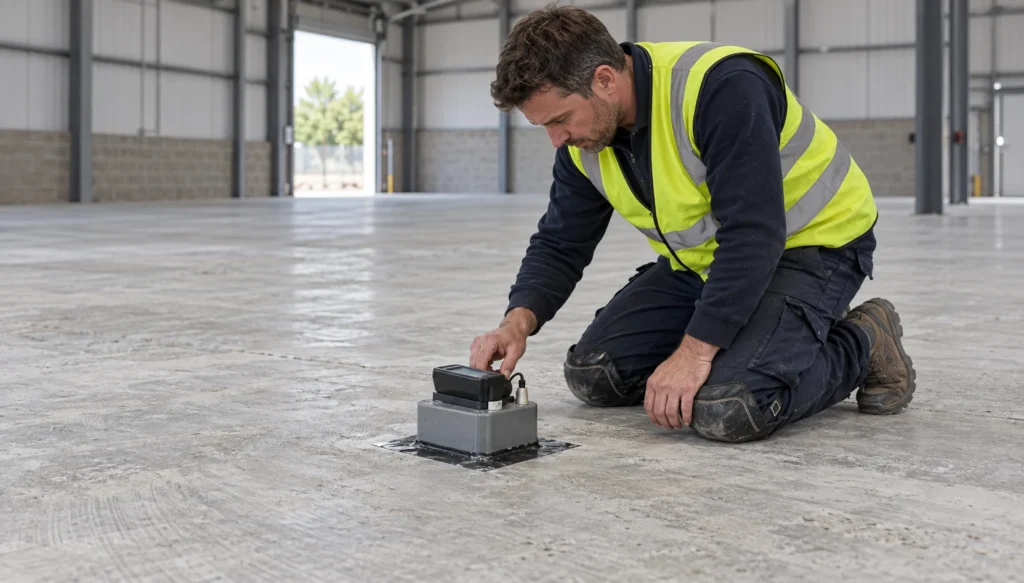
A surface hygrometer measures the equilibrium relative humidity of enclosed air above the slab. Technicians seal an insulated instrument box to the prepared surface with butyl tape. The enclosed air then reaches moisture equilibrium with the upper zone of the concrete. The recorded figure represents that equilibrium condition.
A hygrometer test resin flooring survey follows the protocols set out in BS 8203 and BS 8204-6. The instrument needs sufficient dwell time before any figure is recorded. Most technicians allow seventy-two hours for a stable reading. Readings taken earlier understate the true moisture condition.
Surface Equilibrium and British Standards
British Standard BS 8204-6 sets the framework for synthetic resin flooring installations. The code confirms that surface hygrometer testing gives an accurate benchmark for substrate moisture. Specifiers who follow it hold documented evidence at quality control review. That evidence matters when a warranty claim is later contested.
The test reports relative humidity in the surface contact zone under equilibrium. Fluctuating site temperatures will skew the result. Strict thermal management is therefore necessary throughout the test period. Site heating switched on mid-test is a common cause of invalid data.
Did You Know?
BS 8203 sets 75 percent relative humidity as the accepted upper limit for laying moisture-sensitive floor finishes on a concrete base. A two-coat epoxy liquid damp proof membrane extends that working limit to around 98 percent relative humidity, which is why the additional system exists.
Advanced Quantitative Methods for Substrate Evaluation
In-Situ Relative Humidity Probes
In-situ probes measure deep internal moisture by sampling the atmosphere inside drilled holes. Technicians drill precise cavities into the slab, clean them thoroughly and insert sealed sensor sleeves. The embedded sensors then report conditions at depth. Those readings expose internal moisture gradients that surface methods cannot detect.
This depth-specific measurement follows ASTM F2170. Readings are taken at forty percent of slab depth on a slab drying from one side. That point approximates the condition the slab will reach once the resin seals the top surface.
The Calcium Carbide Chemical Method
The calcium carbide method gives a destructive measurement of free water within an extracted sample. Technicians crush concrete dust taken from a specific depth in the slab. The sample goes into a pressure vessel with calcium carbide reagent. The reaction generates acetylene gas, and the resulting pressure indicates moisture content.
Carbide testing returns a direct quantitative figure unaffected by chemical additives in the mix. Extracting material does damage the substrate. Installers therefore reserve the technique for forensic investigation, where non-destructive instruments cannot resolve a discrepancy.

Need a Resin Flooring Site Visit and Quote?
The Polythene Sheet Myth and Qualitative Limitations
Flaws of the Overnight Polythene Sheet
Taping polythene to concrete overnight is not a valid technical test. Trapped condensation does confirm that vapour is moving through the slab. The absence of condensation proves nothing at all. The sheet works as an uncalibrated visual indicator and returns no numerical data for the specification.
Ambient air temperature alone can prevent condensation over genuinely damp concrete. Relying on an absence of droplets introduces serious commercial risk. Undetected vapour will still delaminate an impermeable resin finish after application.
Qualitative Indications Versus Quantitative Verification
Professional specifications demand measurable figures rather than qualitative assumptions. Quantitative instruments define whether a liquid damp proof membrane is mandatory on a given slab. Decisions based on recorded metrics support contractual compliance. They also protect long-term durability once the floor enters service.
Contractors who skip instrument testing gamble with floor adhesion. Facilities managers cannot substantiate a manufacturer warranty without recorded percentage values. Empirical data remains the only reliable defence against premature coating failure.
Case Studies
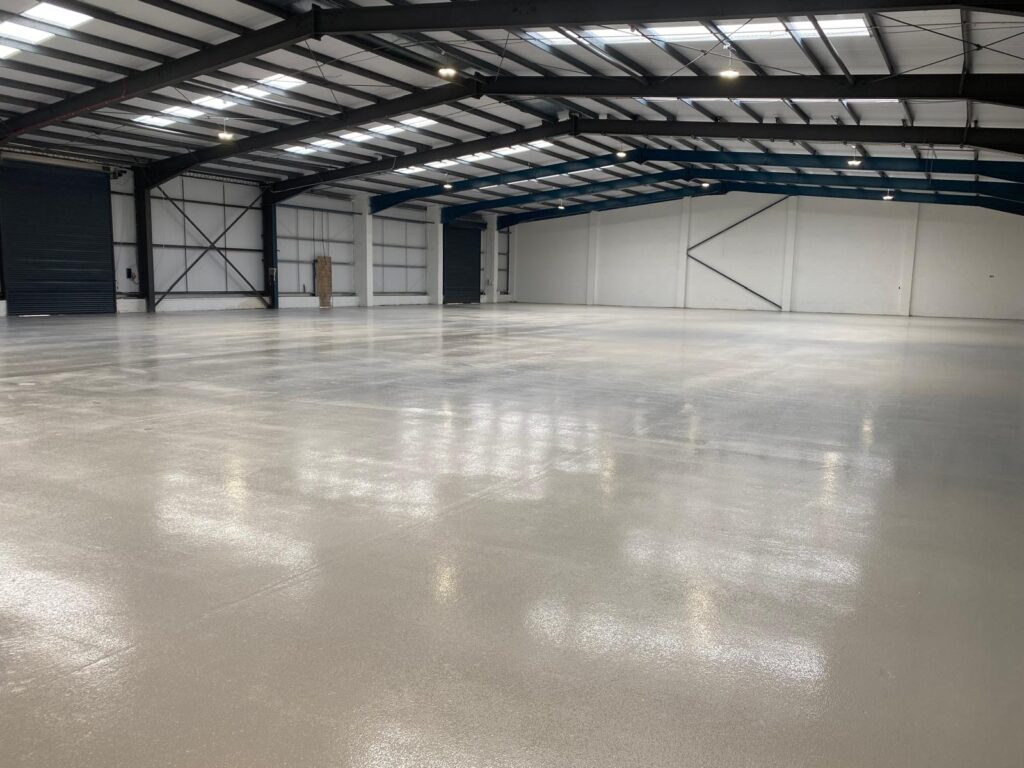
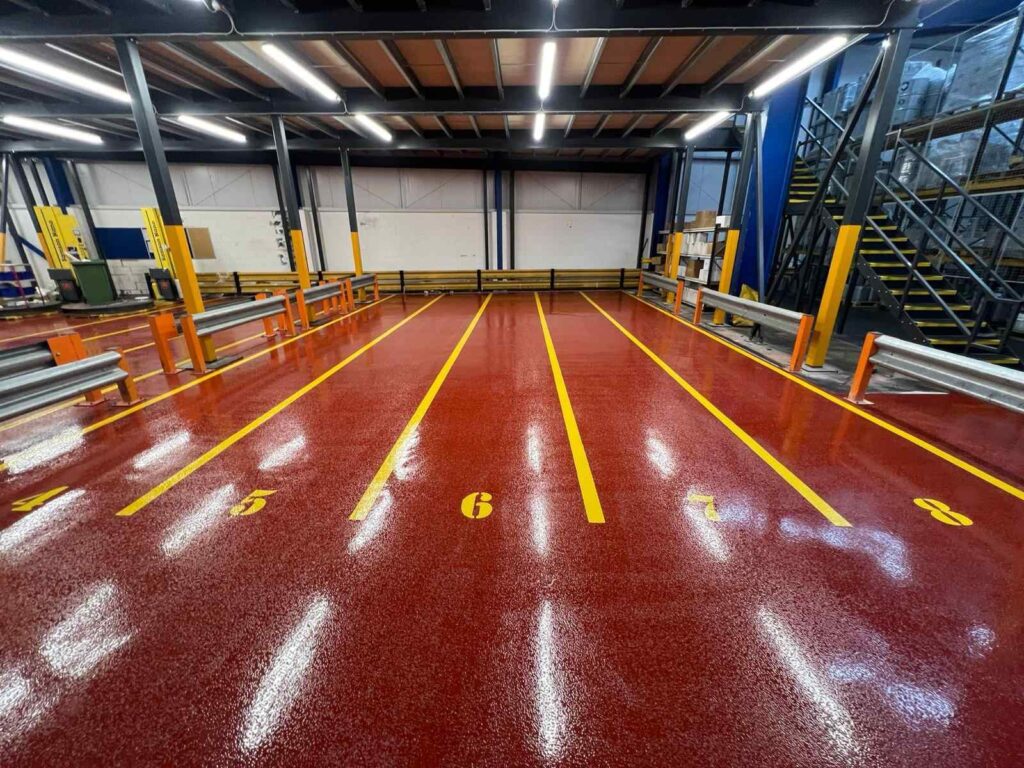
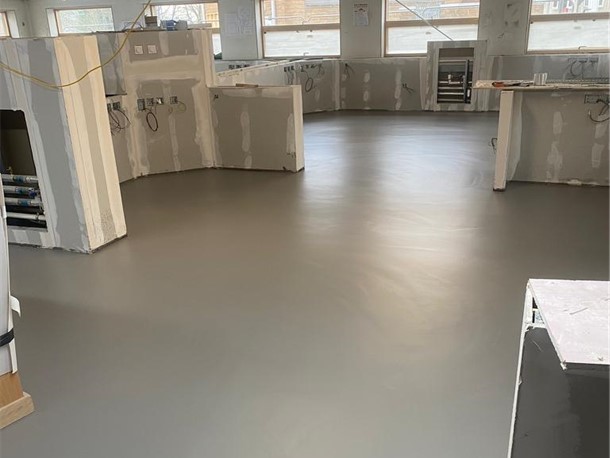
Our case studies cover – Printing & Packaging, Warehousing & Logistics, Pharma & Healthcare, Automotive & Engineering, Aviation & Aerospace, Food & Drink, Printing & Packaging, Warehousing & Logistics, Pharma & Healthcare
Safe Relative Humidity Thresholds and Membrane Selection
What Relative Humidity Is Safe for Resin
Specifiers asking what relative humidity is safe for resin must check the product chemistry against measured readings. Standard solvent-free epoxies require a substrate at or below 75 percent relative humidity. Above that threshold, the risk of osmotic blistering rises sharply. Manufacturer data sheets state the governing limit for each system.
Certain specialist polyurethane formulations tolerate substrate moisture up to 80 percent. Higher readings always demand intervention. Working outside the stated parameters compromises adhesion and invalidates the installation warranty.
Liquid Damp Proof Membrane Application
A two-coat epoxy liquid damp proof membrane suppresses moisture when readings exceed tolerance. The cured film forms an impermeable barrier against vapour at readings approaching 98 percent relative humidity. Resin finishes can then be installed safely over the treated slab. Application still requires a correctly prepared, clean surface.
An epoxy membrane adds minimal build thickness whilst delivering dependable barrier protection. For sites needing rapid turnaround over damp concrete, the system removes long drying delays. It protects bond integrity for the final wearing surface.
“JD Flooring did an excellent job installing a resin floor in our food production facility. The floor is durable, hygienic, and meets all safety regulations. The team was knowledgeable and professional, and the project was completed within the agreed-upon timeframe. I highly recommend JD Flooring for food industry flooring needs.”
Alex Martinez
Substrate Age: New Concrete Versus Aged Substrates
Drying Characteristics in New Concrete
New concrete needs extensive drying before it reaches a safe moisture equilibrium for resin. A long-standing industry rule of thumb allows roughly one month of natural drying per 25 millimetres of thickness. High ambient humidity or poor air movement extends that timeline considerably.
Installing over newly placed concrete without testing is a common cause of bond failure. Fast-track build programmes rarely allow full natural drying. Quantitative testing confirms whether a damp proof membrane is required to meet the programme.
Moisture Dynamics in Aged Substrates
Aged slabs can still show elevated moisture decades after construction. A failed or absent damp proof membrane is usually the cause. Groundwater then migrates upward through porous concrete by capillary action, carrying dissolved salts with it. These older floors need meticulous diagnostic testing before any specification is issued.
Visual inspection cannot detect capillary moisture movement. White efflorescence offers an early warning sign, yet a visual check is never sufficient. Calibrated testing reveals the hydraulic pressures active within an established substrate.
Calculate The True Cost
A three day shutdown at a plant turning over £2,000 an hour is £120,000 of lost output. On most sites that is several times the cost of the new resin floor installation. We have developed our own free custom calculator top help you calculate the true cost and a new resin floor.
Diagnostic Survey Protocols and Substrate Preparation
Comprehensive Site Survey Procedures
A comprehensive resin flooring site survey evaluates every environmental and structural parameter. Experienced technicians record ambient temperature, surface temperature, dew point proximity and substrate moisture. Combined, those readings give a reliable baseline. That baseline then guides the whole preparation and installation strategy for the floor.
Testing must cover multiple points across the floor area. Perimeter walls and drainage channels deserve particular attention. Formal survey records protect every project stakeholder and validate the specification before work begins.
Mechanical Surface Preparation Standards
Mechanical preparation exposes the open capillary structure of the concrete before testing and priming. Industrial diamond grinding with on-tool HEPA dust extraction strips weak laitance, curing agents and surface contaminants. The process opens the pore structure. Primers can then achieve maximum mechanical penetration into the substrate.
Skipping preparation prevents resin adhesives from interlocking with the concrete matrix. A substrate that is clean, sound, profiled and verified dry delivers durable performance. The completed floor then withstands heavy industrial demands for many years.
Final Thoughts
Rigorous concrete moisture testing underpins every successful industrial flooring project. Overlooking substrate conditions almost guarantees premature adhesion failure, osmotic blistering and costly downtime. Calibrated testing confirms that the applied coating bonds to a sound, receptive base.
Modern installations depend on diagnostic data rather than subjective visual estimates. Respect the relative humidity limits, specify a liquid damp proof membrane when the metrics demand one, and prepare the substrate properly. Facilities protected that way stay in service for decades.
Arrange a Free Site Survey
If you are thinking about upgrading the flooring in your commercial or industrial space then we would love to hear from you. Our team of experts will conduct a free onsite survey and then guide you through the process of product selection and project planning, whilst remaining mindful of your budgetary restraints.
Frequently Asked Questions
A:
Standard epoxy resin systems need a substrate reading at or below 75 percent relative humidity. Some polyurethane formulations tolerate up to 80 percent. Higher levels carry substantial risk. Where testing returns readings between 75 percent and 98 percent, a two-coat epoxy liquid damp proof membrane is installed before the top finish. Respecting these limits protects the bond and prevents osmotic blisters forming under the cured resin.
A:
Moisture trapped beneath an impermeable coating cannot evaporate. As vapour accumulates below the non-porous film, it dissolves soluble salts within the concrete. The resulting solution generates osmotic pressure. Over time that pressure forces the resin film upward and creates liquid-filled blisters. The blisters eventually break apart under forklift traffic. The outcome is extensive surface delamination and costly operational disruption.
A:
No. The polythene sheet is a qualitative indicator, not an acceptable test. Condensation under the sheet proves vapour is moving. An absence of condensation does not prove the slab is dry. Warm ambient air and fluctuating room temperatures easily prevent droplets forming. Professional specifications require quantitative measurement from a calibrated surface hygrometer or relative humidity probe before coating.
A:
Under typical UK ambient conditions, a traditional rule of thumb allows about one month of drying per 25 millimetres of depth. A 150 millimetre slab can therefore need six months or more. Cold weather, high atmospheric humidity and restricted ventilation extend that period further. Because commercial programmes rarely permit the wait, quantitative testing determines whether a liquid damp proof membrane is needed.
A:
A surface hygrometer measures the equilibrium relative humidity inside an insulated box sealed to the slab surface. The test is non-destructive and reflects conditions in the upper section of the floor. An in-situ probe requires drilling to a set depth, typically forty percent of slab thickness, then inserting a sensor sleeve. Probes report deep internal moisture that will equilibrate once the surface is sealed.
