
PU Screed Flooring: Thickness, Falls and Coving
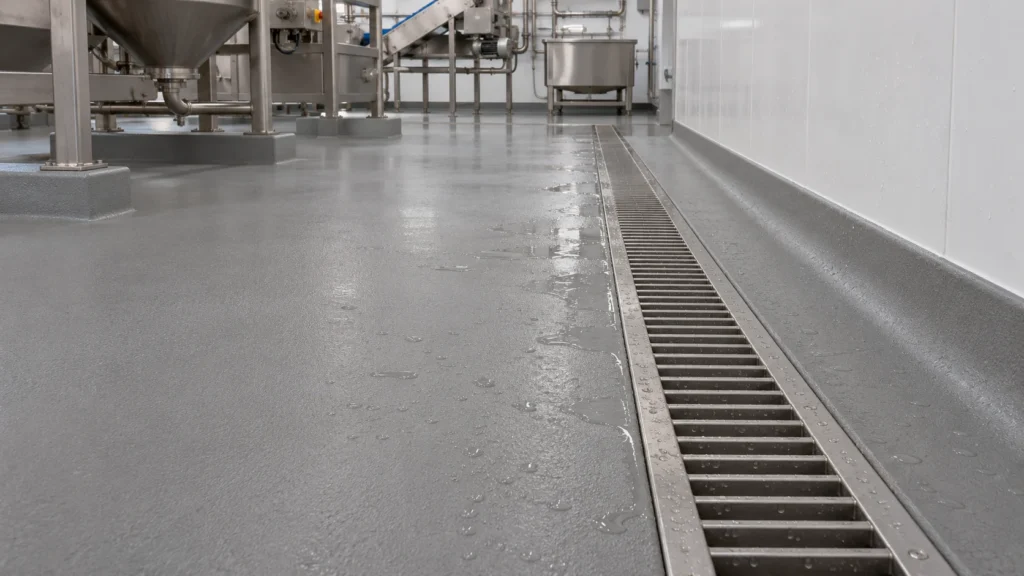
PU Screed Flooring: Thickness, Falls and Coving Heavy processing environments punish floors. Mechanical abuse, chemical contact and daily washdown break down ordinary concrete within a few seasons. Facilities managers specify PU screed flooring to secure an impervious, hard-wearing surface across food factories, chemical plants and commercial kitchens. These three-part systems blend polyurethane resin, water and […]
Polyurethane Industrial Flooring for Wet Process Areas

Polyurethane Industrial Flooring for Wet Process Areas Wet process facilities degrade standard floor finishes fast. Constant moisture, chemical washdowns and severe thermal cycling all attack the surface. Polyurethane industrial flooring delivers the elastomeric resilience, chemical durability and non-porous structure needed to protect structural concrete. Processing plants need seamless surfaces that survive immersion, hot CIP discharges […]
Polyurethane Floor Coating: Chemical and UV Resistance
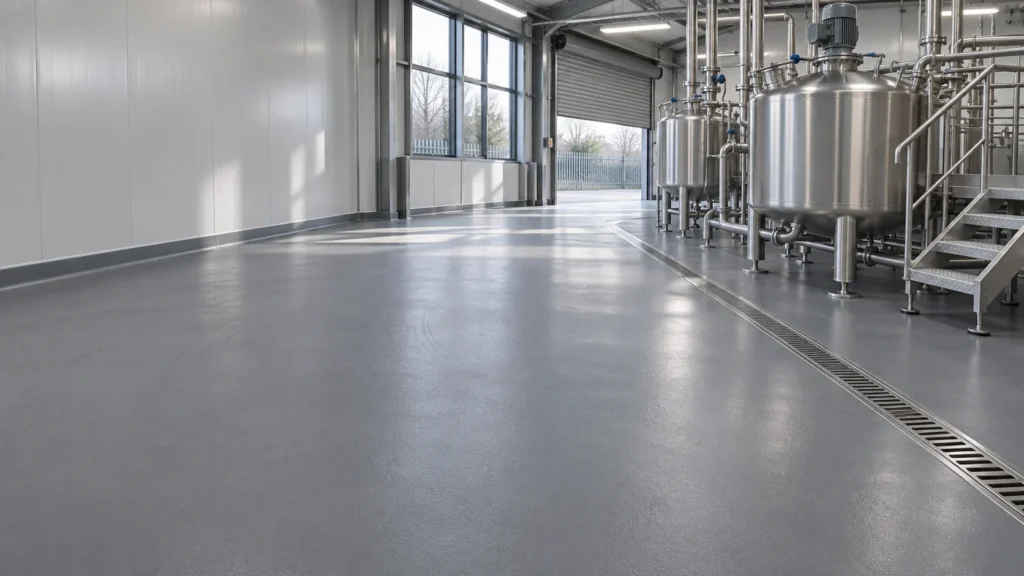
Polyurethane Floor Coating: Chemical and UV Resistance A polyurethane floor coating earns its place where movement, sunlight and organic chemistry defeat other resins. Standard epoxy systems deliver hardness and compressive strength for dry warehousing. Polyurethane chemistries deliver elasticity and ultraviolet stability instead. That difference decides whether a floor survives five years of production or fails […]
ESD Resin Flooring Cost: Earthing, Testing and Spec
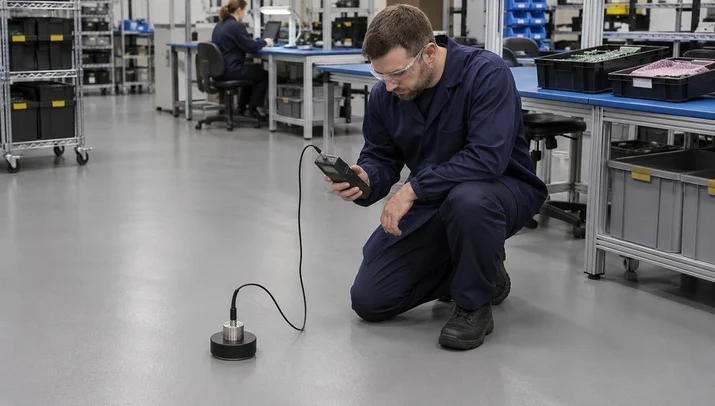
ESD Resin Flooring Cost: Earthing, Testing and Spec A realistic ESD resin flooring cost covers far more than resin and application labour. Electrostatic discharge flooring is an active electrical safety system. It protects microelectronics, avionics and explosive atmospheres from damaging static charge. A complete specification combines substrate preparation, conductive priming, copper earthing grids, static-control body […]
Conductive Flooring vs Dissipative: Which Do You Need?
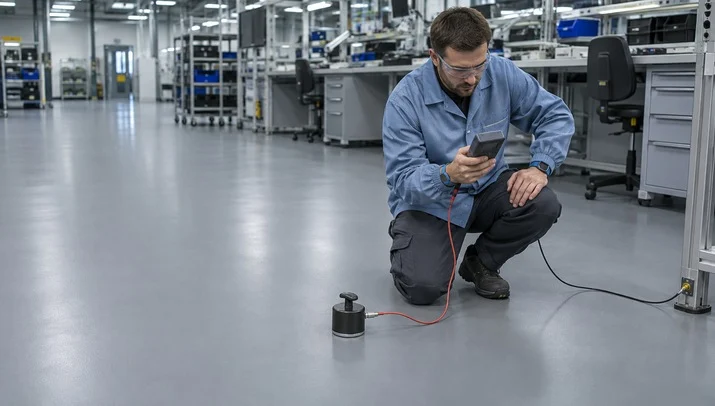
Conductive Flooring vs Dissipative: Which Do You Need? Static control floors fail for one reason above all others. The resistance band specified does not match the hazard on site. Conductive flooring evacuates charge almost instantly, which suits solvent handling and powder processing. Standard electronics assembly needs a slower, controlled bleed instead. Get that choice wrong […]
Anti-Static ESD Epoxy Floor: Resistance Windows

Anti-Static ESD Epoxy Floor: Resistance Windows An anti-static ESD epoxy floor only works when it is specified as an electrical component. Uncontrolled electrostatic discharge destroys microelectronics, ignites solvent vapours and disrupts precision automation. Most procurement failures start with vague wording. A working static control floor needs a stated resistance to ground, verified surface preparation and […]
Server Room Flooring: Static Control and Earthing

Server Room Flooring: Static Control and Earthing Server room flooring carries a duty no other floor finish does. It must drain electrostatic charge to earth before that charge reaches a network switch or a storage controller. A discharge of under one hundred volts can destroy a microprocessor gate without any person feeling a shock. The […]
Data Centre Flooring: ESD Control and EN 1081 Testing
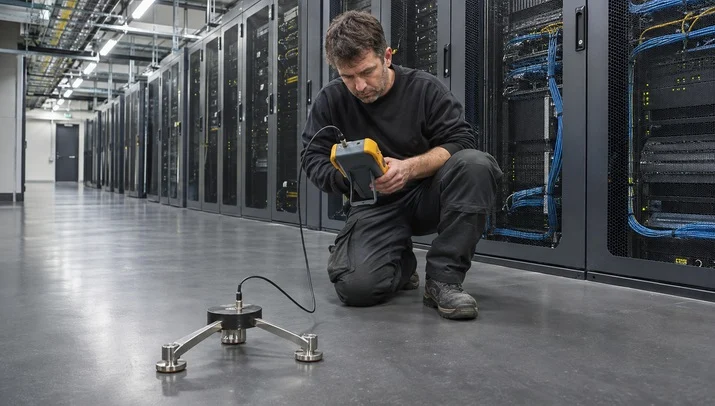
Data Centre Flooring: ESD Control and EN 1081 Testing Mission-critical facilities fail in quiet ways. Electrostatic discharge degrades components long before anyone reports a fault. Specifying data centre flooring therefore means specifying an electrical system, not a surface finish. Resistance windows, earthing paths and cleaning chemistry together decide whether a floor protects hardware or quietly […]
Abrasion Resistant Flooring for Hard-Wheeled Traffic
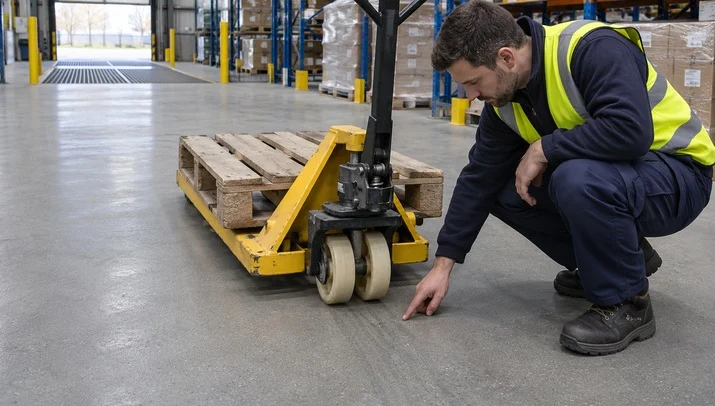
Abrasion Resistant Flooring for Hard-Wheeled Traffic Specifying abrasion resistant flooring starts with the mechanical forces your site actually generates. Hard nylon and polyurethane wheels concentrate load across a tiny contact patch. That pressure pulverises weak concrete and fractures thin coatings. Choosing the right resin chemistry and build thickness protects the slab beneath and stops traffic […]
Slippery Kitchen Floor: Fixing It Properly, Not Quickly

Slippery Kitchen Floor: Fixing It Properly, Not Quickly A slippery kitchen floor is one of the most persistent hazards in UK catering. Hot oil, animal fat and soapy wash water settle on quarry tiles every shift. Traction then disappears. Duckboards and generic floor paint do not fix the problem. Kitchens need a seamless system built […]