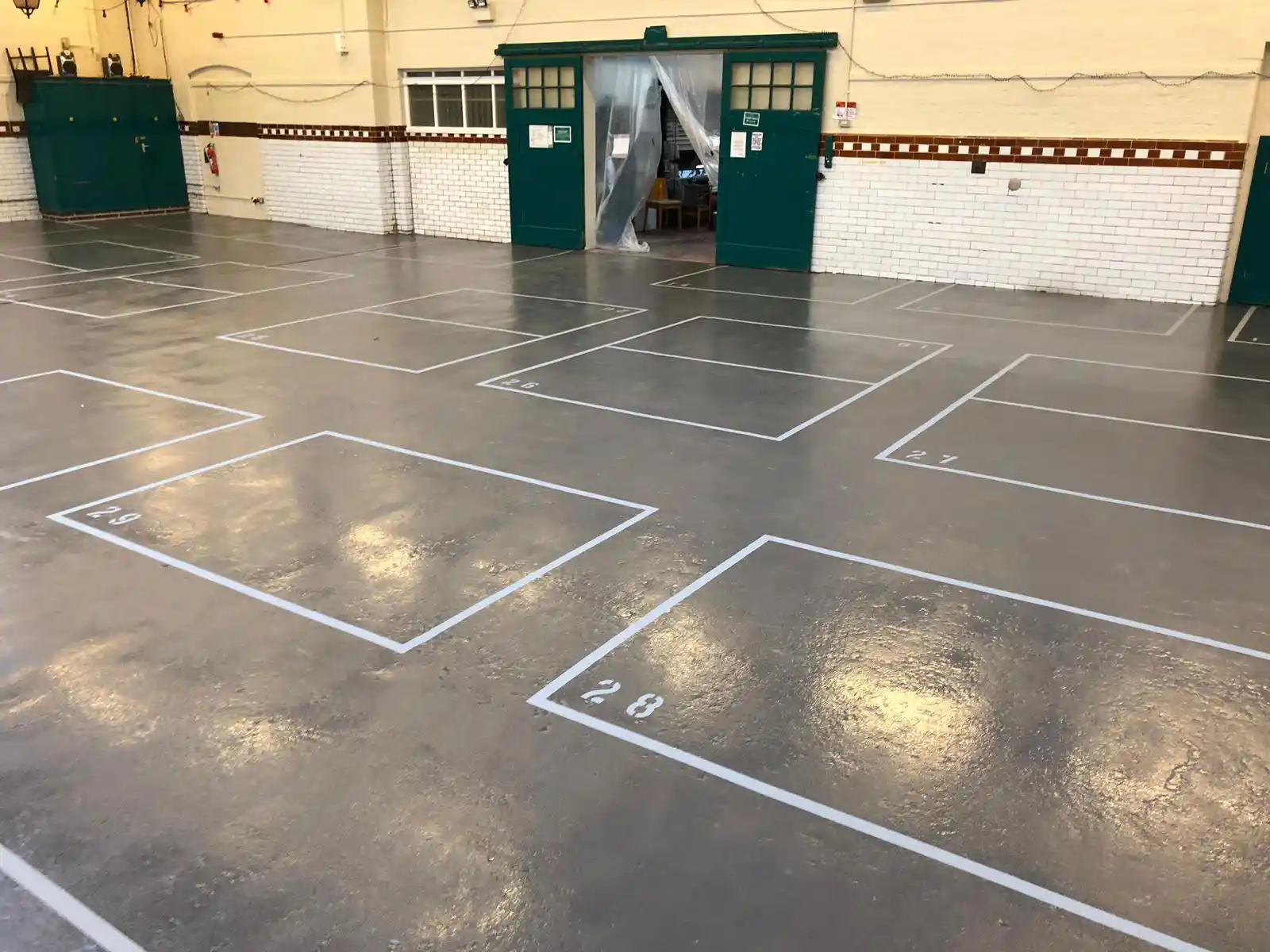
The entry point into resin flooring, and the right answer more often than people expect. A floor seal soaks into sound concrete and stops it shedding dust, staining and holding dirt, at the lowest cost per square metre of any system we install. What it will not do is repair a slab, and this page is clear about where that line falls.

| System | Resin Floor Seal |
|---|---|
| Classification | FeRFA Type 1, aligned to BS 8204-6 |
| Duty | Light to medium duty |
| Typical thickness | Up to 150 microns |
| Cost indicator | From £8 per square metre |
| Return to service | 24 to 48 hours |
| Application temperature | 15°C and above |
A seal is a surface treatment rather than a floor in its own right. It changes how an existing concrete slab behaves without adding meaningful thickness to it.
The thinnest system in the FeRFA range, laid in two or more coats as a solvent or water borne seal. It soaks into the surface rather than building on top of it.
Type 1 in the FeRFA classification aligned to BS 8204-6. It protects a sound floor and makes it cleanable; it does not add strength or thickness to one.
Aggregate can be added where the floor gets wet, so a seal is not automatically a smooth finish. The texture is still set against the contamination present.
A structurally sound slab that is dusting, staining or simply hard to clean. Plant rooms, stores, light workshops and back of house areas where the floor is tired rather than damaged, and the budget has to go a long way.
A seal cannot repair, level or strengthen anything. Spalled joints, cracking, forklift routes and chemical exposure all need a build-up. Sealing a failing slab buys months, not years.
A seal is the cheapest system on the list, which is exactly why it has to be the right one. Three checks settle whether it is.
A seal only works on sound concrete. We check for laitance, cracking and joint damage first, because none of that is fixed by a thin coat on top.
Most seals are specified because a floor is shedding dust into product, plant or lungs. That is a measurable problem with a compliance answer.
Where water or oil reaches the floor, aggregate goes into the seal and the finish is set against BS 7976 pendulum values for that contamination.
A dusting concrete floor is not just a housekeeping nuisance. Worn and under-specified concrete sheds respirable crystalline silica, and that sits under COSHH and the EH40 workplace exposure limits, where the limit for respirable crystalline silica is 0.1 mg/m³ as an eight-hour time-weighted average. Sweeping it up every morning does not address the duty; stopping the floor producing it does.
That is the strongest commercial case for a seal, and it is worth making properly rather than selling a seal on appearance. The same dust also finds its way into product, into bearings and filters, and onto every surface in the building, which is why the argument usually lands with production and quality as readily as with health and safety.
We attend site and test the substrate before recommending anything. If your floor is sound and a seal will do, that is what we will quote. If it is not, we will show you what the concrete is actually doing and specify accordingly.