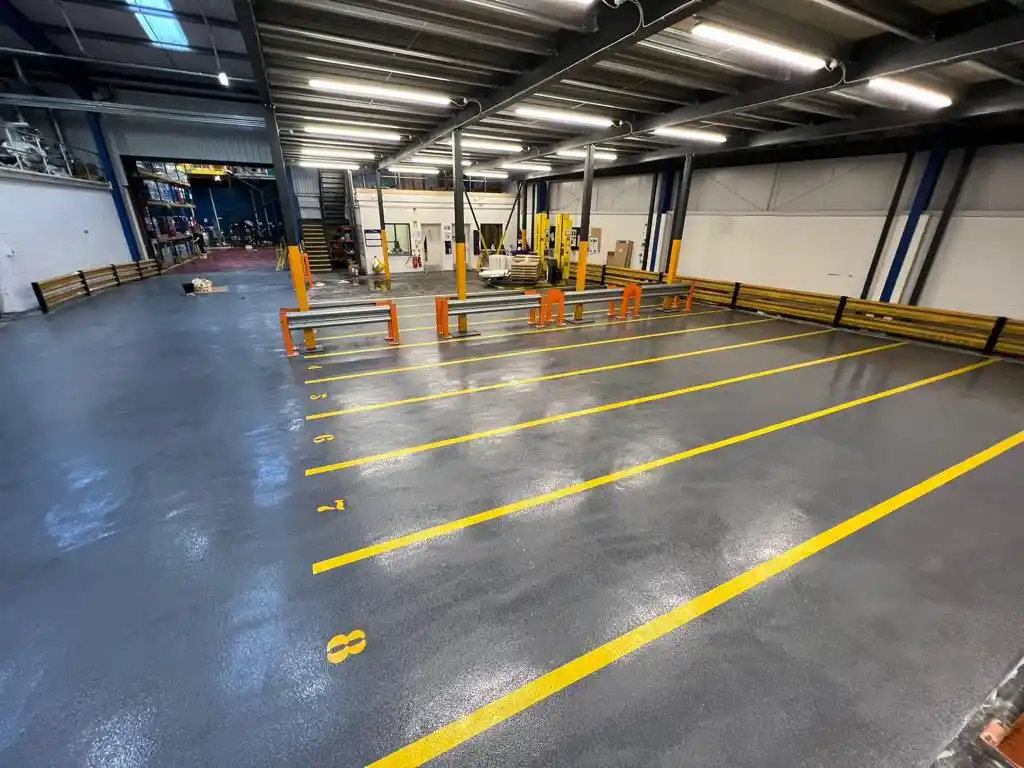
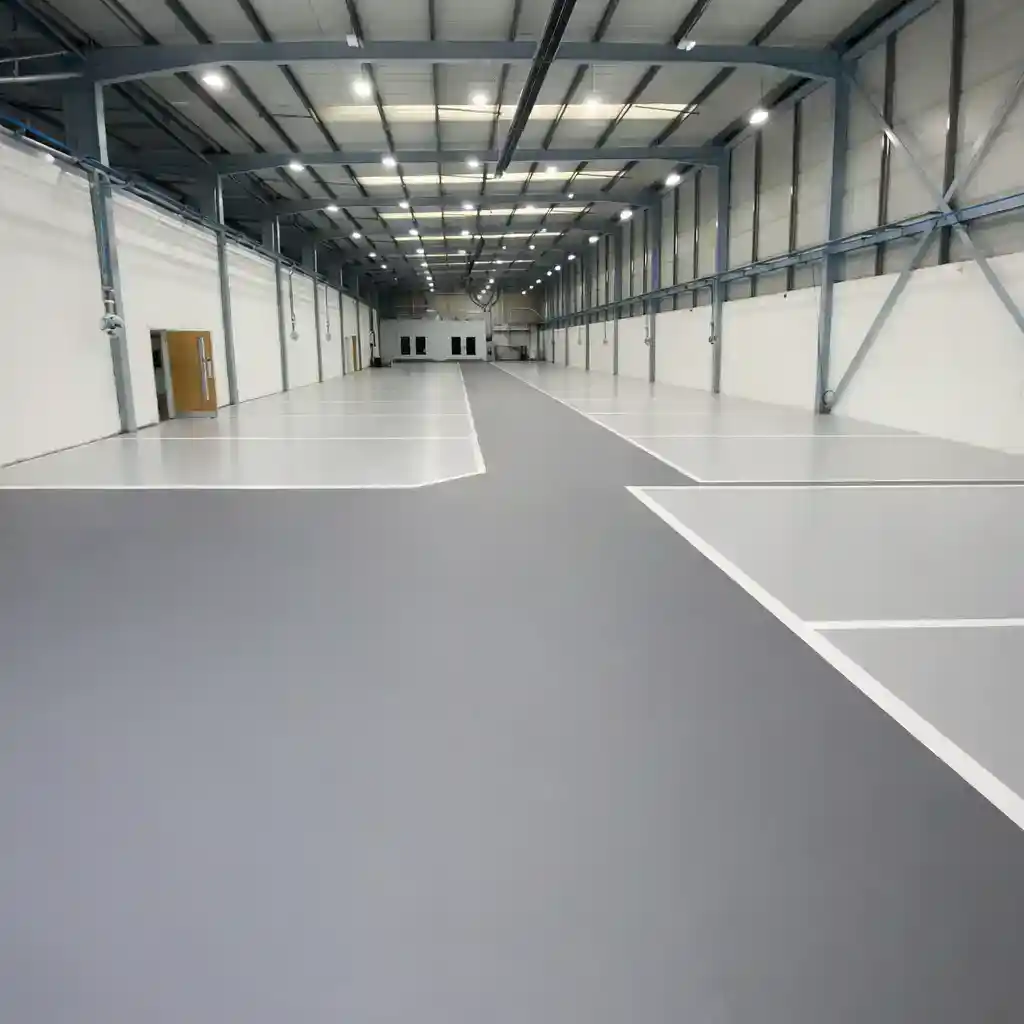
Every resin floor we install, set out side by side with the classification, duty, thickness and cost per square metre. The range runs from a thin seal that stops a sound slab dusting, to a nine millimetre polyurethane screed that survives boiling discharge and steam cleaning. The right one is decided by what the floor carries, what reaches it, and how long you can close.
Figures are indicative and come from our own pricing matrix. Preparation, substrate condition and access all move the final number, which is why every quotation follows a survey.
| System | Class | Duty | Typical thickness | Cost per m² |
|---|---|---|---|---|
| Resin Floor Seal | Type 1 | Light to medium | Up to 150 microns | From £8 |
| Epoxy and PU Coating | Type 2 | Light to medium | Up to 300 microns | £8 – £12 |
| High Build Epoxy | Type 3 | Medium | Up to 1,000 microns | £8 – £12 |
| Multi-Layer Flooring | Type 4 | Medium to heavy | 1 – 3 mm | £12 – £16 |
| Self-Smoothing Resin | Type 5 | Medium to heavy | 2 – 4 mm | £20 – £30 |
| Heavy Duty Flowable | Type 7 | Heavy to very heavy | 4 – 6 mm | £25 – £35 |
| Polyurethane Screed | Type 8 | Heavy to very heavy | 6 – 9 mm | £30 – £40 |
| Polyaspartic | Chemistry | Medium | 300 – 500 microns | From £38 |
| MMA Resin Flooring | Chemistry | Medium to heavy | 2 – 6 mm | From £45 |
| Anti-Slip and ESD | Build-up | Follows the base | Added to Types 3 to 8 | From £12 |

FeRFA Type 1 · Up to 150 microns
Dust-proofs a sound but dusting slab and makes it cleanable.
Full specification →
FeRFA Type 2 · Up to 300 microns
Chemical resistance with a gloss, matt or silk finish.
Full specification →
FeRFA Type 3 · Up to 1,000 microns
The most commonly specified industrial system. Takes colour well.
Full specification →
FeRFA Type 4 · 1 – 3 mm
Aggregate broadcast between coats. Grip built into the floor.
Full specification →
FeRFA Type 5 · 2 – 4 mm
Flow applied, seamless and non-porous. Hygiene-led specification.
Full specification →
FeRFA Type 7 · 4 – 6 mm
Screed-level duty that still flows out to a smooth finish.
Full specification →
FeRFA Type 8 · 6 – 9 mm
Thermal shock, steam cleaning and washdown. Roughly −40°C to +120°C.
Full specification →
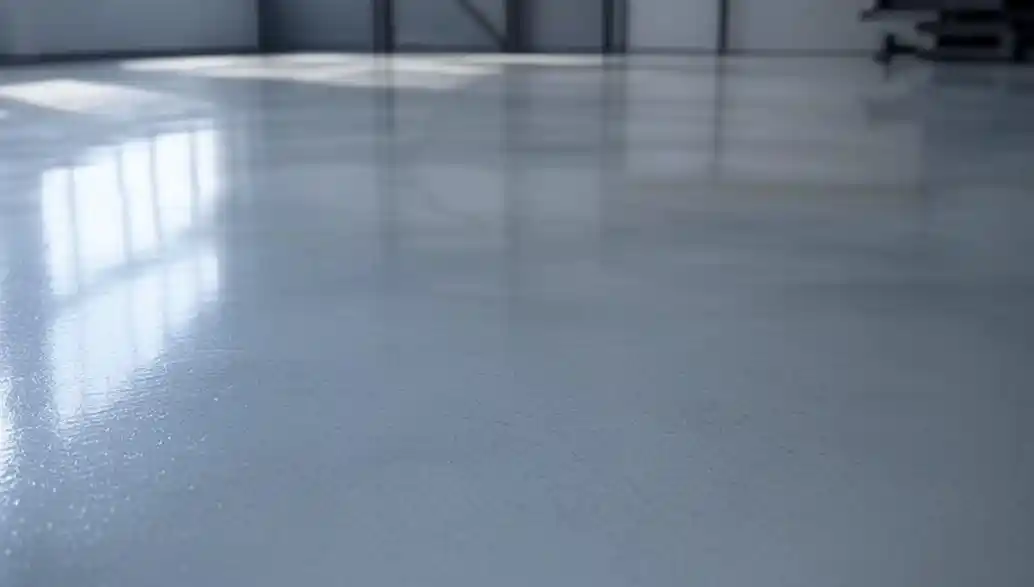
FeRFA Chemistry · 300 – 500 microns
Foot traffic in about two hours. Installs down to −5°C.
Full specification →
FeRFA Chemistry · 2 – 6 mm
Full cure in two to three hours. Sub-zero capable, strong odour.
Full specification →Grip and static control are not systems in their own right. Both are layers added to one of the systems above, available across FeRFA Types 3 to 8, and both are specified against a measured value rather than a word on a datasheet.
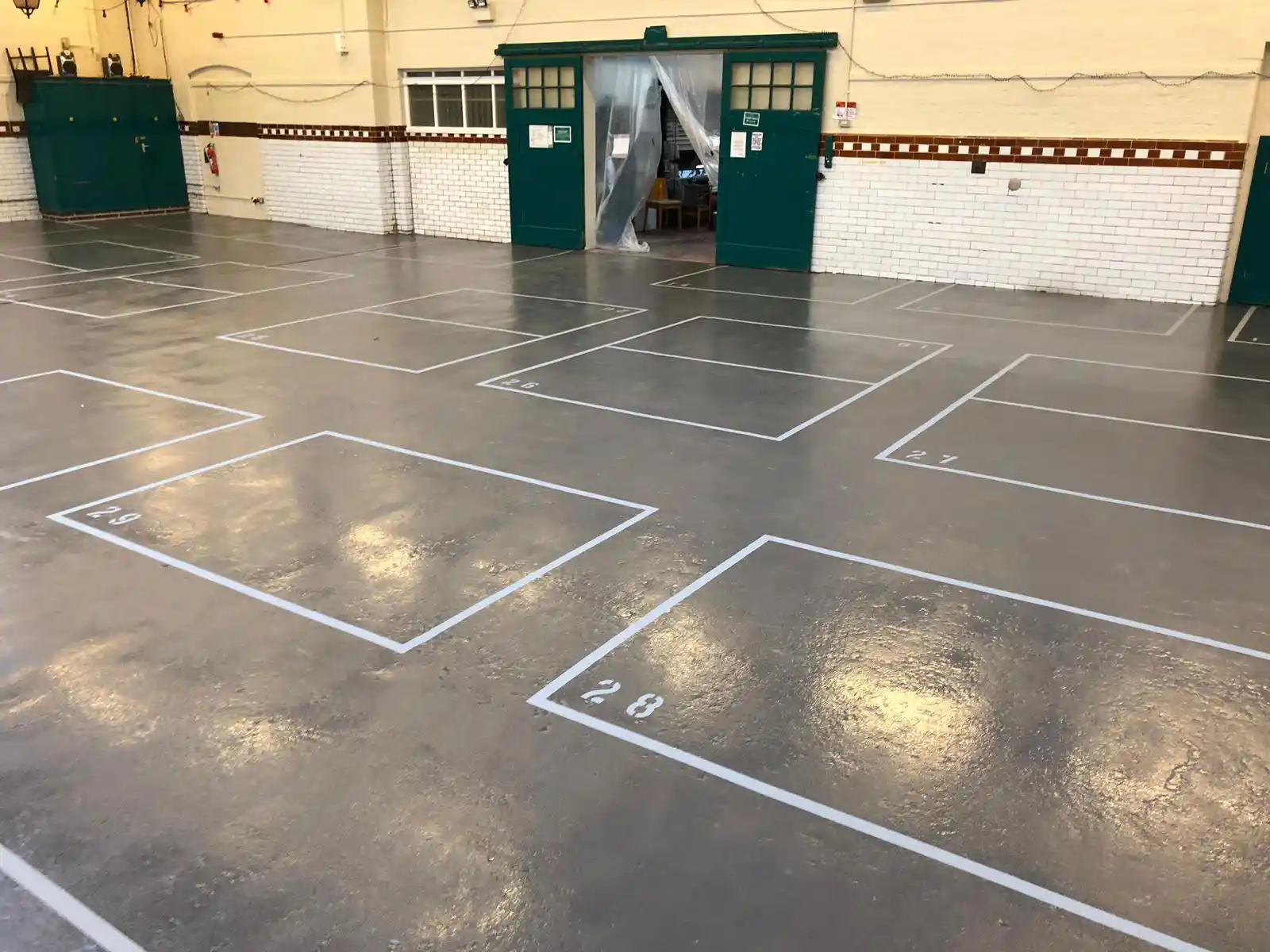
How the build-ups work →Nobody should be choosing a resin floor from a product list. Three readings taken on site narrow ten systems to one or two, and the rest of the specification follows from there.
Forklift traffic, racking baseplates and dropped tooling set the thickness. Duty is the first filter and it rules systems out faster than anything else does.
Heat, water, oils and cleaning chemicals decide the chemistry. A floor that survives abrasion can still be destroyed by a washdown regime.
The hours the floor can be out of service often decides the answer on its own, and it is the reason the fast-cure chemistries exist at all.
FeRFA, aligned to BS 8204-6 classification practice, divides synthetic resin floors into eight types. The types are distinguished primarily by build-up and thickness, running from a Type 1 floor seal at up to 150 microns to a Type 8 heavy duty resin at over 6mm. That is useful shorthand, and it is worth understanding what it does not tell you.
A FeRFA type describes how much floor you are getting, not what it is made of. Two Type 5 floors can be epoxy and polyurethane respectively and behave very differently under heat. Equally, polyaspartic and MMA sit outside the classification altogether, because what they offer is cure speed rather than build. So the type number narrows the field; the chemistry and the exposure decide it.
We attend site, test the substrate for moisture and contamination, and record the traffic, chemicals, temperatures and closure window the floor has to work around. The system comes out of those findings rather than out of a price list.