ESD & anti slip resin systems

Anti-Slip and ESD Build-Ups for Resin Floors

Neither of these is a floor on its own. Grip and static control are build-ups added to a base resin system, and both are specified against a measured value rather than a word on a datasheet. Learn more about how ESD and an anti slip resin system are constructed and what decides the specification. For the service itself, the anti-slip and ESD flooring pages cover scope and pricing.

THE SPECIFICATION AT A GLANCE

Anti-Slip and ESD Build-Ups at a Glance

Anti-Slip and ESD

Slip resistant resin floor coating with broadcast aggregate
Build-upAnti-slip aggregate or conductive ESD layer
Applied toFeRFA Types 3 to 8
DutyFollows the base system
Multi-layer thickness1 to 3 mm
Cost indicatorMulti-layer from £12 to £16 per square metre
Slip standardBS 7976 pendulum testing
Electrical standardEN 1081 surface resistance
THE BUILD-UP, DEFINED

What Anti-Slip and ESD Build-Ups Actually Are

Both are layers within the floor rather than products laid on top of it. That is the difference between a specification that lasts and a coating that wears off the high-traffic lines in a year.

Broadcast, Not Painted On

Aggregate is scattered into the wet coat and locked in by the next one. The grip is structural, built into the floor, rather than a textured product applied over it.

A Build-Up, Not a System

Both are layers added to a base system rather than floors in their own right. ESD is available across FeRFA Types 3 to 8, so the base is chosen first.

ESD Is a Circuit

A conductive layer is laid under the resin and tied into earth points. Without that path to earth the floor dissipates nothing, whatever the material claims.

SPECIFIED RIGHT, AND SPECIFIED WRONG

Where a Build-Up Is the Right Specification

Where It Is the Right Call

Loading bays, ramps and walkways, wet production and washdown areas, workshops with oil on the floor, and electronics or pharmaceutical areas where static has to be dissipated rather than merely reduced.

Where It Is the Wrong Call

Texture is harder to clean. Over-specifying grip in a hygiene area creates a cleaning problem instead of solving a safety one, and carbon in an ESD build-up darkens the colours available to you.

WHAT WE MEASURE BEFORE WE QUOTE

Three Things That Decide the Build-Up

Grip and conductivity are both ranges, not switches. Where a floor lands within those ranges is set on site, by what reaches the surface and how the floor is cleaned.

The Contamination Present

Water, oil, flour and detergent all behave differently underfoot. We specify against what is actually on your floor, not against a generic wet rating.

The Cleaning Regime

Grip and cleanability pull in opposite directions. The texture is set at the point where the floor is safe underfoot and still cleanable by your method.

Earthing and Testing

An ESD floor is only compliant once it is earthed and its resistance measured. The test result is the deliverable, not the material certificate.

MEASURED, NOT ASSERTED

Specified Against a Test, Not a Word

“Anti slip resin system” on its own means nothing. Slip resistance is specified against BS 7976 pendulum testing, carried out with the contamination that is actually present on the floor — water, oil, flour or cleaning chemical — because a surface that performs well dry can fail badly wet. Wet production areas typically call for a textured finish rather than a smooth one, and the right value is the one that matches the risk, not the highest number available.

Static control works the same way. EN 1081 governs surface resistance measurement, and an ESD floor is only doing its job once the conductive layer is tied into earth points and the installed resistance has been measured and recorded. One further practical point worth knowing before colours are chosen: the carbon that makes an ESD system conductive darkens it, so the palette is narrower than for a standard resin floor.

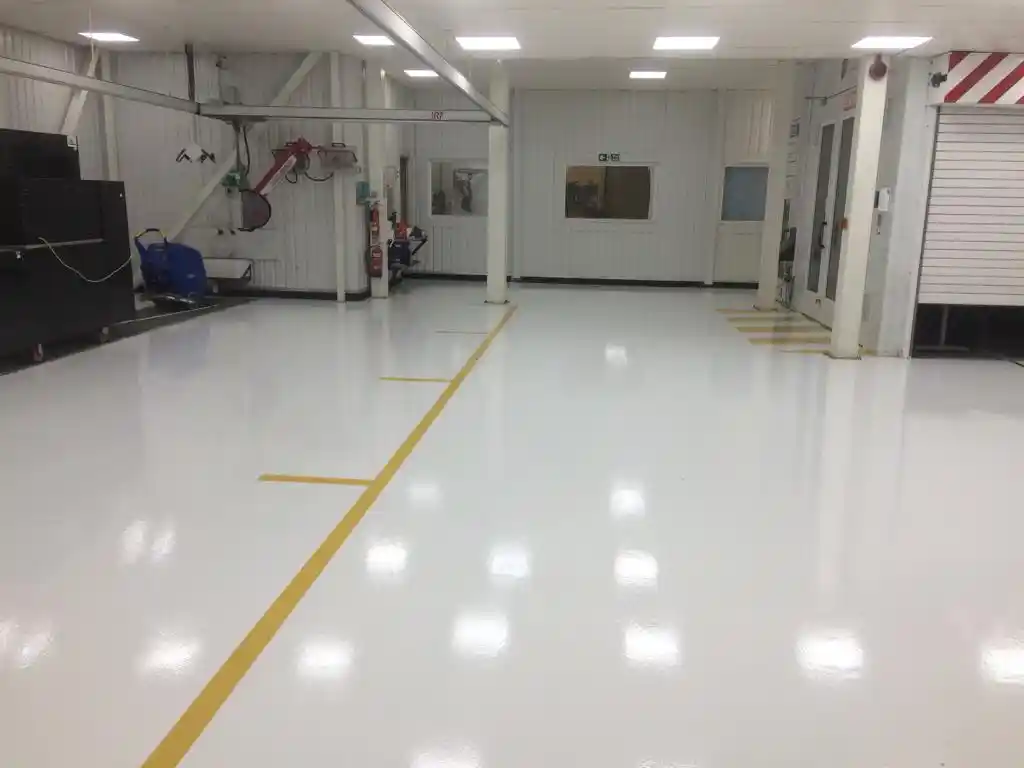
CHOOSE THE BASE SYSTEM FIRST

The Other Resin Flooring Systems We Install

SPECIFY IT FROM THE SUBSTRATE UP

Find Out What Your Floor Actually Needs

We attend site, record what reaches the floor and how it is cleaned, and specify the grip or the conductivity against a measured value. If a build-up is not what your floor needs, we will tell you so rather than add a layer you will have to live with..