PU Screed Flooring: Thickness, Falls and Coving
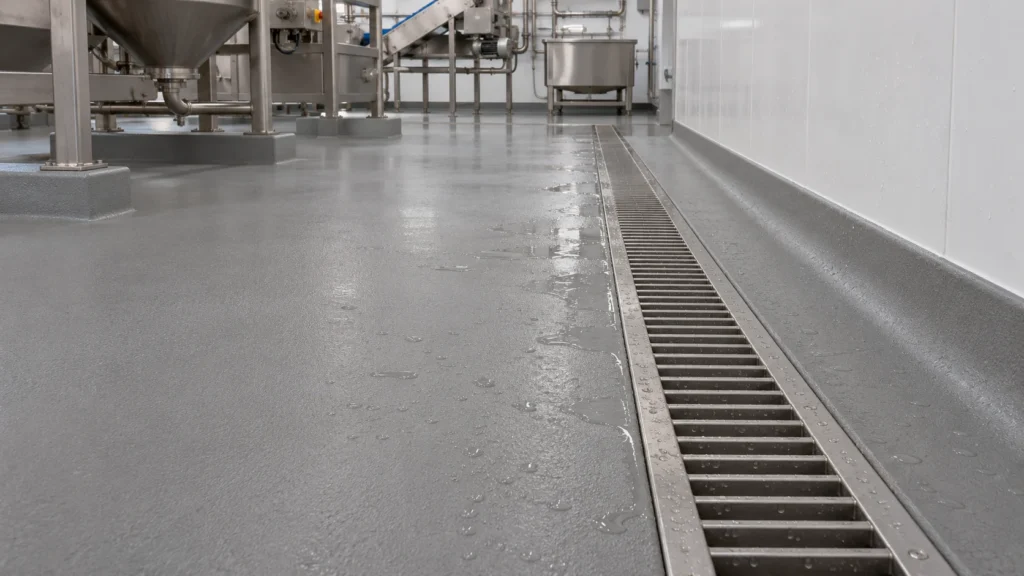
PU Screed Flooring: Thickness, Falls and Coving Heavy processing environments punish floors. Mechanical abuse, chemical contact and daily washdown break down ordinary concrete within a few seasons. Facilities managers specify PU screed flooring to secure an impervious, hard-wearing surface across food factories, chemical plants and commercial kitchens. These three-part systems blend polyurethane resin, water and […]
Polyurethane Floor Coating: Chemical and UV Resistance
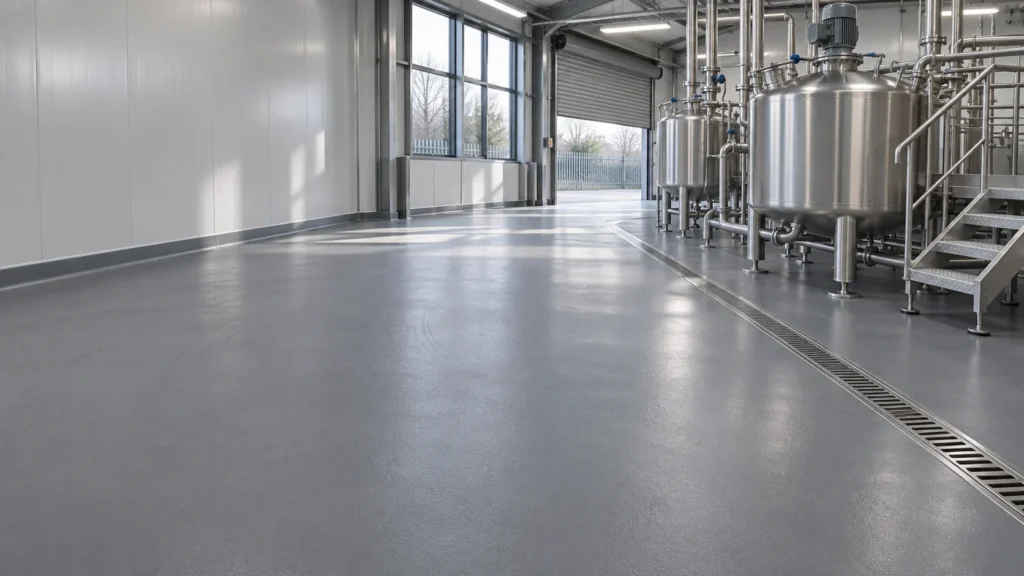
Polyurethane Floor Coating: Chemical and UV Resistance A polyurethane floor coating earns its place where movement, sunlight and organic chemistry defeat other resins. Standard epoxy systems deliver hardness and compressive strength for dry warehousing. Polyurethane chemistries deliver elasticity and ultraviolet stability instead. That difference decides whether a floor survives five years of production or fails […]
Pumped Screed or Self-Smoothing Resin: How to Choose
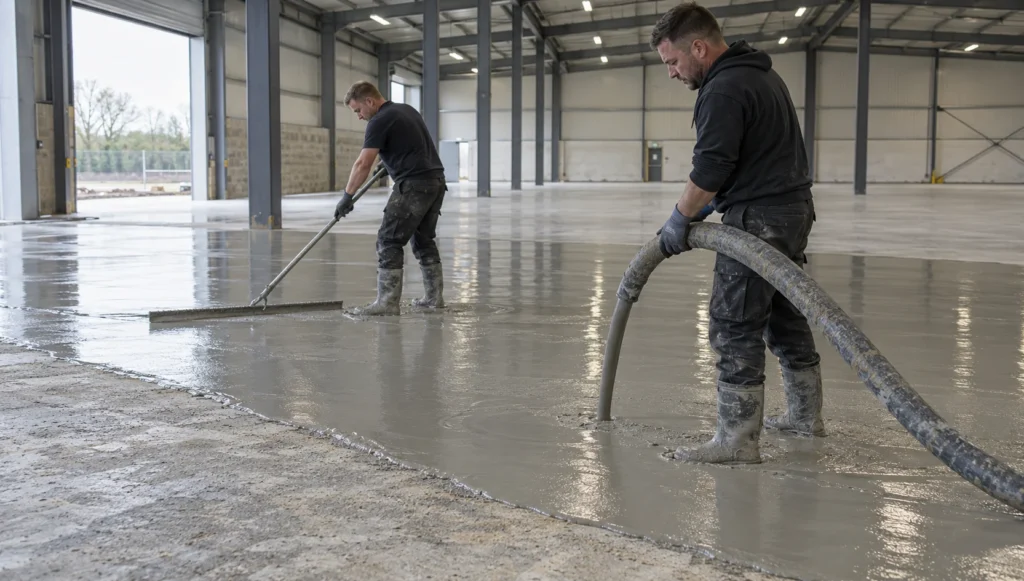
Pumped Screed or Self-Smoothing Resin: How to Choose Specifiers often debate whether to select a pumped screed or self-smoothing resin, treating the two as competing options on site. They are not alternatives. They are two different layers doing two different jobs. The pumped screed is a cement-based levelling layer. The self-smoothing resin is the functional […]
Static Dissipative Flooring and EN 1081 Testing
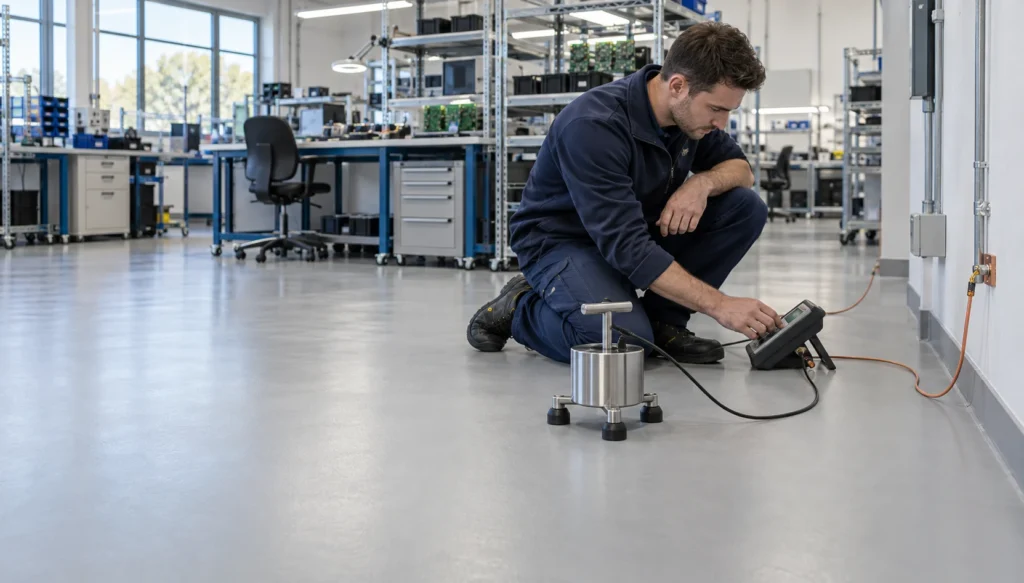
Static Dissipative Flooring and EN 1081 Testing Static dissipative flooring is an electrical component, not a decorative finish. In plants handling microelectronics, solvents or fine powders, an uncontrolled spark carries real cost. A correctly engineered resin system bleeds charge across its matrix and into an earthing network. Specifiers must balance that electrical performance against mechanical […]
BS 8204-6 Explained for Resin Flooring Specifiers

BS 8204-6 Explained for Resin Flooring Specifiers Getting BS 8204-6 explained matters to every specifier, architect and main contractor delivering an industrial or commercial finish. This code of practice governs synthetic resin floorings applied to in-situ bases. It sets benchmarks for substrate soundness, preparation, surface regularity and testing. Adherence decides whether a floor survives heavy […]
FeRFA Classification: Resin Floor Types Explained
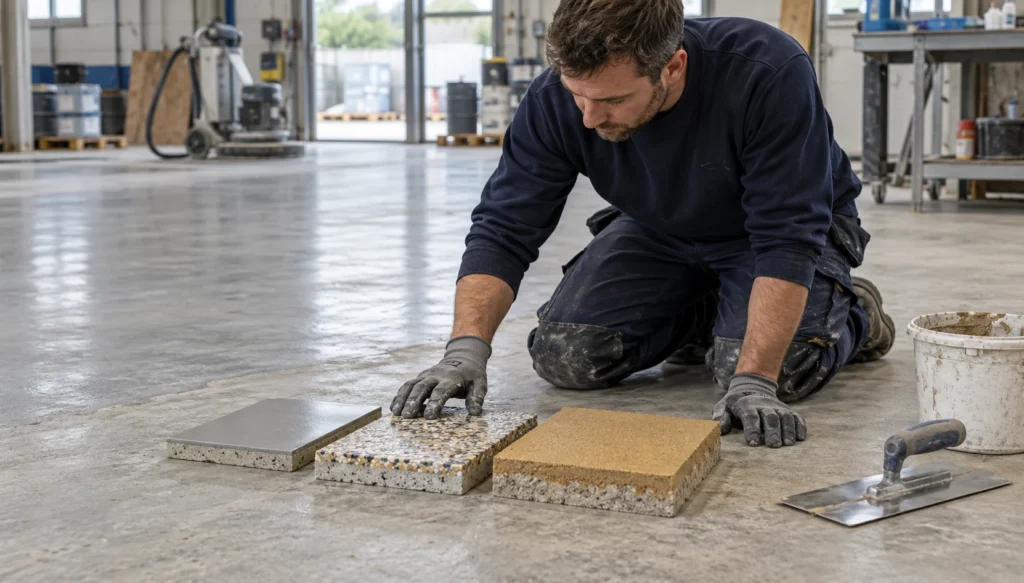
FeRFA Classification: Resin Floor Types Explained Specifying industrial flooring requires a clear framework to match mechanical performance against operational demands. The FeRFA classification provides this structure across the UK construction sector. It sorts synthetic resin formulations into eight distinct types. The system therefore removes a common source of specification error. Aligned with British Standard BS […]
Which Resin Floor Do I Need? A Selection Guide
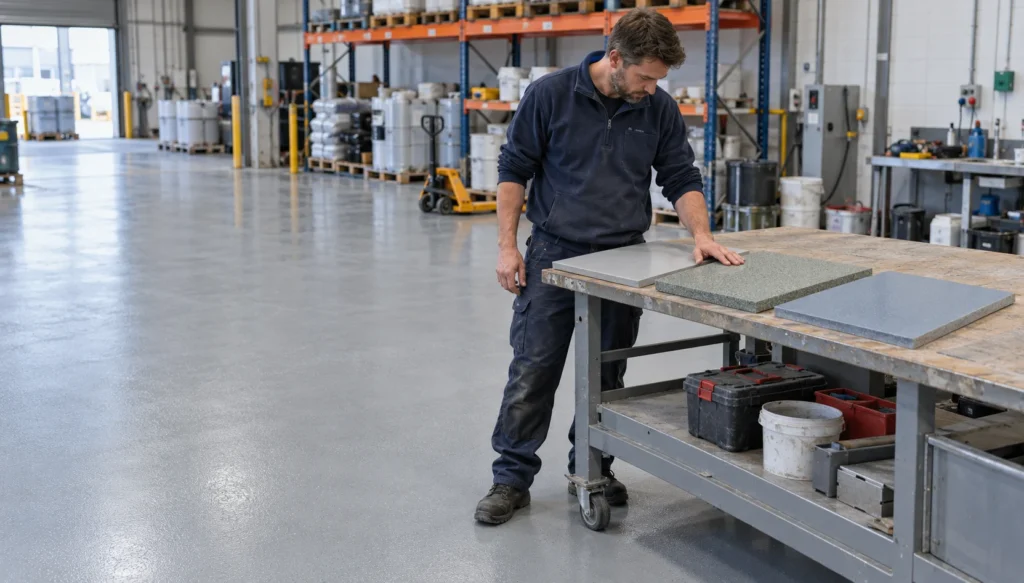
Which Resin Floor Do I Need? A Selection Guide Specifying a commercial or industrial floor finish means matching mechanical demands against downtime and budget. Facility managers regularly ask which resin floor do I need when faced with dusting concrete, erosion or heavy forklift traffic. The answer rests on exposure conditions, not decorative preference. Resin formulations […]
Epoxy vs Polyurethane: Choosing Resin Floor Types

Epoxy vs Polyurethane: Choosing Resin Floor Types The epoxy vs polyurethane decision sets the service life of an industrial floor. Match the chemistry to the site and the floor lasts. Get it wrong and the result is delamination, cracking or chemical attack within months. Facility managers carry that cost directly. Both chemistries cure to a […]