Static Dissipative Flooring and EN 1081 Testing
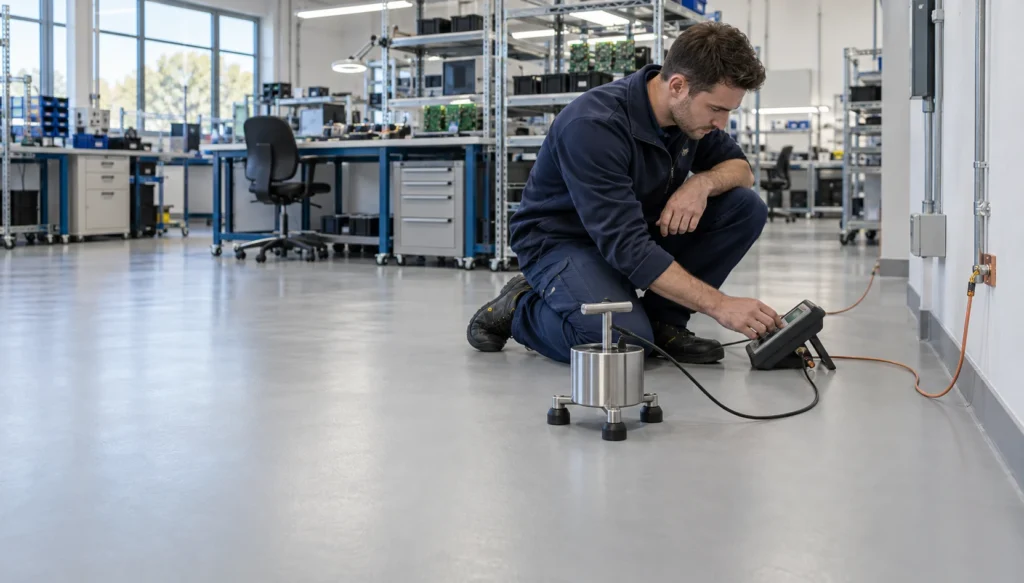
Static Dissipative Flooring and EN 1081 Testing Static dissipative flooring is an electrical component, not a decorative finish. In plants handling microelectronics, solvents or fine powders, an uncontrolled spark carries real cost. A correctly engineered resin system bleeds charge across its matrix and into an earthing network. Specifiers must balance that electrical performance against mechanical […]
Pendulum Slip Test Rating and Slip Resistance
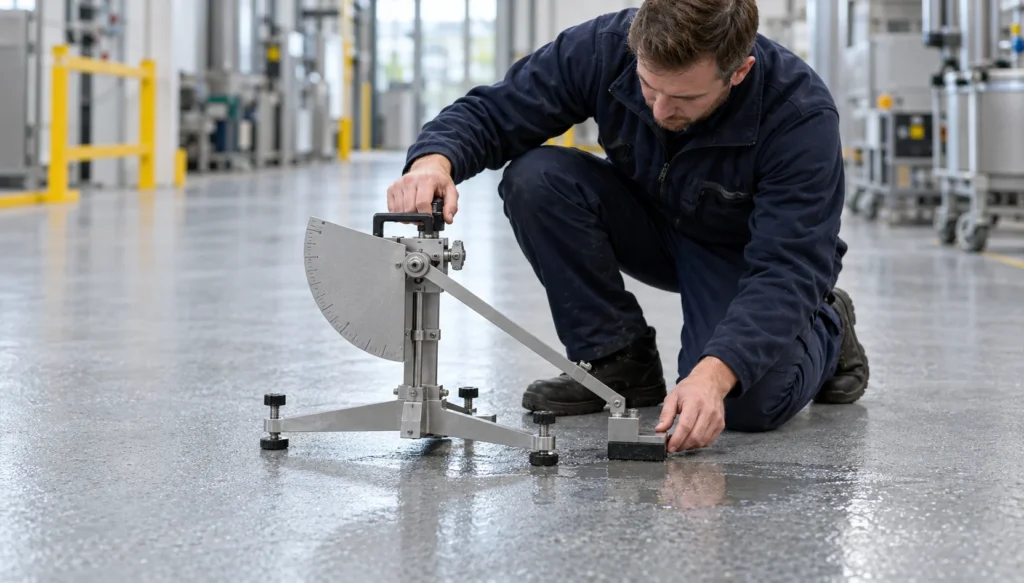
Pendulum Slip Test Rating and Slip Resistance Specifying workplace safety requires verified data rather than marketing assertions. A certified pendulum slip test rating provides the definitive benchmark for traction on pedestrian surfaces across the UK. By evaluating dynamic friction under actual working conditions, this assessment helps facility managers determine true slip potential before incidents take […]
COSHH Assessment for Flooring and CDM Duties
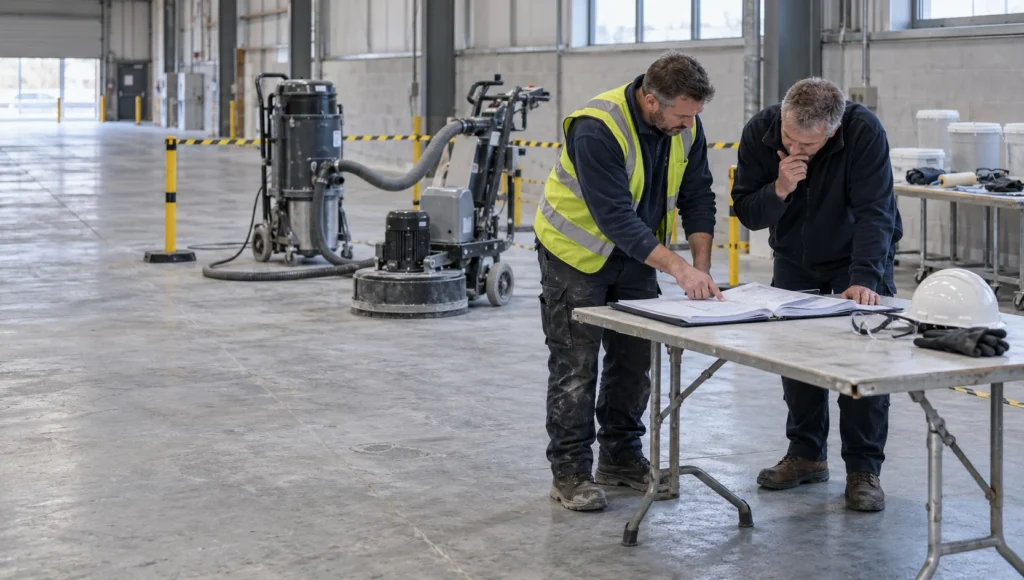
COSHH Assessment for Flooring and CDM Duties Before resin installation begins, facilities managers must evaluate contractor documentation to ensure statutory compliance. Securing a COSHH assessment for flooring is an essential step under the Control of Substances Hazardous to Health Regulations 2002. This documentation identifies risks from chemical components, hazardous primers, and airborne particulates. Reviewing these […]
BS 8204-6 Explained for Resin Flooring Specifiers

BS 8204-6 Explained for Resin Flooring Specifiers Getting BS 8204-6 explained matters to every specifier, architect and main contractor delivering an industrial or commercial finish. This code of practice governs synthetic resin floorings applied to in-situ bases. It sets benchmarks for substrate soundness, preparation, surface regularity and testing. Adherence decides whether a floor survives heavy […]
FeRFA Classification: Resin Floor Types Explained
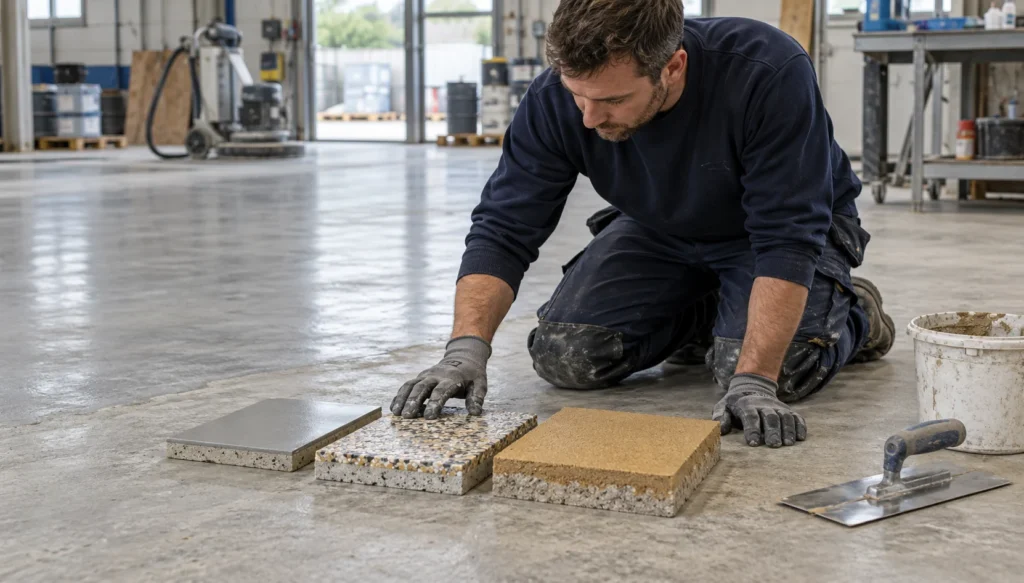
FeRFA Classification: Resin Floor Types Explained Specifying industrial flooring requires a clear framework to match mechanical performance against operational demands. The FeRFA classification provides this structure across the UK construction sector. It sorts synthetic resin formulations into eight distinct types. The system therefore removes a common source of specification error. Aligned with British Standard BS […]
5S Floor Marking and Workplace Zoning Colours
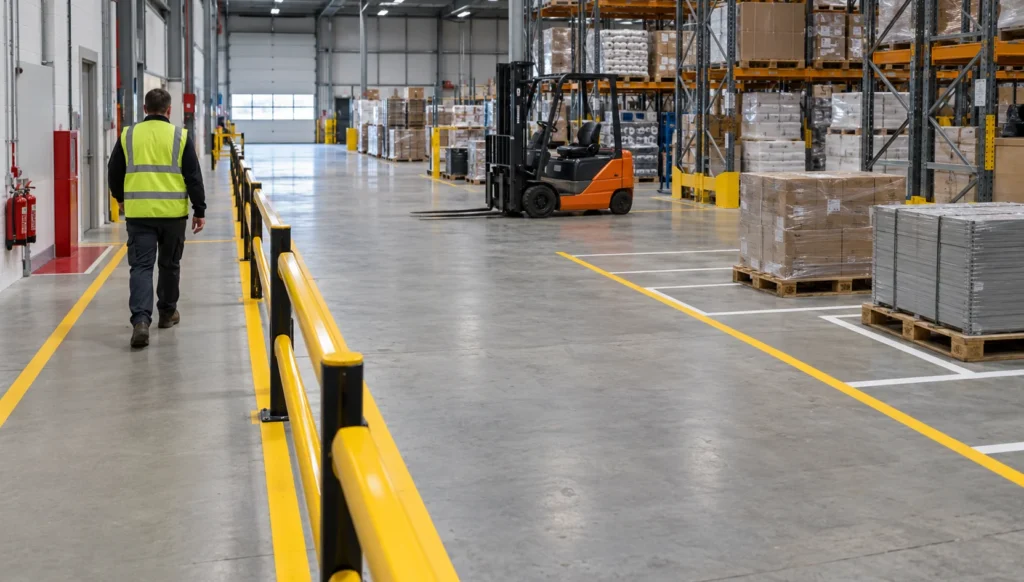
5S Floor Marking and Workplace Zoning Colours Structured 5S floor marking turns a cluttered industrial space into an ordered, auditable working environment. Painted boundaries tell every operative where to walk, where to drive and where stock belongs. Hard-wearing resin lines hold that information in place. Basic tapes and single-pack paints do not. The difference shows […]
Choosing a Flooring Contractor: What to Check
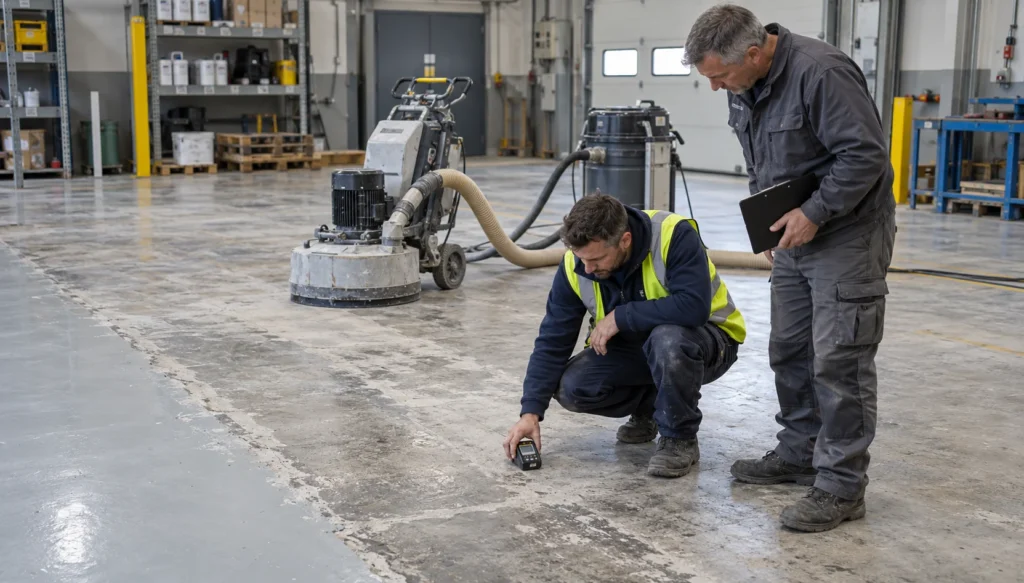
Choosing a Flooring Contractor: What to Check When choosing a flooring contractor for an industrial or commercial facility, technical competence matters far more than salesmanship. Installing high-performance resin is an exacting chemical process. Substrate preparation, environmental controls, and product selection determine long-term durability. A failed floor causes expensive operational disruption, inventory damage, and serious safety […]
Commercial Kitchen Flooring and Restaurant Floors
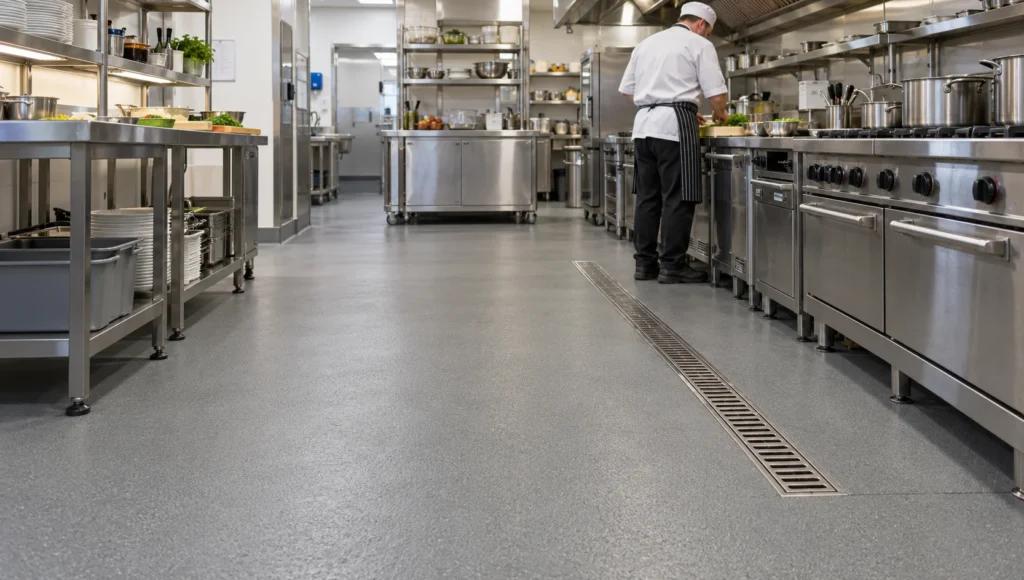
Commercial Kitchen Flooring and Restaurant Floors Specifying commercial kitchen flooring means balancing thermal shock, hot oils, aggressive cleaning and constant foot traffic. In catering and hospitality environments, a floor failure threatens hygiene standards and staff safety. It also puts statutory compliance at risk. The correct resin formulation protects the concrete substrate from chemical attack. It […]
Which Resin Floor Do I Need? A Selection Guide
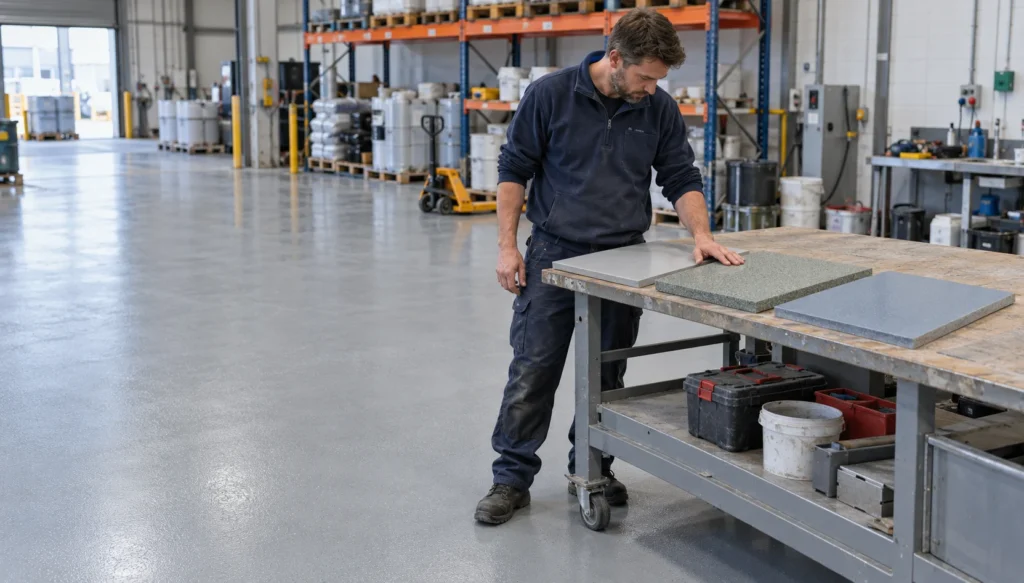
Which Resin Floor Do I Need? A Selection Guide Specifying a commercial or industrial floor finish means matching mechanical demands against downtime and budget. Facility managers regularly ask which resin floor do I need when faced with dusting concrete, erosion or heavy forklift traffic. The answer rests on exposure conditions, not decorative preference. Resin formulations […]
Chemical Resistant Flooring and Floor Coatings
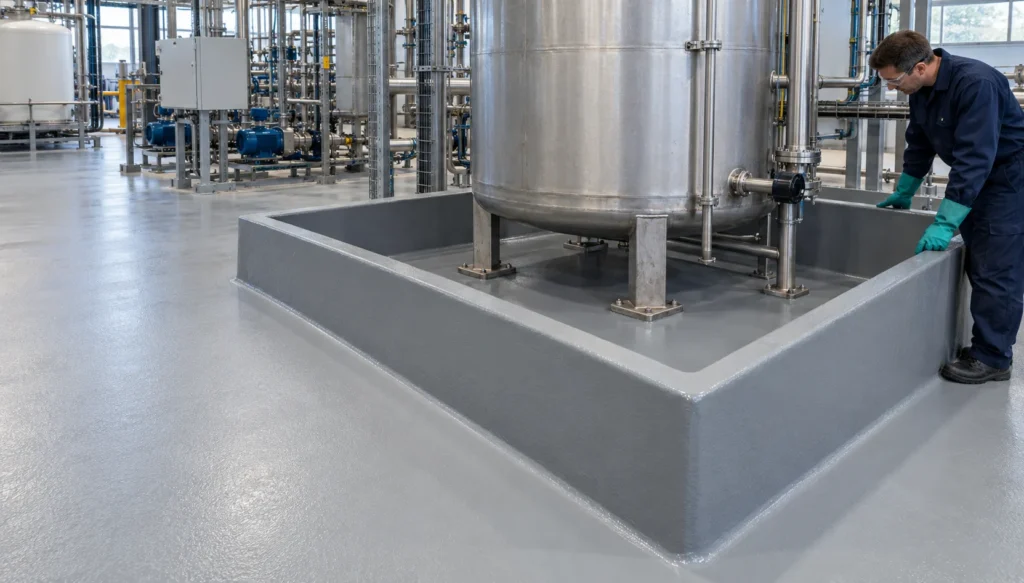
Chemical Resistant Flooring and Floor Coatings Specifying chemical resistant flooring demands a precise match between resin chemistry and the substance inventory on site. Many facilities assume a generic industrial finish will hold. Thin films then blister, soften and lift within weeks of an accidental release. Industrial plants handle aggressive reagents, thermal washdowns and constant traffic. […]