Pharmaceutical Flooring for GMP Production Areas
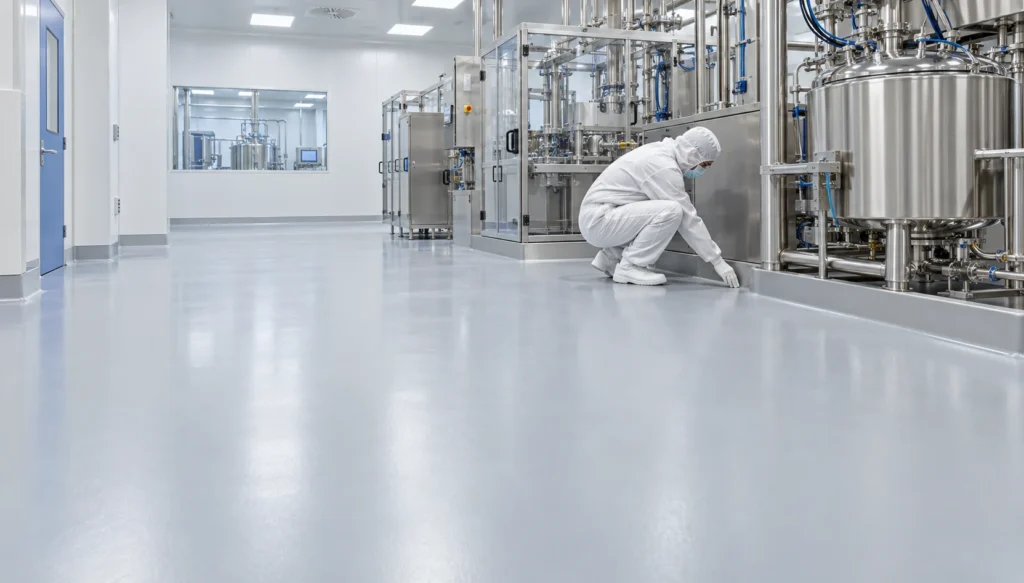
Pharmaceutical production facilities require rigorous environmental control to protect products from microbiological and particulate contamination. Selecting the correct pharmaceutical flooring is essential for maintaining process integrity, managing bioburden, and satisfying stringent regulatory frameworks. Facilities must resist aggressive sanitisation regimes, withstand harsh processing chemicals, and maintain continuous mechanical durability without flaking or dusting. Specifying an appropriate seamless resin system ensures cleanrooms meet statutory hygiene benchmarks whilst supporting smooth operational workflows across all cleanroom grades.
Modern cleanroom environments cannot tolerate surface cracks, porous grout lines, or prolonged maintenance shutdowns that disrupt batch schedules. Production managers must balance rapid return-to-service requirements against the need for durable chemical resistance and validated cleanability. How can manufacturing teams specify and install durable surfaces that maintain strict compliance standards whilst minimising facility downtime during scheduled maintenance intervals?
Key Takeaways
- Cleanroom environments require seamless synthetic resin surfaces to eliminate particulate accumulation, bacterial harbourage, and joint degradation across primary production suites and sterile packaging cleanrooms.
- Meeting GMP expectations under Annex 1 demands smooth, non-porous finishes capable of withstanding aggressive daily spillage from alcohols, hydrogen peroxide vapour, and caustic detergents.
- Forming integral coved skirting at wall junctions creates an easily sanitised tub structure, eliminating crevices where organic residues and cleaning agents might otherwise collect.
- Substrate preparation requires mechanical diamond grinding with HEPA dust extraction to ensure reliable adhesion without contaminating sensitive air handling systems in operational pharmaceutical environments.
- Fast-curing polyaspartic and specialised polyurethane systems allow pharmaceutical facilities to execute planned refurbishments within narrow scheduled shutdown windows without sacrificing chemical tolerance.
Performance Specifications for Cleanroom Surfaces
Specifying resin systems for life sciences facilities requires balancing mechanical durability with strict chemical tolerance. Robust hygienic resin flooring provides a dependable, seamless barrier against contamination across production rooms. The surface finish must support aggressive cleaning protocols without degrading or releasing airborne particulates into controlled environments.
Different operational areas within a facility impose distinct physical and environmental demands on the floor. Whereas primary synthesis suites require resilience against aggressive process solvents, secondary packaging lines prioritise wear resistance against heavy trolley traffic. Matching the FeRFA system type to the specific room function ensures dependable performance throughout the facility lifecycle.
| System Type | Build-up Thickness | Target Application | Cleanability and Resistance |
|---|---|---|---|
| FeRFA Type 5 Self-Smoothing Epoxy | 2 mm to 4 mm | Grade A/B Cleanrooms | Exceptional resistance to spilt alcohol and sterilants |
| FeRFA Type 7 Heavy Duty Flowable | 4 mm to 6 mm | Formulation and Synthesis Suites | High impact resistance and heavy trolley wheel tolerance |
| FeRFA Type 8 Polyurethane Screed | 6 mm to 9 mm | Washdown and CIP Suites | Withstands thermal shock and hot caustic sanitisation |
| Polyaspartic Coating | 300 to 500 microns | Packaging and Airlocks | Rapid cure within hours for short maintenance shutdowns |

Regulatory Requirements for Cleanroom Surface Finishes
Surface Smoothness Under Revised Annex 1
The revised GMP Annex 1 requires cleanroom finishes to remain smooth, unbroken, and impervious to liquid ingress. These surface characteristics prevent particle shedding and eliminate micro-environmental niches where viable microorganisms might settle. Unbroken resin finishes allow sanitising agents to contact all contaminants evenly during routine decontamination cycles.
Compliance auditors evaluate whether surface finishes permit validated cleaning regimes without retaining residue. Floors in Grade A and Grade B cleanrooms must possess zero porosity. This prevents biological organisms from finding shelter below the surface. A flow-applied self-smoothing epoxy or polyurethane screed creates an uninterrupted finish meeting the surface standards outlined in the MHRA Orange Guide.
Validation Documentation and Audit Readiness
Maintaining an audit-ready state in regulated pharmaceutical manufacturing requires comprehensive validation documentation for every installed surface. Facility managers must supply material conformity declarations, testing data, and technical specifications during regulatory inspections. These records prove that the installed floor finishes resist specified cleaning protocols and do not shed particulates into clean spaces.
Any floor replacement inside a validated pharmaceutical space represents a formal change control event. Specifiers must log chemical exposure data, resin cure characteristics, and slip resistance test values within the facility safety file. Independent verification tests, carried out following complete resin cure, confirm that the floor satisfies documented quality protocols before production resumes.
Seamless Detailing and Contamination Prevention
Grout Lines and Traditional Joint Failure
Traditional tiled finishes introduce grout lines that inevitably degrade under constant chemical attack and mechanical stress. These porous recesses collect process moisture, harbour bacterial colonies, and resist effective sanitisation during washdown cycles. Seamless resin systems replace vulnerable joint networks with continuous, non-porous finishes that maintain hygiene integrity under rigorous cleaning.
Even minor hairline gaps in tile grout can allow liquids to seep into the concrete substrate beneath. Once trapped, chemical contaminants ferment or degrade the adhesive bond, causing tile tenting and debonding. In contrast, seamless synthetic resin bonds monolithically to the prepared substrate. This completely eliminates weak points where microbial bioburden might multiply unchecked.
Integral Coved Skirting and Wall Junctions
Forming integral coved skirting creates a smooth, curved radius between the floor surface and cleanroom walls. This eliminates sharp ninety-degree floor-to-wall junctions where dirt, moisture, and chemical residues naturally accumulate. The resulting basin profile allows washdown fluids and sterilising foams to drain efficiently toward designated collection outlets.
Qualified resin installers construct coving up to a defined height using identical resin formulations to maintain uniform chemical resistance. Plinths beneath reaction vessels and support columns receive similar detailing to ensure no hidden crevices exist around structural penetrations. This detailing ensures that automated floor scrubbers and manual mops reach all surface perimeters without leaving unsanitised margins.
Did You Know?
The revised GMP Annex 1 for sterile medicinal products, in operation since 25 August 2023, requires surfaces in clean areas to be smooth, impervious and unbroken so that they neither shed nor accumulate particles and can take repeated cleaning and disinfection.
Chemical and Solvent Spillage Resistance
Resilience Against Cleaning Agents and Sterilants
Routine sanitisation protocols in sterile manufacturing areas deploy aggressive chemical rotations to eliminate resistant microbial strains. Standard cleaning regimes use concentrated sodium hypochlorite, peracetic acid, and hydrogen peroxide vapour to achieve sterility. The protective resin matrix must withstand repeated exposure to these active agents without softening, bleaching, or micro-crazing over time.
Chemical exposure accelerates when cleaning agents remain on warm floors or dry by evaporation. When specifiers build an exposure schedule, they evaluate active ingredient concentrations and typical contact times. Selecting FeRFA Type 5 or Type 7 systems provides high chemical tolerance. This ensures the resin matrix retains its glossy, non-absorbent qualities through years of intense sanitisation.
Protection Against Active Pharmaceutical Solvents
Bulk chemical synthesis and active ingredient processing suites frequently expose floors to concentrated industrial solvents. Solvents such as acetone, isopropyl alcohol, methanol, and toluene can soften conventional floor coatings upon prolonged contact. Formulating chemical-resistant polyurethane or specialised novolac epoxy toppings shields the underlying substrate from aggressive solvent degradation.
When formulating an operational suite, engineers must log all anticipated solvent spillage scenarios. Accidental drips beneath dispensing hoods or filling nozzles can pool unnoticed beneath machinery covers. High-performance resin screeds provide an impermeable barrier. Plant operators can neutralise and collect chemical spills safely without risking substrate penetration or environmental discharge.

Need a Resin Flooring Site Visit and Quote?
Thermal Stress and Cleaning Regimes
Polyurethane Screeds for Thermal Shock Resistance
Clean-in-place steam washdowns and boiling discharge liquids subject pharmaceutical floors to rapid, extreme temperature differentials. Rigid epoxy chemistries expand at different rates than the underlying substrate, which can cause severe cracking and delamination. Flexible polyurethane resin screeds accommodate dramatic thermal swings from sub-zero conditions up to 120°C without blistering.
Pharmaceutical plants that operate steam sanitisation hoses require FeRFA Type 8 polyurethane screeds installed at six to nine millimetres. This thickness disperses heat loads across the floor profile, preventing local thermal distortion. In the UK, installers should check the safety data sheet and product label before use. Where a product contains 0.1 percent or more diisocyanates, professional and industrial users must have completed the required diisocyanate training. Refresher training is required at least every five years.
Drainage Falls and Standing Water Elimination
Designing positive drainage falls of 1:80 to 1:100 prevents liquid pooling in washdown bays and process rooms. Standing water creates serious microbial incubation hazards and elevates slip risks for cleanroom personnel walking in smooth footwear. Installing trowel-applied polyurethane screeds allows contractors to contour falls directly toward stainless steel drain gullies.
Annex 1 prohibits sinks and drains in Grade A and Grade B areas altogether. In lower-grade cleanrooms, floor drains must carry traps or water seals that prevent back flow, with air breaks fitted between equipment and the drainage run. Correctly profiled resin screeds direct washdown effluent into those sealed gullies swiftly, leaving the surface dry and ready for subsequent production cycles.
Case Studies
Our case studies cover – Printing & Packaging, Warehousing & Logistics, Pharma & Healthcare, Automotive & Engineering, Aviation & Aerospace, Food & Drink, Printing & Packaging, Warehousing & Logistics, Pharma & Healthcare
Static Control in Cleanroom Environments
Electrostatic Discharge Standards for Processing Rooms
Static charge accumulation poses severe threats in cleanrooms handling combustible solvent vapours or dry powdered excipients. Uncontrolled discharges can ignite airborne dust or damage sensitive instrumentation used on production lines. Anti-static pharmaceutical flooring maintains electrical resistance to ground below 10⁹ ohms to dissipate static charges safely into building earthing systems.
Under BS EN 61340-5-1, electrostatic protected areas must manage personal body voltage generation to less than 100 volts. Installers incorporate carbon fibres or conductive undercoats beneath the resin body coat to form an electrical path. Connecting conductive copper earthing strips directly to verified plant earthing terminals guarantees that static charges bleed off safely without sparking.
ESD Systems and Cleanroom Footwear Protocols
Achieving true electrostatic protection requires combining conductive resin flooring with verified anti-static cleanroom footwear. Standard operators wearing insulating overshoes break the conductive pathway, rendering even certified dissipative floors ineffective. Facilities must audit the combined resistance of personnel, footwear, and the floor system periodically to maintain continuous electrostatic process safety.
Cleaning chemicals and maintenance waxes can deposit microscopic insulating films over dissipative floors, leading to failed compliance tests. Specifiers must mandate specialist cleaning detergents that leave zero non-conductive residue. Regular resistance testing in accordance with EN 1081 protocols ensures that static dissipation characteristics remain within operational parameters across every shift.
“JD Flooring did an excellent job installing a resin floor in our food production facility. The floor is durable, hygienic, and meets all safety regulations. The team was knowledgeable and professional, and the project was completed within the agreed-upon timeframe. I highly recommend JD Flooring for food industry flooring needs.”
Alex Martinez
Mechanical Preparation and Substrate Integrity
Diamond Grinding and Contamination Removal
Long-term resin adhesion relies on thorough mechanical preparation to eliminate weak surface laitance and existing contaminants. Captive diamond grinding mechanically abrades the concrete substrate, creating a clean, open-pored profile for primer penetration. All preparation machinery must incorporate industrial HEPA-filtered vacuum extraction to prevent fine silica dust from contaminating cleanroom ventilation systems.
Concrete dust contains respirable crystalline silica. The IARC classifies respirable crystalline silica from occupational sources as a Group 1 carcinogen. Under COSHH, the workplace exposure limit published in EH40/2005 is 0.1 mg/m³ as an eight-hour time-weighted average. Uncontrolled dust can also infiltrate HEPA terminal filters and ruin cleanroom classification ratings. Enclosed diamond grinding captures particulates at the tool interface, protecting worker respiratory health and sensitive production facilities.
Substrate Moisture Control and Liquid DPMs
Trapped moisture beneath an impermeable cleanroom floor creates vapour pressure that can cause destructive osmotic blistering. Standard epoxy finishes cannot tolerate substrate relative humidity levels exceeding 75 to 80 percent without failing prematurely. Installing a specialised two-coat epoxy liquid damp proof membrane suppresses residual construction moisture up to 98 percent relative humidity.
Qualified installation contractors measure substrate relative humidity using calibrated hygrometer boxes before applying primers. If moisture levels exceed safe thresholds, the damp proof membrane forms an impervious moisture barrier that shields subsequent resin screeds. This critical preparation step ensures seamless floor systems remain firmly bonded throughout decades of intensive facility operations.
Calculate The True Cost
A three day shutdown at a plant turning over £2,000 an hour is £120,000 of lost output. On most sites that is several times the cost of the new resin floor installation. We have developed our own free custom calculator top help you calculate the true cost and a new resin floor.
Installation Sequencing and Shutdown Windows
Phased Works Within Controlled Shutdown Intervals
Pharmaceutical production suites run on demanding operational schedules where unprogrammed downtime incurs significant commercial losses. Refurbishing floor finishes usually requires coordination during planned annual shutdown windows or holiday changeover periods. Phased installation programmes allow contractors to treat individual production suites or airlocks sequentially whilst preserving climate control in adjacent rooms.
Working inside an active manufacturing facility requires strict zoning, airlocks, and negative pressure isolation tents. Contractors must submit comprehensive risk assessments and method statements detailing air handling protection and personnel movement routes. Phased handovers ensure air balancing and cleanroom validation testing proceed progressively without causing bottlenecks across the wider facility.
Fast-Cure Chemistries for Accelerated Return to Service
Rapid-curing resin chemistries allow facilities teams to compress flooring installations into tight maintenance timeframes. Advanced polyaspartic coatings cure rapidly, accepting light foot traffic in approximately two hours and reaching full mechanical cure within twenty-four hours. This dramatic speed enables facilities to complete vital floor recoating work over standard weekend shutdowns.
Although standard epoxy systems require two to five days to achieve full cure, fast-curing chemistries drastically reduce facility downtime. However, contractors must exercise caution with methyl methacrylate resins due to their strong odour, which can taint production goods. Fast-curing polyaspartics offer rapid turnaround without the severe odour complications associated with acrylic systems.
Final Thoughts
Selecting the ideal pharmaceutical flooring involves aligning cleanroom regulatory demands with mechanical, thermal, and chemical performance requirements. A properly specified resin floor creates a seamless, durable barrier. This simplifies sanitisation protocols, controls particulate generation, and protects the building substrate from severe processing damage.
As life sciences manufacturing advances, facilities will face increasingly stringent hygiene audits and tighter environmental controls. Investing in high-performance resin technology backed by rigorous substrate preparation delivers long-term durability. It ensures that production suites remain fully compliant, durable, and cleanable throughout decades of continuous pharmaceutical manufacturing.
Arrange a Free Site Survey
If you are thinking about upgrading the flooring in your commercial or industrial space then we would love to hear from you. Our team of experts will conduct a free onsite survey and then guide you through the process of product selection and project planning, whilst remaining mindful of your budgetary restraints.
Frequently Asked Questions
A:
Cleanroom floors must be completely seamless, non-porous, and resistant to particle shedding to satisfy regulatory hygiene standards. Under revised GMP Annex 1 guidelines, cleanroom surfaces must remain unbroken and smooth to facilitate thorough disinfection and prevent microbial harbourage. Synthetic resin systems achieve these performance criteria by creating an impervious surface that bonds monolithically to the substrate. Furthermore, incorporating integral coved skirting eliminates right-angled floor-to-wall junctions, allowing sanitising detergents to reach every perimeter margin effectively during routine cleanroom cleaning schedules.
A:
Floors themselves do not hold official GMP certification because Good Manufacturing Practice certifications apply to entire production facilities and operational systems rather than individual construction materials. Instead, contractors install GMP compliant resin flooring systems that are specifically engineered to meet statutory cleanroom surface criteria. These seamless epoxy and polyurethane screeds satisfy the cleanability, non-shedding, and chemical resistance requirements evaluated by regulatory bodies such as the MHRA. The flooring supports facility compliance by providing an unbroken, non-absorbent finish that withstands validated decontamination regimes.
A:
The installation timeframe for flooring for a pharmaceutical production suite depends on substrate condition, room geometry, and the selected resin chemistry. Standard flow-applied epoxy screeds generally require twenty-four to forty-eight hours before accepting foot traffic, with complete chemical cure taking between two and five days. However, when working within constrained maintenance shutdowns, contractors can install fast-curing polyaspartic systems that accept foot traffic within roughly two hours and achieve full cure in twenty-four hours, dramatically minimising production downtime during scheduled maintenance intervals.
A:
High-performance resin flooring systems use densely cross-linked polymer matrices that resist aggressive sanitising chemicals, sterilants, and process solvents. Cleanroom disinfection protocols regularly expose floors to isopropyl alcohol, sodium hypochlorite, and hydrogen peroxide vapour decontamination cycles. Specialised epoxy and heavy-duty polyurethane screeds resist chemical softening, blistering, and colour degradation under repeated disinfectant contact. Specifiers must develop a comprehensive chemical exposure schedule before installation to ensure the selected resin formulation delivers verified chemical tolerance against the facility's specific disinfectant rotation.
A:
Mechanical diamond grinding is essential because smooth power-floated concrete lacks the microscopic texture needed for synthetic resin to achieve a strong mechanical bond. Grinding removes weak laitance, surface sealers, and residual contaminants whilst opening the concrete pores to facilitate deep primer penetration. Professional contractors always use industrial diamond grinding equipment connected directly to HEPA-filtered vacuum extraction units. This rigorous dust containment prevents harmful respirable crystalline silica from entering cleanroom ventilation ducts, protecting air handling filtration systems from severe particulate fouling.
