

High Build Epoxy Floor Coating Cost: A UK Breakdown
Planning an industrial flooring upgrade demands an accurate view of the full scope of works. The true high build epoxy floor coating cost depends on far more than the resin poured across the slab. Specifiers and operations managers must price mechanical preparation, substrate repairs, primers and system build-up together. Evaluating every operational factor upfront protects project timelines. It also prevents unexpected site variations once the contractor mobilises.
A basic quotation frequently omits essential detailing, edge work and the line marking needed for safety compliance. Initial financial models then fail to reflect actual workshop or warehouse requirements. How should a facilities manager compare quotations and confirm that preparation, chemical layers and site constraints are properly funded?
Key Takeaways
- Standard industrial high build epoxy installations typically cost £8 to £12 per square metre, covering preparation, materials and skilled application labour.
- Diamond grinding or captive shot blasting removes weak surface laitance and prevents premature debonding, bubbling and coating failure.
- Substrate moisture testing remains essential, because trapped rising damp beneath an impermeable resin film triggers osmotic blistering and bond breakdown.
- Quotes omitting perimeter coving, expansion joint treatment and demarcation lines look cheaper upfront and generate expensive mid-project variations.
- Planned maintenance and prompt spill clearance extend resin system life towards twenty years, whilst reducing long-term facility lifecycle expenditure.
Industrial Resin Flooring Price Ranges in the UK
Commercial resin systems span a diverse spectrum of build thicknesses and chemistries. A standard FeRFA Type 3 high build coating delivers substantial durability for medium-duty warehousing and manufacturing environments. Professional pricing generally ranges from £8 to £12 per square metre for high build epoxy. Heavier screeds and fast-cure options command higher rates.
Contractors calculate these benchmark rates on complete system delivery. The figure includes substrate profiling, primers and two-coat resin application. Total expenditure still varies with site access, operational constraints and detailing. The FeRFA classification below underpins BS 8204-6, the British Standard for synthetic resin flooring. It gives facilities teams a reliable basis for early capital planning.
| System Specification | FeRFA Classification | Typical Thickness | Indicative Cost per m² |
|---|---|---|---|
| Resin Floor Seal | FeRFA Type 1 | Up to 150 microns | From £8 |
| High Build Epoxy Coating | FeRFA Type 3 | 300 – 1000 microns | £8 – £12 |
| Multi-Layer Resin Flooring | FeRFA Type 4 | Over 2 mm | £12 – £16 |
| Flow Applied Self-Smoothing Flooring | FeRFA Type 5 | 2 – 3 mm | £20 – £30 |
| Heavy Duty Resin Screed | FeRFA Type 8 | Over 6 mm | £30 – £40 |
| Polyaspartic Fast-Cure System | Specialist Chemistry | 300 – 500 microns | From £38 |

Mechanical Preparation and Substrate Profiling
Diamond Grinding and Laitance Removal
Mechanical preparation forms the foundation of every durable resin installation across commercial and industrial facilities. Specialists utilise heavy rotary diamond grinders equipped with integrated HEPA dust extraction units to abrade the surface. This mechanical process completely removes weak concrete laitance, existing surface contaminants, and old paints to expose sound concrete pores.
Concrete finishing naturally brings cement fines and water to the surface, forming a fragile layer known as laitance. Laitance can support light pedestrian traffic. However, it lacks the tensile strength required to anchor a high-performance polymer. Applying resin directly over untreated concrete guarantees eventual delamination under vehicular shear stresses. Professional grinding creates a mechanical key. The coating then achieves an unyielding bond with the concrete substrate.
Captive Shot Blasting for Heavily Trafficked Areas
Captive shot blasting offers an aggressive preparation profile suited for large industrial open spaces and thicker floor overlays. High-velocity steel shot impacts the concrete substrate within an enclosed blast chamber. This fractures surface contamination and instantly vacuums debris away. This controlled method leaves an evenly textured profile without generating hazardous fugitive dust.
Shot blasting proves exceptionally cost-effective across expansive warehouse layouts. Contractors can prepare hundreds of square metres per shift. The technique reveals micro-fractures, dormant oil penetration, and hollow areas that hand grinding might overlook. However, the aggressive profile generated by shot blasting requires adequate resin film thickness. This ensures uniform coverage across peaks and troughs. Contractors must match the preparation method to the specified dry film thickness to avoid surface telegraphing.
Primer Selection and Moisture Suppression
Standard Primers and Outgassing Control
Epoxy primers penetrate deeply into the open pores of the mechanically prepared concrete substrate to lock down fines. A dedicated primer seals microscopic air voids. This prevents expanding air from rising through uncured resin during ambient temperature changes. This critical step eliminates unsightly pinholes, craters, and surface bubbles that ruin protective integrity.
Skipping the primer coat represents a common cost-cutting tactic on substandard quotations. When installers apply pigmented coatings directly to bare concrete, the porous substrate unevenly absorbs the resin vehicle. This starvation causes patchy gloss levels, compromised adhesion, and premature wear. In practice, we find that a correctly formulated low-viscosity epoxy primer ensures complete saturation of the substrate. That saturation must occur before the main body coat goes down.
Liquid Damp Proof Membranes for Rising Damp
Substrate moisture testing frequently reveals elevated relative humidity levels. These often exceed the standard 75% tolerance of regular epoxy systems. In these wet environments, installers must apply a specialist liquid damp proof membrane across the prepared concrete. This two-coat epoxy barrier successfully suppresses residual construction moisture and rising damp up to 98% relative humidity.
Ground moisture migrating upwards through capillary action exerts enormous hydraulic vapour pressure beneath dense floor finishes. Trapped moisture reacts with water-soluble salts within the concrete matrix. This forms osmotic blisters that fracture rigid coatings within months. Installing an epoxy liquid DPM adds extra material and curing time to the project schedule. Omitting moisture suppression on a damp substrate guarantees total floor failure. This turns initial savings into extensive removal and rectification costs.
Did You Know?
Slips, trips and falls on the same level caused 30% of all non-fatal employee injuries reported under RIDDOR in 2023/24. The HSE recorded more than 20,000 such injuries in that year alone. Since March 2015, magistrates’ courts have been able to impose unlimited fines for health and safety offences.
High Build Epoxy Floor Coating Cost and Layer Build-Up
Dry Film Thickness and Material Consumption
Dry film thickness serves as the primary technical metric determining long-term mechanical wear resistance under industrial forklift traffic. FeRFA Type 3 high build epoxy coatings deliver an aggregate thickness up to 1000 microns across multiple roller-applied coats. Thicker resin applications consume substantially more chemical volume per square metre.
The base formulation of solvent-free epoxy resins directly influences project budgeting. A typical high build epoxy resin price reflects pure reactive solids. Inexpensive solvent carriers evaporate into the atmosphere rather than remaining on the floor. When contractors dilute products with solvents, dry film thickness drops drastically upon evaporation. Achieving a robust 500 to 1000-micron dry film requires two generous coats of pure resin. This thickness withstands heavy traffic for many years.
Aggregate Broadcasts for Traction and Texture
Workplace safety standards mandate reliable traction across areas exposed to water, industrial oils, cutting fluids, and processing residues. Installers broadcast graded aluminium oxide or quartz aggregates into the wet basecoat before applying the final chemical seal coat. This textured profile elevates wet slip resistance. It also marginally increases material and labour requirements.
Under Regulation 12 of the Workplace (Health, Safety and Welfare) Regulations 1992, employers must keep floors free from slipping hazards. The pendulum test to BS 7976 measures wet slip resistance. A Pendulum Test Value of 36 or above indicates low slip potential. Finer aggregates deliver comfortable cleaning characteristics. Coarse profiles provide aggressive grip in heavy wash bays. Balancing aggregate grit against cleanability protects both personnel safety and operational hygiene.

Need a Resin Flooring Site Visit and Quote?
Perimeter Detailing and Expansion Joint Engineering
Perimeter Coving and Wall Upstands
Forming smooth, curved coving along wall perimeters eliminates right-angled dirt traps in regulated workspaces. Skilled craftsmen hand-trowel thixotropic epoxy mortar up the wall upstand to create a seamless, radius transition. This specialised hand detailing requires dedicated labour time. Contractors price this work per linear metre rather than square metres.
In hygiene-sensitive environments, open junctions between floors and walls collect moisture and bacterial matter. Installing integral resin coving satisfies strict audit criteria by facilitating rapid washdowns. Coving requires meticulous manual finishing, specialist edge tapes, and separate primer applications. Excluding it from initial quotes creates artificial budget expectations. Comprehensive commercial proposals always itemise perimeter coving alongside open floor rates.
Movement Joint Treatment and Arris Rebuilding
Movement joints within concrete ground floors accommodate thermal expansion and structural settlement. This prevents uncontrolled cracking across the floor. Installers never coat over active expansion joints rigidly with standard epoxy resin. Uncontrolled substrate movement inevitably tears rigid coatings. Instead, specialists rebuild damaged arrises and install high-performance flexible polysulphide sealants.
Forklift wheels crossing unprotected saw-cut joints relentlessly pound concrete edges, producing arris spalling. Unrepaired joint damage jars material handling equipment and creates dangerous trip hazards. Repairing broken arrises involves chasing out damaged concrete and priming the prepared edges. Installers then pack them with structural epoxy mortar before placing backing foam and sealant. This restorative work demands separate linear metre pricing to ensure lasting mechanical integrity.
Case Studies
Our case studies cover – Printing & Packaging, Warehousing & Logistics, Pharma & Healthcare, Automotive & Engineering, Aviation & Aerospace, Food & Drink, Printing & Packaging, Warehousing & Logistics, Pharma & Healthcare
Demarcation and Safety Line Marking
Pedestrian Walkways and Traffic Segregation
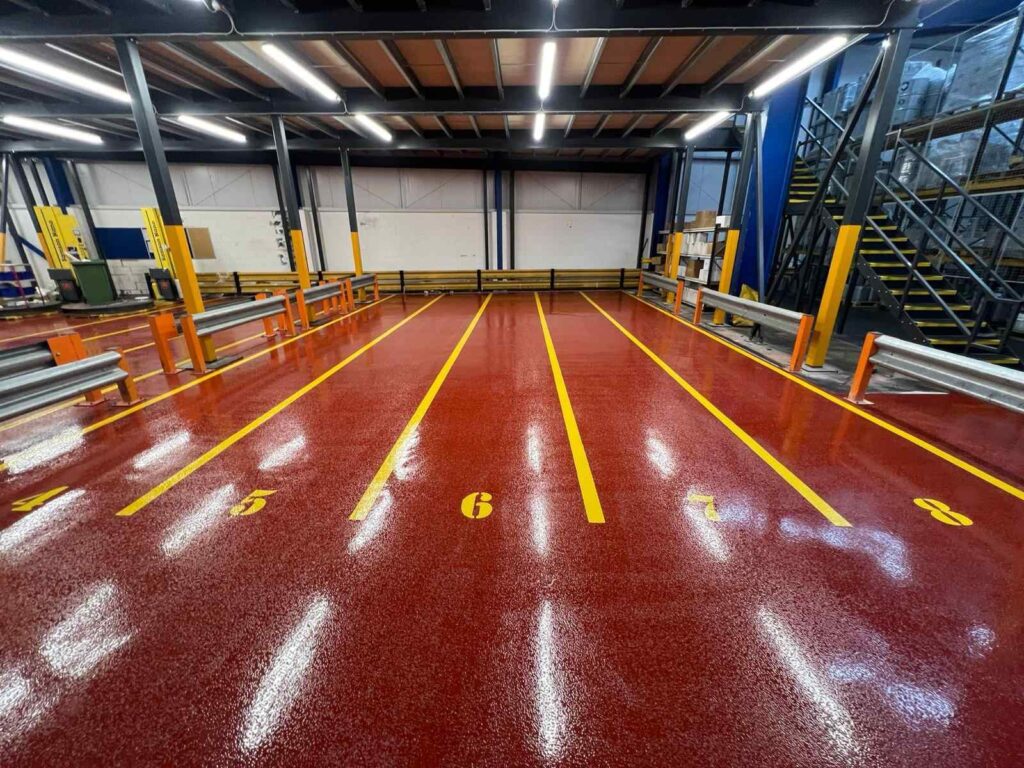
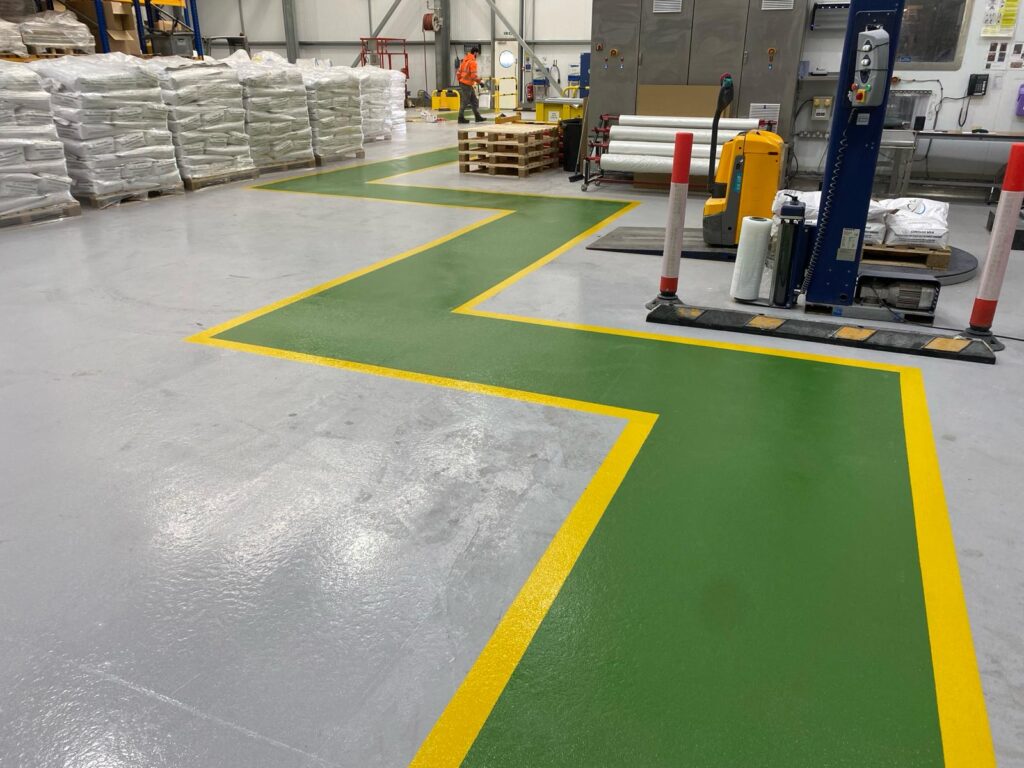
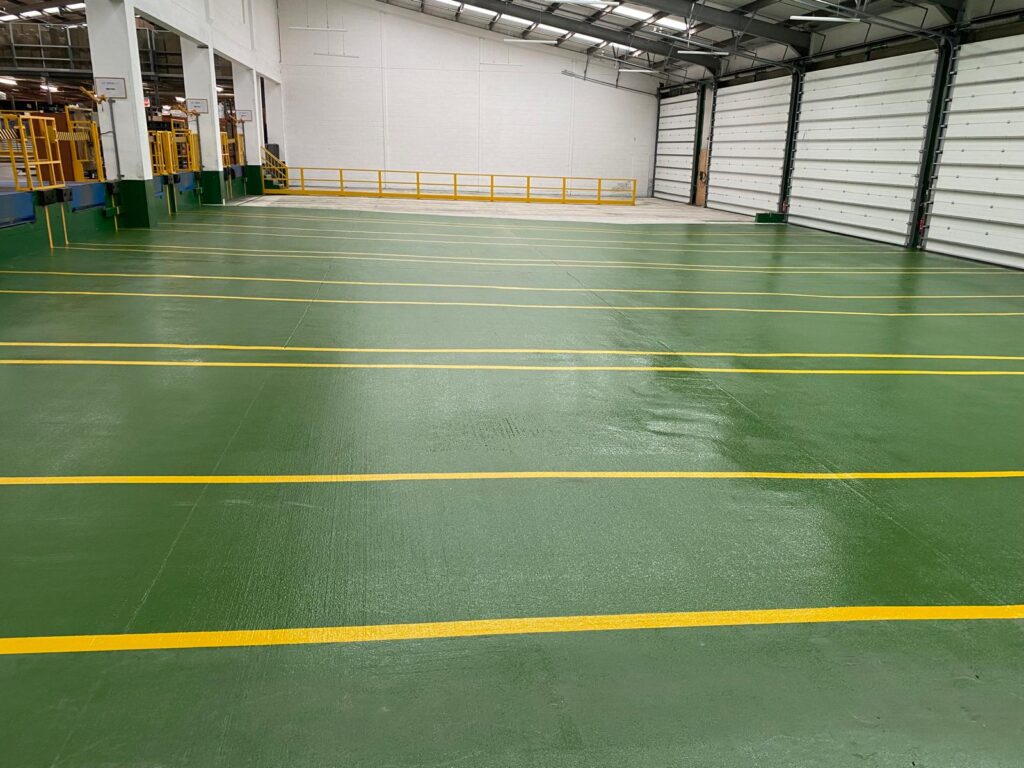
Workplace safety legislation strictly requires the clear organisation and separation of mechanical traffic routes from pedestrian paths. Applying durable resin line markings directly into the flooring installation ensures long-lasting visual clarity. Unlike adhesive tape, resin lines cannot peel. Contrasting pathways guide foot traffic safely past busy reach trucks, loading bays, and active machinery.
Regulation 17 of the Workplace (Health, Safety and Welfare) Regulations 1992 requires traffic routes to be suitably indicated. Resin demarcation bonds chemically to the newly applied high build coating. This delivers exceptional abrasion resistance against continuous wheel scuffing. Setting out pedestrian zones, crossing points, and stop lines requires careful masking and hand rolling. Reputable contractors price these items separately on the quotation.
Zoning for 5S Lean Management Programmes
Manufacturing facilities implementing 5S methodology rely on distinctive colour zoning to define storage bays, equipment locations, and quarantine areas. High-visibility solid colours such as Safety Red, Lincoln Green, and Bondi Blue delineate functional production workspaces clearly. This visual discipline eliminates floor clutter, boosts productivity, and simplifies continuous hygiene audits.
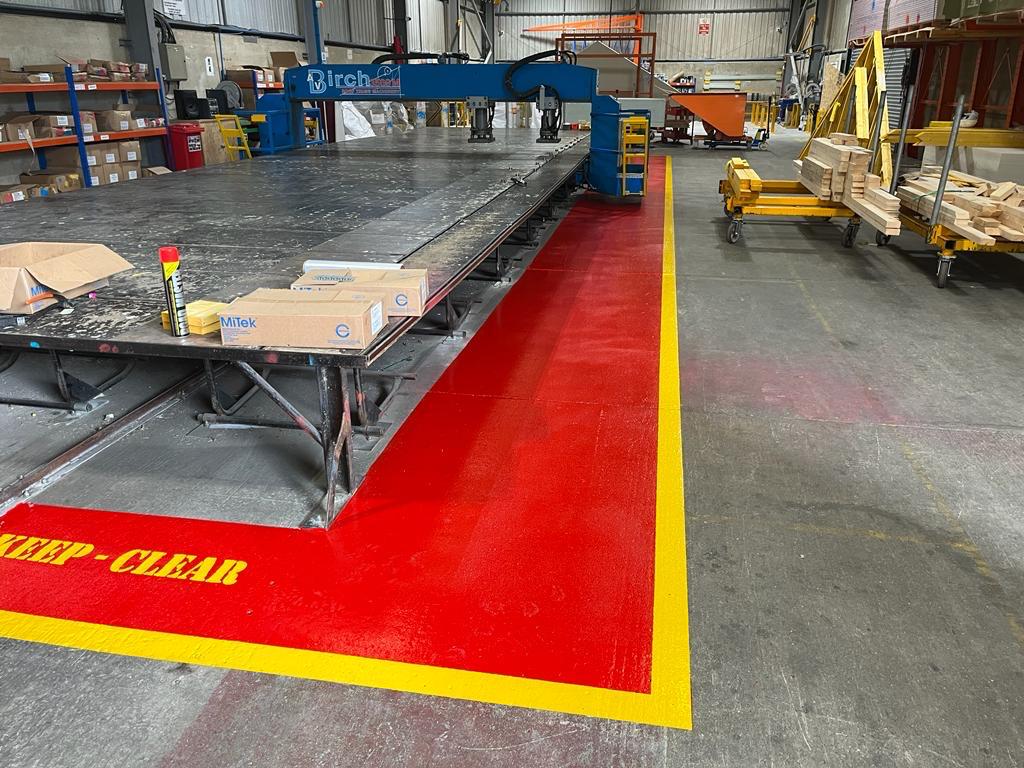
Auditors evaluating lean manufacturing operations inspect floor zoning to verify standardised material flows. Hatching keep-clear areas in front of electrical panels and fire exits supports compliance under fire safety legislation. Complex multi-colour demarcation requires extensive masking tape and multiple site visits. Installers must allow drying time between shades. Detailed line marking therefore constitutes an essential commercial consideration within the final flooring invoice.
“JD Flooring did an excellent job installing a resin floor in our food production facility. The floor is durable, hygienic, and meets all safety regulations. The team was knowledgeable and professional, and the project was completed within the agreed-upon timeframe. I highly recommend JD Flooring for food industry flooring needs.”
Alex Martinez
Site Variables That Drive Square Metre Rates
Physical Geometry, Access, and Area Scale
Large, unobstructed warehouse floors permit rapid mechanical grinding and broad application sweeps. This yields optimal economies of scale for facility owners. Conversely, compact rooms packed with machinery columns, narrow aisles, or mezzanine levels slow down installation crews substantially. Hand grinders and intricate masking increase overall labour hours per square metre.
The published rate for high build epoxy coating runs from £8 to £12 per square metre. This includes mechanical preparation, labour, and materials. However, small industrial rooms below one hundred square metres carry a higher proportional rate. Fixed plant mobilisation costs drive this increase. Transporting generators, diamond planers, and HEPA vacuums requires fixed logistical expenditure regardless of project dimensions. Consequently, expansive factory areas achieve the lowest cost per unit area.
Operational Phasing and Working Hours
Industrial facilities rarely possess the luxury of shutting down manufacturing lines or dispatch hubs completely for flooring refurbishments. Contractors often execute installation programmes during out-of-hours shifts, overnight windows, or across scheduled bank holiday weekends. Working in discrete operational phases maintains live warehouse distribution. However, it extends total project mobilisation time.
Standard epoxy systems require ambient temperatures above 15°C. They need 24 to 48 hours before accepting pedestrian traffic. Full chemical cure takes several days. If production cannot pause, companies must decide between heated enclosures, staged handovers, or alternative chemistries. From experience across the sector, comparing downtime losses against installation premiums clarifies the decision. Facilities teams can then phase standard epoxy or invest in fast-curing alternatives.
Calculate The True Cost
A three day shutdown at a plant turning over £2,000 an hour is £120,000 of lost output. On most sites that is several times the cost of the new resin floor installation. We have developed our own free custom calculator top help you calculate the true cost and a new resin floor.
Long-Term Maintenance and Lifecycle Economics
Preventative Cleaning and Traffic Management
Sustaining an epoxy floor finish requires consistent housekeeping rather than aggressive chemical treatment or harsh scrubbing techniques. Abrasive mineral grit and metal swarf left on walking surfaces grind into the cured polymer beneath rolling wheels. Regular sweeping combined with automated scrubber-dryers using mild pH-neutral detergents preserves the protective topcoat.
Aggressive caustic cleaners or unbuffered degreasers slowly degrade the polymer matrix. This causes surface dulling and reduces slip resistance. Furthermore, running forklifts with damaged polyurethane tyres concentrates point loads that micro-fracture resin edges. Implementing scheduled maintenance routines extends system longevity from seven years to fifteen or twenty years. Sound cleaning habits protect initial capital expenditure and minimise future operational disruption.
Recoating Intervals and Lifecycle Value
Timely recoating represents the most economical method for maintaining long-term substrate protection without incurring full replacement expenses. When an existing high build system exhibits minor wear but remains solidly bonded, technicians lightly abrade the top surface. They then apply a fresh seal coat. This proactive intervention restores cleanability and gloss affordably.
Neglecting worn high build coatings allows heavy traffic to wear through to bare concrete. Once traffic abrades the concrete substrate, oil and moisture penetrate deep into the pores. This necessitates mechanical removal, extensive patch repairs, and re-priming. A planned maintenance agreement costs materially less than periodic emergency replacement. Annual condition surveys identify thinning traffic zones before structural substrate damage occurs. Early intervention protects the original investment.
Final Thoughts
Calculating a realistic high build epoxy floor coating cost means pricing the whole operational scope. Specifiers should never rely on a bare material rate per square metre. Diamond grinding, primers, moisture testing, coving and compliant demarcation all form part of a complete package. Omitting any stage from the specification creates hidden financial exposure. That exposure surfaces later as contract variations or premature coating failure.
Facilities managers who insist on transparent proposals get floors that last. They also gain demonstrable safety compliance across the full service life. Thorough site surveys, hygrometer testing and honest condition appraisals set the technical benchmark. Approaching resin installation with that clarity keeps industrial workspaces safe, hygienic and productive for decades.
Arrange a Free Site Survey
If you are thinking about upgrading the flooring in your commercial or industrial space then we would love to hear from you. Our team of experts will conduct a free onsite survey and then guide you through the process of product selection and project planning, whilst remaining mindful of your budgetary restraints.
Frequently Asked Questions
A:
Professional contractors typically price FeRFA Type 3 high build epoxy systems between £8 and £12 per square metre. This includes supply, mechanical preparation, and installation across sound industrial concrete. The rate covers HEPA-extracted diamond grinding and suitable primer application. It also covers two roller coats of solvent-free resin up to 1000 microns. Smaller areas, complex layouts or uneven concrete will adjust the final quotation. Survey findings decide the final figure.
A:
Quotations usually differ because contractors include different preparation standards and detailing elements within their scopes. A cheaper estimate often excludes mechanical diamond grinding, uses thinner coatings, or omits primers and moisture testing. Reputable installers price expansion joint sealing, line marking and perimeter coving transparently. Incomplete quotes frequently exclude these essential tasks. Check the declared FeRFA system type, the stated dry film thickness and the preparation method. Those three items reveal the true difference between competing tenders.
A:
A liquid damp proof membrane is necessary when hygrometer testing shows relative humidity above 75% in the substrate. Standard high build epoxies are impermeable to water vapour. They blister when rising damp pushes through the concrete pores. A two-coat liquid DPM creates an effective moisture barrier. It suppresses residual moisture up to 98% relative humidity. The membrane adds material cost and drying time. In practice, that expense is far cheaper than osmotic delamination and full floor replacement.
A:
High build epoxy coatings follow the existing surface contour and will not level an uneven floor. FeRFA Type 3 systems reach a total thickness of around 1000 microns, which is one millimetre. Correcting significant undulations requires a dedicated regulating screed or a cementitious pump screed. That work happens before the resin finish goes down. Distinguish between surface regulating and true floor levelling on your quotation. The distinction prevents disputes over final surface regularity and overall expenditure.
A:
A professionally installed high build epoxy floor typically lasts 15 to 20 years in medium-duty industrial use. Service life depends on mechanical preparation, adequate dry film thickness and routine housekeeping. Abrasive grit left on the surface is the main enemy. Without regular sweeping and neutral machine washing, busy forklift aisles may need resurfacing within five to seven years. Proactive maintenance and timely seal recoats preserve the protective layer. That care lowers the lifetime cost of ownership substantially.
