
Choosing Garage Flooring: Epoxy vs Flake Resin Flooring
Anyone choosing garage flooring is making a practical decision rather than a cosmetic one. The finish must withstand daily vehicular traffic, fluid spills, and mechanical abrasion. Unprotected concrete sheds abrasive dust continuously whilst absorbing motor oil, brake fluid, and road salts. Correct resin chemistry keeps the underlying substrate permanently protected. Modern resin systems deliver seamless, non-porous surfaces. They resist hot tyre pickup, chemical staining, and surface erosion for decades.
Homeowners often struggle to choose between three systems. The options are a solid high-build coating, a multi-layer flake broadcast, or an aggregate-filled quartz screed. Each system behaves differently on texture, slip resistance, colour variety, mark concealment, and long-term touch-in maintenance. How do these three resin systems compare on cost, daily durability, and aesthetic performance?
Key Takeaways
- Solid high-build epoxy provides a smooth, economical finish starting from £1,500, offering dependable chemical resistance and the simplest touch-in maintenance available.
- A PVC flake garage floor combines multi-colour vinyl broadcast chips with durable clear topcoats from £2,550, effectively concealing dirt, tyre marks, and substrate flaws.
- Quartz resin flooring matches flake pricing from £2,550 whilst providing superior mechanical slip resistance and enhanced impact durability for demanding domestic workshop environments.
- Mechanical preparation via diamond grinding remains mandatory across all resin specifications to open substrate pores and eliminate costly coating adhesion failures.
- Polyvinyl chloride decorative flakes offer eighteen distinct blends, whilst solid epoxy and natural coloured quartz provide twelve standard uniform colour options each.
Epoxy, PVC Flake and Quartz Systems Compared
Comparing epoxy, PVC flake and quartz garage finishes means weighing initial installation cost against practical daily performance. Solid high-build coatings suit clean utility spaces. Broadcast systems deliver textured surfaces that conceal dirt and improve wet traction. The table below sets out the core technical metrics across all three residential resin systems.
Every system requires professional diamond grinding to open concrete substrate pores before primer goes down. Pricing reflects typical single-bay installations on sound concrete. Review these performance indicators against your intended use. Vehicle storage, a home gym, and a detailing studio each place different demands on the finish.
| Performance Metric | Solid High-Build Epoxy | PVC Flake System | Quartz Broadcast System |
|---|---|---|---|
| Entry Cost (Single Garage) | From £1,500 | From £2,550 | From £2,550 |
| Standard Colour Options | 12 solid colours | 18 blended options | 12 coloured aggregates |
| Surface Texture Profile | Smooth (gloss or satin) | Lightly orange-peeled texture | Moderately textured stone feel |
| Slip Resistance Level | Low (optional aggregate) | Medium (PTV 36+ wet capable) | High (superior natural grip) |
| Concealment of Dust and Marks | Low (shows dust quickly) | High (multi-tone camouflaging) | High (granular stone masking) |
| Ease of Local Patch Repairs | Straightforward colour blending | Moderate (blend matching required) | Complex (aggregate dispersal matching) |

Core System Characteristics and Chemistry
Solid High-Build Epoxy Formulations
Solid high-build epoxy uses a two-component resin base and hardener. It cures chemically into a rigid, non-porous thermoset plastic. The coating forms a completely seamless surface across the prepared concrete substrate. That barrier resists fluid penetration, household chemicals, and abrasive wear under standard residential loads.
The system provides an even, uniform aesthetic in either gloss or satin. Solid coatings cure at 15°C and above. They need roughly 24 to 48 hours before accepting light foot traffic. Because epoxy is inherently rigid, it holds exceptional compressive strength under stationary vehicle loads. Smooth high-build surfaces do highlight floor irregularities, hairline cracks, and surface dust. Multi-tone finishes hide those far better. Installers can broadcast fine aggregate into the basecoat to introduce slip resistance. Doing so slightly alters the glossy, mirror-like appearance.
Multi-Layer PVC Flake and Quartz Builds
Broadcast resin systems embed decorative particles between a pigmented basecoat and one or more protective clear topcoats. Those particles are either coloured polyvinyl chloride vinyl chips or graded, ceramic-coated quartz granules. The embedded layer builds structural thickness. It improves mechanical resistance against dropped tools and heavy wheel traffic.
The clear seal coats encapsulate the particles. This produces a durable wear surface with varying degrees of profile texture. Polyvinyl chloride chips give a showroom finish that softens minor substrate undulations. Quartz systems instead use round-grained mineral aggregates that lock tightly within the resin matrix. The result is a dense, stone-like screed with exceptional compressive properties. Both builds require meticulous vacuum extraction between coats. Loose particles must go before the final UV-stable clear seal coat.
Visual Appearance and Aesthetic Options
Colour Blends for Decorative Flake Floors
A PVC flake garage floor gives a decorative, multi-toned appearance resembling polished terrazzo or granite. Homeowners choose from eighteen standard pre-engineered flake blends. Those include Arctic Grey, Granite, Pebble, Onyx, and Storm Grey. The multi-coloured vinyl chips create depth that alters the visual scale of a residential garage.
The chips disperse randomly across the wet basecoat during broadcast. Random distribution breaks up large expanses of floor and prevents glare from overhead lighting. Custom blends combine neutral tones with contrasting highlight chips. In practice, we specify these to complement particular vehicle paintwork or fitted cabinetry. High broadcast density gives complete visual coverage over the basecoat. Clear topcoats then lock the flakes flat. The finished look elevates a standard garage into a showroom extension of the home.
Solid Epoxy and Natural Quartz Palettes
Solid epoxy systems and quartz finishes offer twelve standard colours each. Solid epoxy provides clean, clinical tones including Platinum, Steel, Slate, Graphite, and Charcoal. Quartz aggregate systems use ceramic-coated granules instead. These create organic, textured surfaces that evoke natural stone across the finished floor.
Solid colours suit vehicle storage bays and minimalist architectural conversions. High-gloss surfaces reflect direct lighting sharply. That reflection highlights any imperfection in the underlying concrete substrate. Quartz systems offer subtle mineral variation across the floor. The coloured crystals produce rich, tactile finishes that diffuse light across detailing bays and home workshops. Both options hold colour when sealed with aliphatic, UV-resistant topcoats. Those topcoats prevent yellowing from sunlight near open garage doors.
Did You Know?
Untreated concrete continuously generates respirable crystalline silica dust through mechanical friction. Respirable crystalline silica is classified as a Group 1 human carcinogen. EH40 workplace exposure limits cap airborne concentrations at 0.1 mg/m³ over an eight-hour time-weighted average.
Surface Texture and Wet Slip Resistance
Traction Profiles Across System Types
Traction varies considerably between untextured solid resin coatings and aggregate-rich broadcast systems. Smooth high-build epoxy gives minimal mechanical grip when dry. It becomes hazardous once wet from rainwater, melting road snow, or a fluid leak. Broadcast systems, by contrast, carry built-in surface texture without supplementary grit additives.
A broadcast flake system yields an orange-peel profile as the clear topcoat flows around the chips. This gives dependable grip for pedestrian traffic whilst staying comfortable underfoot. Quartz systems supply the highest coefficient of friction among residential finishes. Dense mineral granules create microscopic peaks and valleys across the cured surface. That profile delivers robust foot grip. Transit stays safe even with car shampoo, rainwater carryover, or lubricating oils on the floor.
Pendulum Test Values and Wet Safety
Formal slip assessments rely on the BS 7976 pendulum test method. It quantifies surface friction in both wet and dry conditions. A pendulum test value of 36 or above confirms low slip potential under the expected contamination. Smooth epoxy falls well below that threshold whenever water is tracked indoors.
Aluminium oxide or polymer beads added to solid epoxy can lift wet traction to acceptable levels. Broadcast systems reach consistent PTV 36+ ratings naturally through their multi-layered geometry. Quartz surpasses baseline safety standards comfortably. From experience across the sector, it suits detailing bays, wash bays, and workshop access zones. Specifiers must balance traction against cleaning regimes. Highly textured profiles give exceptional wet safety but retain dirt more stubbornly. They demand dedicated scrubbing rather than light flat-mopping.

Need a Resin Garage Flooring Quote?
Mark Concealment and Everyday Housekeeping
Dirt and Tyre Mark Concealment in Practice
Multi-toned broadcast systems excel at hiding day-to-day garage debris, dust, and dark tyre marks. Varied chip patterns in flake and quartz surfaces disguise dropped soil, leaves, sawdust, and tyre transfer. Solid-colour epoxy floors do the opposite. They reveal every speck of dirt, hair, and surface smudge immediately.
Hot tyres deposit plasticisers and road grime straight onto the coating on parking. On solid Platinum or Slate epoxy, those black friction marks demand immediate cleaning. Flake blends such as Granite or Onyx mask everyday scuffs within their complex patterns. Homeowners running a workshop or parking a daily driver benefit most from broadcast systems. The visual camouflage keeps the garage looking tidy between routine cleans. That reduces the pressure for daily floor maintenance.
Routine Cleaning and Surface Care Regimes
Routine maintenance across all resin garage floors relies on sweeping and damp mopping with pH-neutral detergents. Highly acidic or solvent-laden cleaners cause damage. Harsh chemicals gradually dull the protective clear seal coat. Smooth epoxy cleans rapidly with a microfibre mop, whereas textured systems need soft-bristled brooms.
Cured resin floors are seamless and non-porous. Engine oil, antifreeze, and brake fluid sit on the surface without penetrating. Wipe spills promptly to prevent slip hazards and chemical attack. Quartz and flake finishes withstand heavy washing regimes. Their textured surfaces do hold dirty water if rinsed carelessly. A wet-and-dry vacuum or rubber squeegee clears textured broadcast floors effectively. Weekly sweeping stops loose grit acting as an abrasive under vehicle tyres.

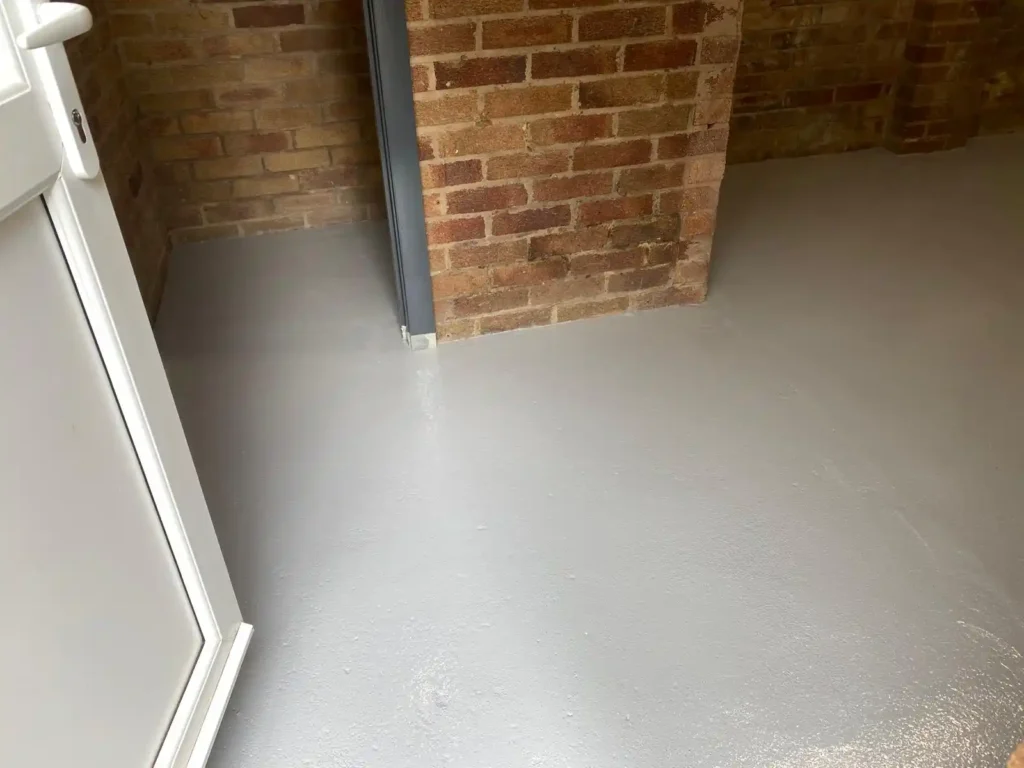
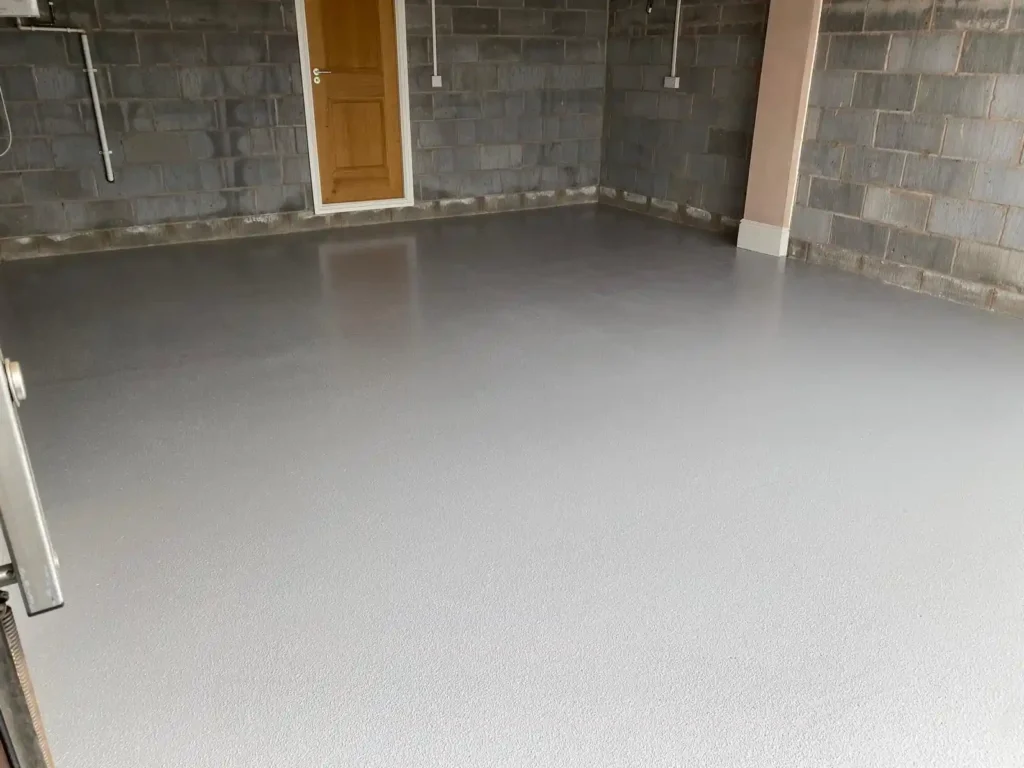


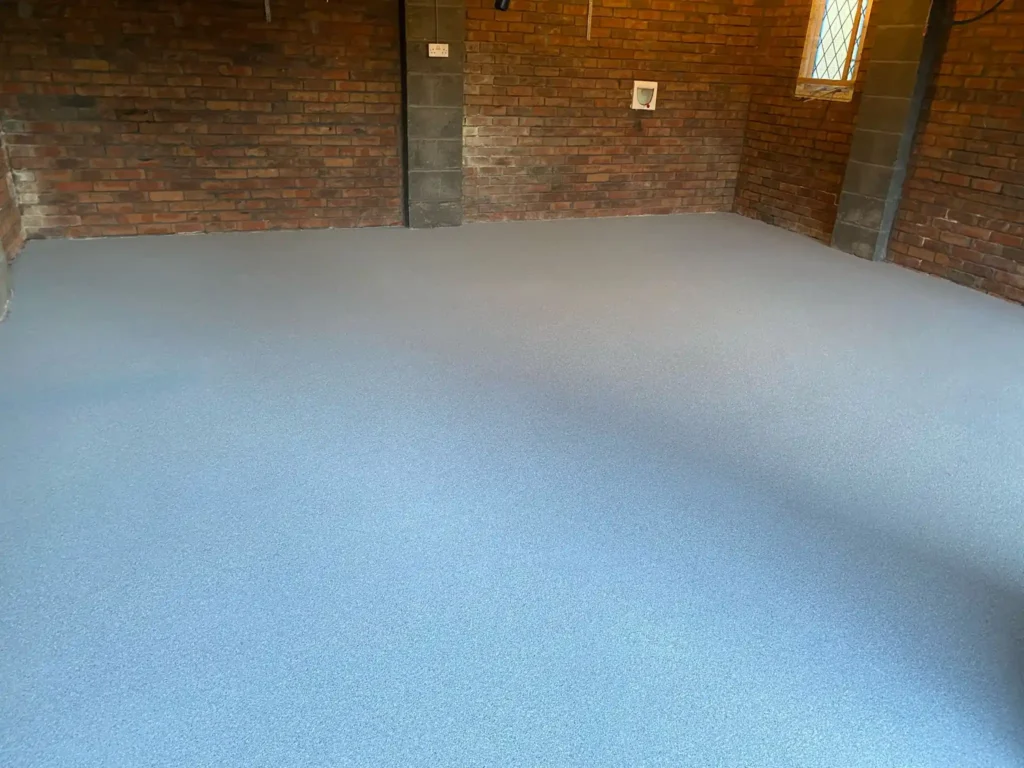

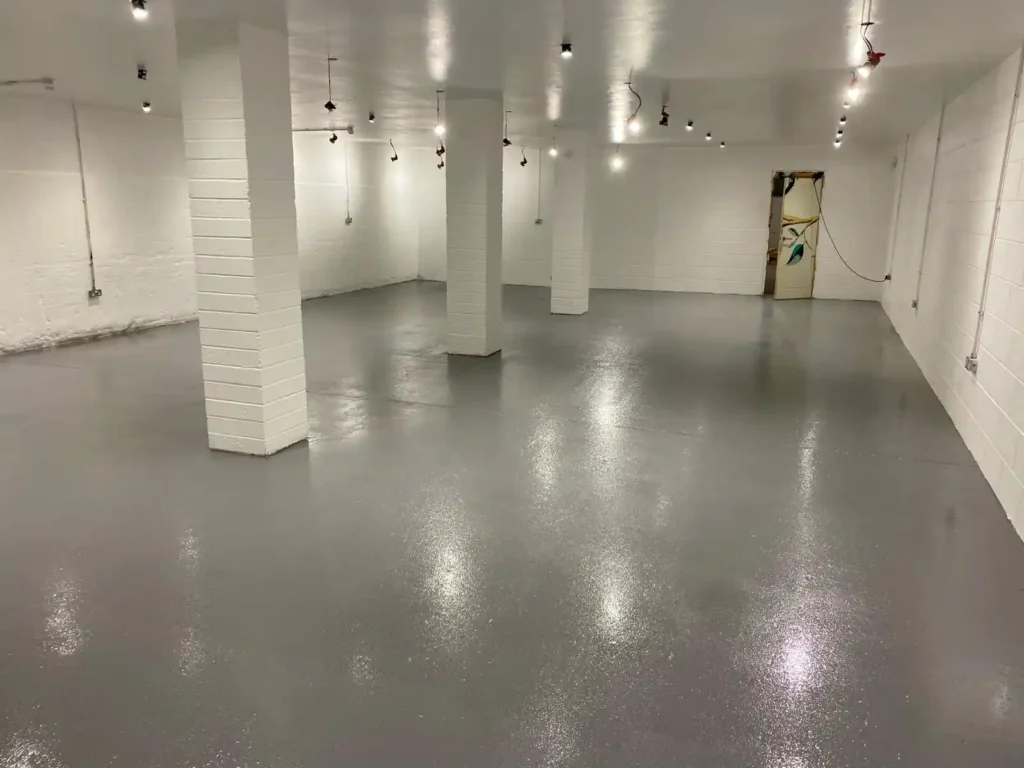
Epoxy Resin garage Floors
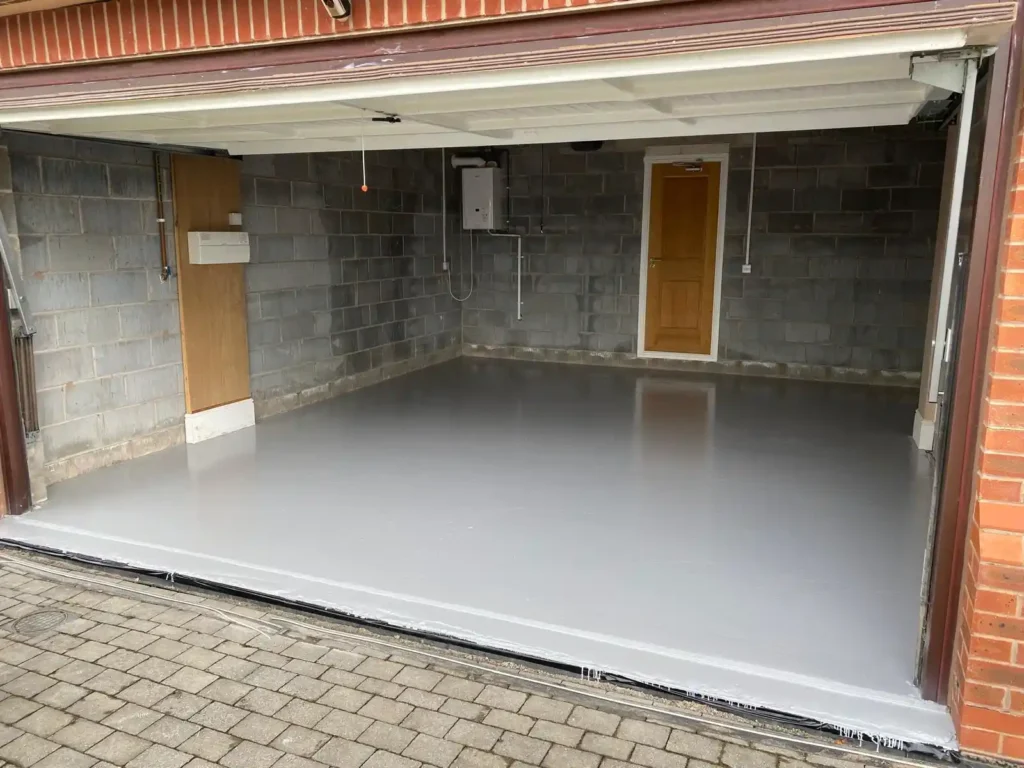
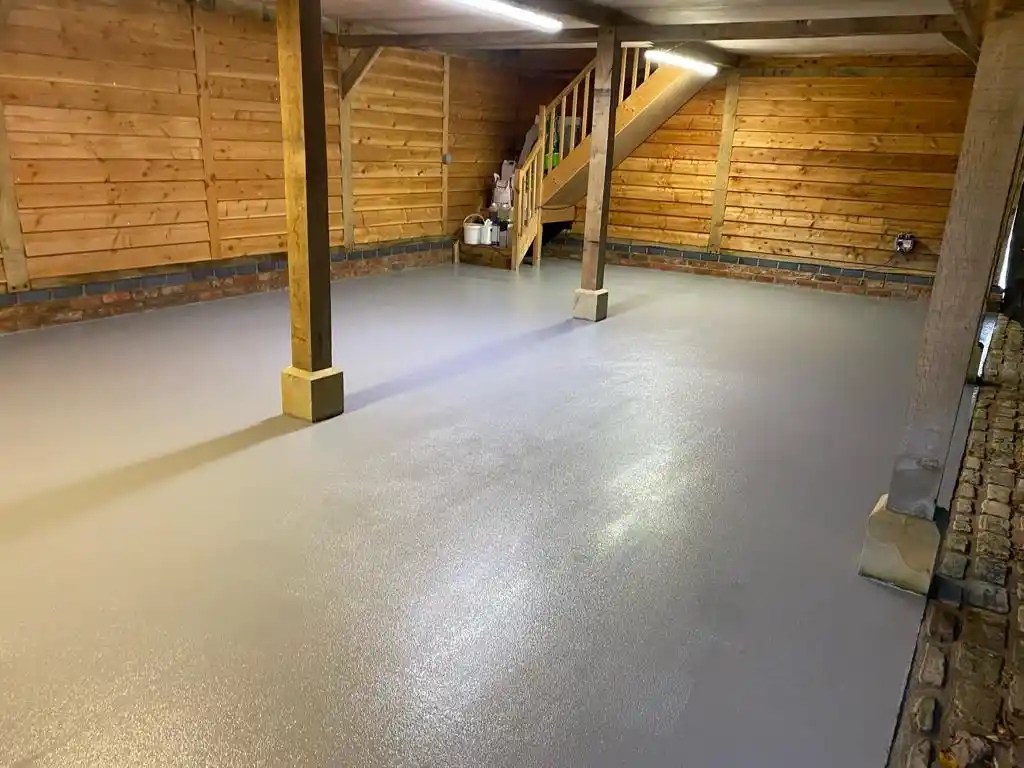
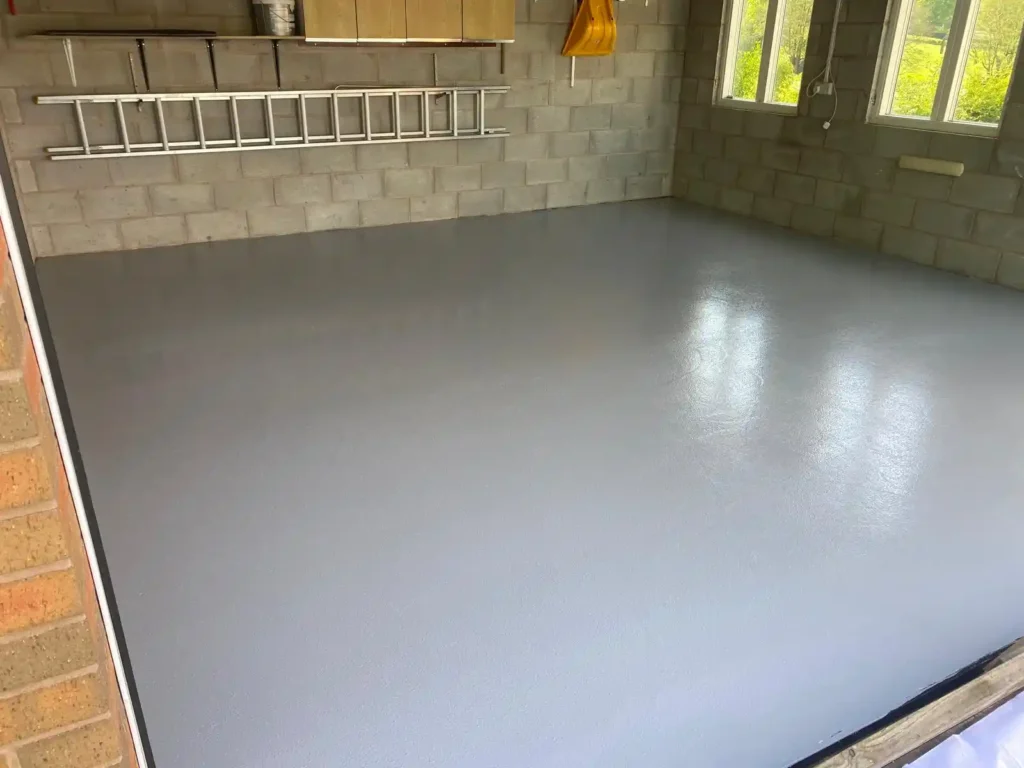
Epoxy resin garage floor installation across the North West. Fixed prices from £1,500, diamond ground prep and a choice of epoxy, PVC flake or quartz.
Installation Process and Substrate Preparation
Mechanical Diamond Grinding Requirements
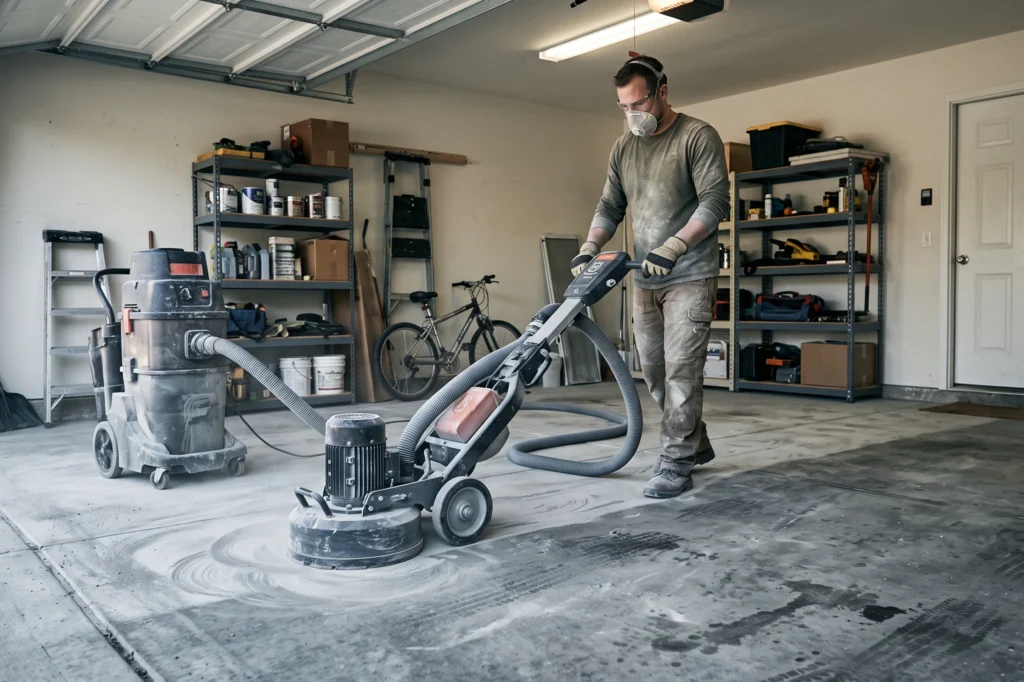
Professional resin installation always begins with mechanical diamond grinding to profile the concrete substrate. Acid etching is unacceptable practice. It introduces uncontrolled moisture and fails to open concrete pores reliably. Grinding strips weak surface laitance, old sealers, and oil contaminants, leaving an open-pored profile for the primer.
Industrial grinding equipment must connect directly to HEPA-filtered vacuum extraction to capture silica dust. Technicians then assess relative humidity within the concrete using calibrated hygrometers. Where internal readings exceed 75% relative humidity, a liquid damp-proof membrane suppresses moisture vapour. The substrate must be sound, dry, and structurally stable. Dynamic movement cracks and failing control joints need chasing out first. We fill them with structural epoxy mortar before any basecoat goes down.
System Build-Up and Coating Stages
Resin installations run through consecutive technical stages: priming, basecoat, broadcast, curing, and topcoating. Primer penetrates deeply into the prepared substrate. It secures inter-coat adhesion and controls concrete outgassing. The pigmented basecoat establishes core film thickness and receives the decorative flake or quartz aggregate.
Installers broadcast vinyl flakes or quartz grains evenly to total saturation across the wet basecoat. Once cured, technicians scrape the floor mechanically to remove protruding particle edges. A site vacuum then lifts the loose material away. One or two coats of clear polyurethane or polyaspartic resin seal the system. These aliphatic topcoats provide scratch resistance, chemical protection, and UV stability. Skipping primer or rushing inter-coat curing compromises adhesion. The risk is blistering, pin-holing, or early delamination under hot tyres.
“JD Flooring did an excellent job installing a resin floor in our food production facility. The floor is durable, hygienic, and meets all safety regulations. The team was knowledgeable and professional, and the project was completed within the agreed-upon timeframe. I highly recommend JD Flooring for food industry flooring needs.”
Alex Martinez
Durability and Touch-In Maintenance
Long-Term Resistance to Vehicle Traffic
Correctly specified resin garage floors deliver ten to twenty years of service under domestic conditions. Hot tyre pickup occurs when warm rubber bonds to weak DIY paint. The paint then lifts as the vehicle moves off. Professionally primed industrial-grade systems remove that failure mode entirely from the equation.
Durability correlates directly with total cured film thickness. A solid high-build coating measures roughly 300 to 500 microns. That suits foot traffic, vehicle storage, and mild abrasion. Broadcast flake and quartz builds reach one to two millimetres. The denser build resists impact from dropped tools, heavy trolley jacks, and axle stands. An aggregate-reinforced structure absorbs localised point loads without cracking. The concrete beneath stays protected from physical and chemical degradation.
Feasibility and Visibility of Local Repairs
Localised repairs are occasionally needed when heavy metal equipment drops from height and chips the resin. Solid-colour epoxy is the easiest system to repair on the spot. Technicians fill the void with colour-matched resin paste. Fresh patches will still show minor gloss or shade differences against aged coatings.
Repairing a flake or quartz floor requires careful blending to match surrounding aggregate density. Technicians clean and profile the damaged pocket, then apply fresh basecoat. They hand-broadcast matching flakes or mineral crystals and reseal. Blending aggregate patterns takes skilled manual dispersal. The multi-toned background then disguises the repair outline far better than a solid surface. On solid colours, clean patch edges draw the eye immediately. On broadcast floors, repairs vanish into the surrounding visual field once cured.
Installed Costs and Value Engineering
Cost Bands Across Single, Double and Treble Garages
Residential garage flooring is priced on floor area and substrate condition. Solid high-build epoxy starts from £1,500 for a single garage. A double garage starts from £1,800 and a treble from £2,100. These baseline figures assume sound concrete substrates that need only standard preparation.
Decorative PVC flake and natural quartz systems price identically. Both start from £2,550 for a single garage, £2,900 for a double, and £3,550 for a treble. Substrate grade adjusts these rates. Average substrates needing crack repairs add £150 to £300. Poor substrates needing extensive re-profiling add more. Quotations include diamond grinding, HEPA extraction, crack repairs, high-grade primers, and UV-stable topcoats. Pricing stays indicative until on-site moisture and sounding surveys are complete.
Value Engineering for Specific Uses
Selecting the right system means balancing upfront expenditure against intended use. A high-build epoxy coating saves £1,050 against broadcast finishes on a single garage. That makes solid epoxy the most cost-effective choice for standard parking, utility storage, or a let property. The saving matters most where appearance is secondary.
Spending £2,550 on a PVC flake or quartz finish is sound value engineering elsewhere. Detailing studios, active workshops, and home fitness suites all justify it. Home gyms benefit from the impact resistance of flake builds, which absorb dropped weights without chipping. Detailing bays need the wet traction and chemical resistance of quartz aggregate screeds. Matching the finish to daily operational demand prevents premature surface failure. It also avoids a disruptive floor replacement later.
Final Thoughts
Success when choosing garage flooring comes down to matching resin chemistry and surface texture to daily use. Solid high-build epoxy remains the most economical route for clean domestic parking. It delivers chemical protection and simple maintenance from £1,500. A PVC flake garage floor or a quartz aggregate system lifts performance from £2,550. Both bring superior mark concealment, impact resistance, and built-in slip safety for heavy workshop use.
Substrate preparation remains the defining factor in floor longevity. Industrial diamond grinding, moisture profiling, and structural crack repair secure durable adhesion for any resin finish. Specify the system that matches the work the garage actually does. A correctly built floor protects the concrete from hot tyre pickup, road salt, and fuel leaks for decades.
Arrange a Free Site Survey
If you are thinking about upgrading the flooring in your commercial or industrial space then we would love to hear from you. Our team of experts will conduct a free onsite survey and then guide you through the process of product selection and project planning, whilst remaining mindful of your budgetary restraints.
Frequently Asked Questions
A:
Hot tyre pickup happens when warm vehicle tyres bond to low-quality or poorly adhered paint. The coating then tears away from the floor as the car drives off. Inexpensive DIY floor paints lack the heat tolerance and adhesion to resist hot tyres. Professional installations prevent the failure with industrial diamond grinding, which mechanically profiles the substrate. Installers then apply high-grade epoxy primers that bond permanently into concrete pores. Thermosetting basecoats and clear topcoats follow, and they withstand tyre heat without softening.
A:
PVC flake and quartz floors share an identical four-stage build. That build is a penetrating primer and a pigmented high-build basecoat. A decorative broadcast layer applied to total saturation follows, then clear protective topcoats. Raw vinyl chips and ceramic quartz aggregates do differ in material cost. The labour, diamond-grind preparation, scraping, vacuum recovery, and multi-coat resin volumes are virtually identical. Both systems need equivalent technician time and equipment on site. Pricing therefore starts from £2,550 for a single garage either way.
A:
Standard epoxy coatings cannot bond reliably to concrete with elevated moisture levels. Trapped vapour pressure causes blistering and delamination. Technicians measure substrate relative humidity with calibrated hygrometers before installation begins. Where readings exceed 75% relative humidity, a specialised two-coat liquid damp-proof membrane goes down first. It sits directly on the diamond-ground concrete. That epoxy barrier suppresses moisture vapour up to 98% relative humidity. The result is an impermeable base that protects subsequent resin coats from osmotic blistering.
A:
Routine maintenance involves regular sweeping with a soft-bristled broom to lift abrasive dirt. Damp mopping with warm water and a mild pH-neutral detergent follows. Harsh acids, solvents, and abrasive cleaners cause lasting damage. They dull the clear seal coats over time. Heavily textured quartz floors respond best to a deck brush. Pair it with a wet-and-dry vacuum or rubber squeegee. That lifts dirt efficiently from surface recesses and leaves no dirty rinse water behind.
A:
Yes. Dedicated high-density rubber gym matting remains strongly recommended beneath free-weight drop zones and lifting platforms. Multi-layer flake and quartz systems give high compressive strength and impact resistance for routine foot traffic and gym machinery. Repeatedly dropping heavy dumbbells or loaded barbells from height can still fracture topcoats. It can also crush the concrete substrate beneath. Heavy rubber tiles absorb severe point impact shock. They protect both the resin wear layer and the concrete underneath.
