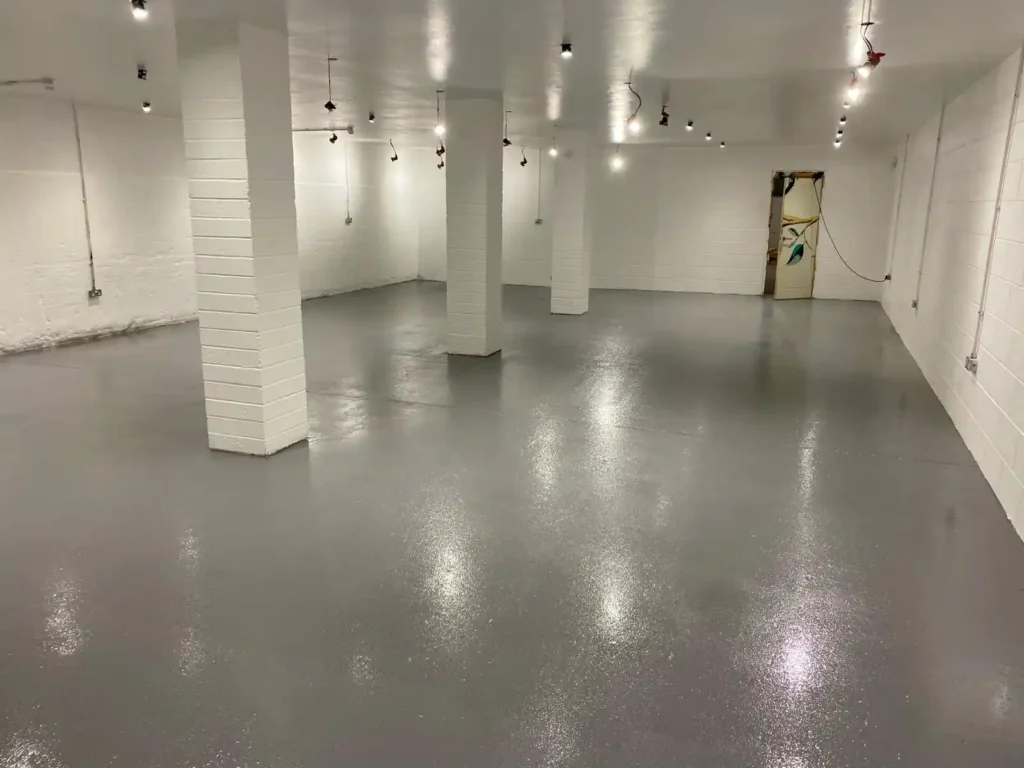
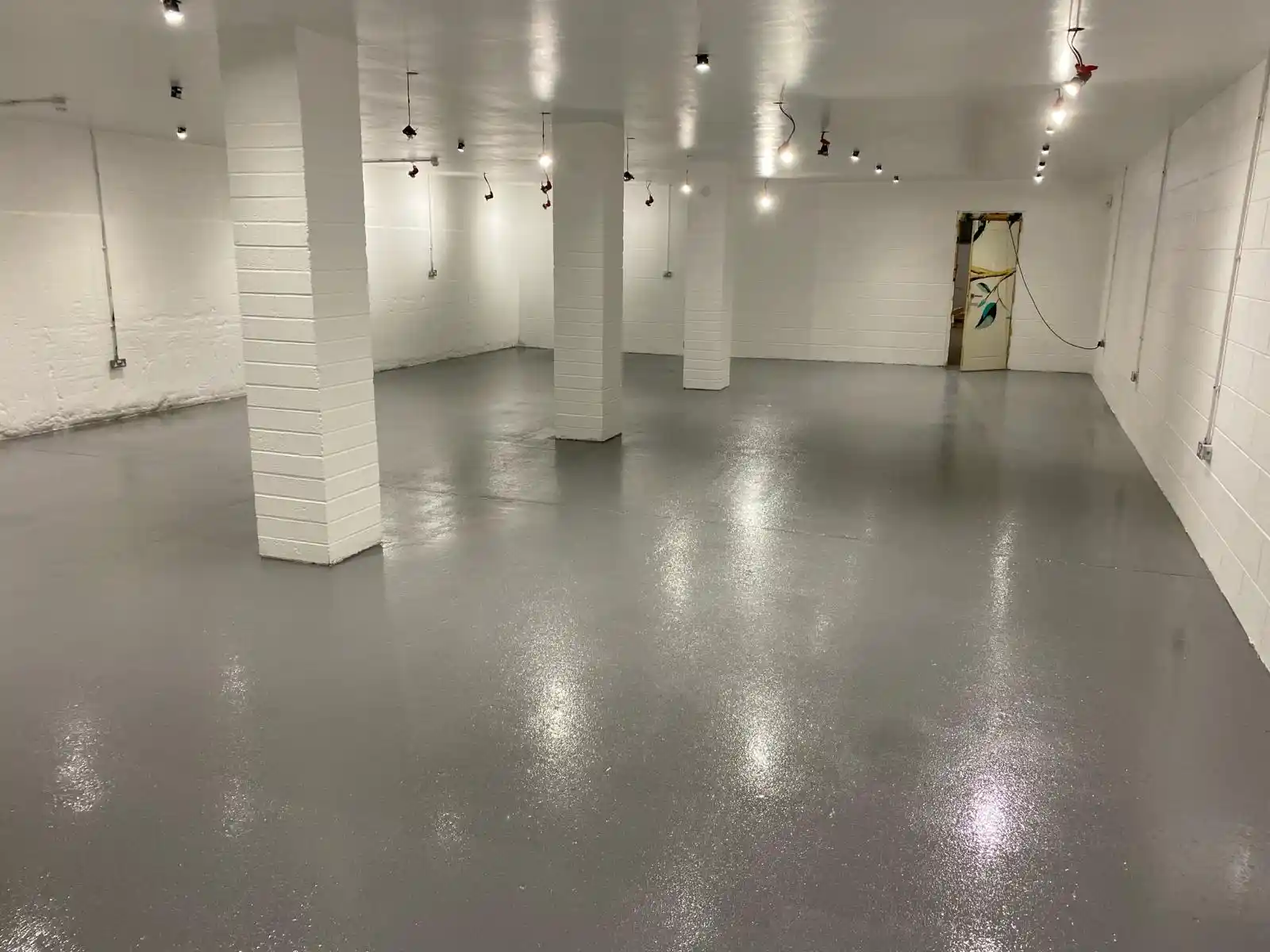
An engineering company based in Warrington recently relocated to new premises, requiring their 165m2 manufacturing floor space to be brought up to health and safety standards. The client also had a company requirement for all operational areas to achieve aesthetic standards and ensure easy cleaning and maintenance of the flooring.
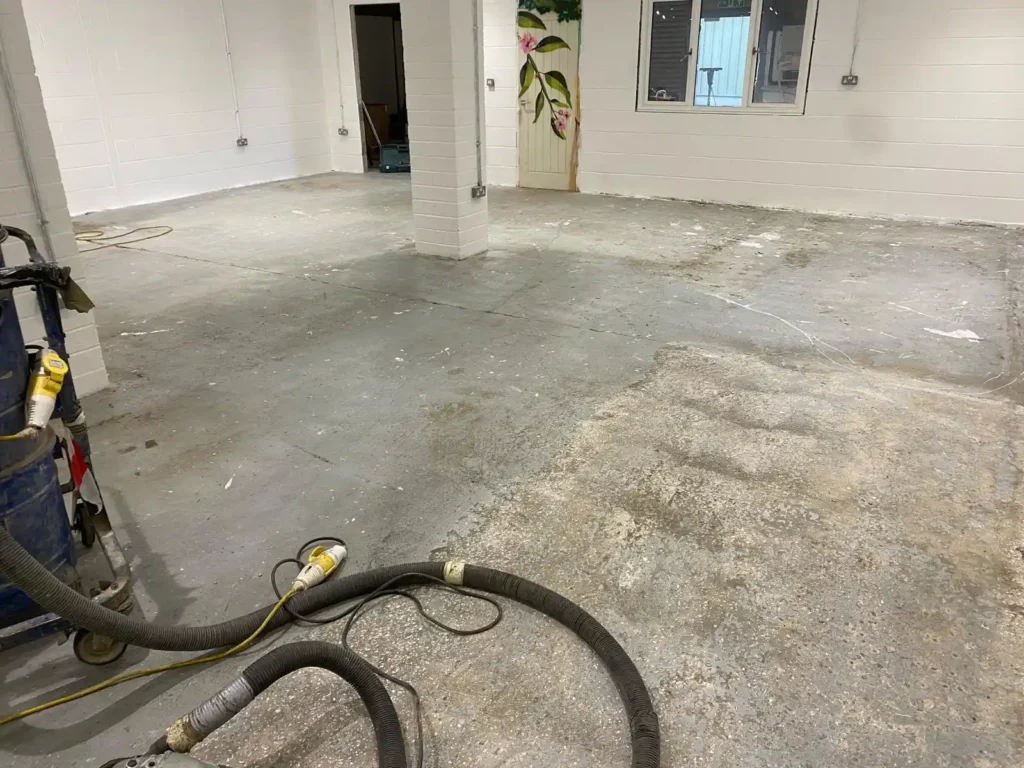
The existing floor had been coated repeatedly, resulting in a 1mm thick coating in some places. JD Flooring assessed the area and presented a proposal to the client, focusing on thorough preparation.


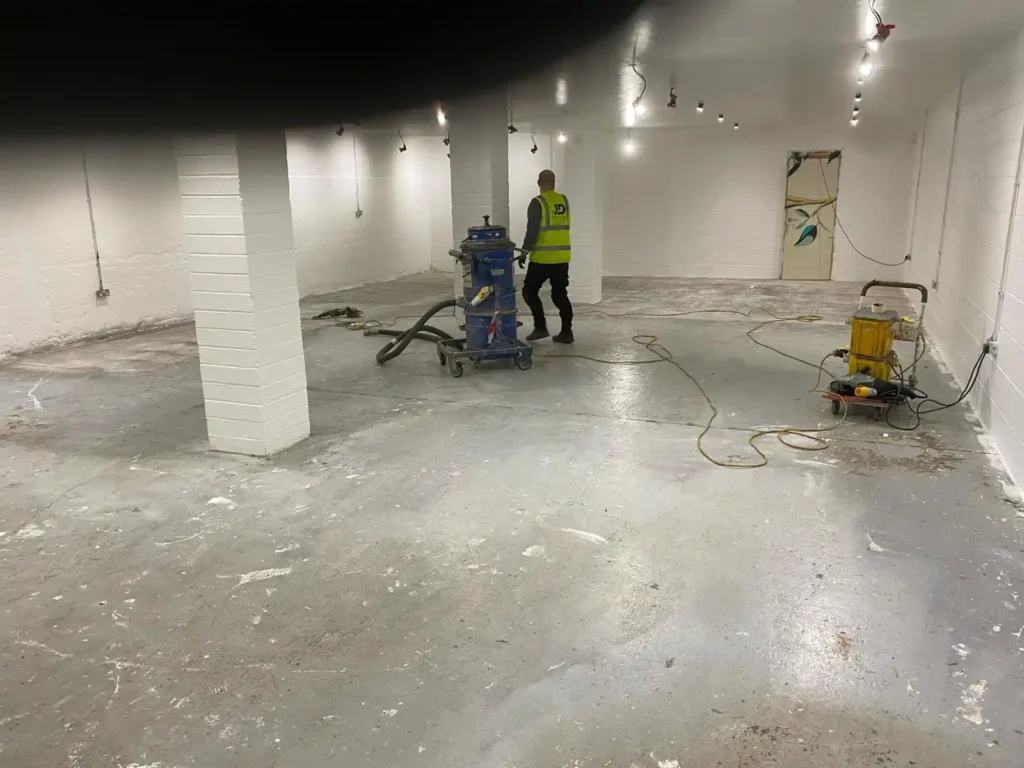
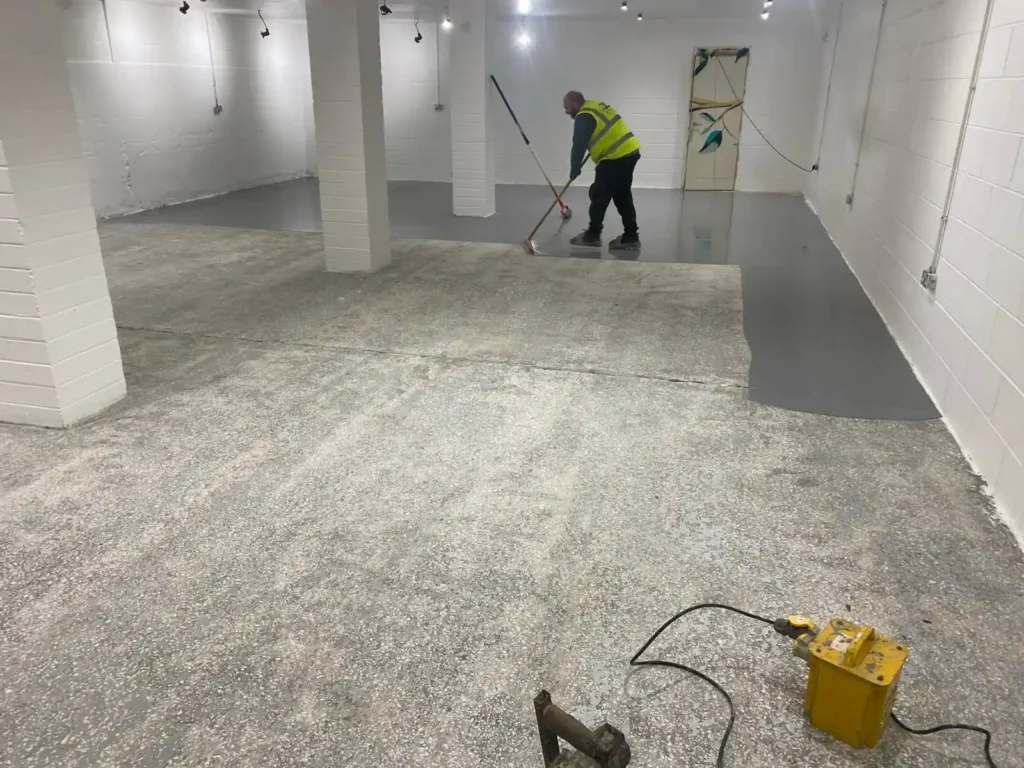
After surveying the floor, JD Flooring suggested using a double-headed diamond tip grinder to remove the multiple layers of existing epoxy coating. We then recommended installing a 2-pack epoxy high build system with a fine aggregate to improve slip resistance and overall health and safety.
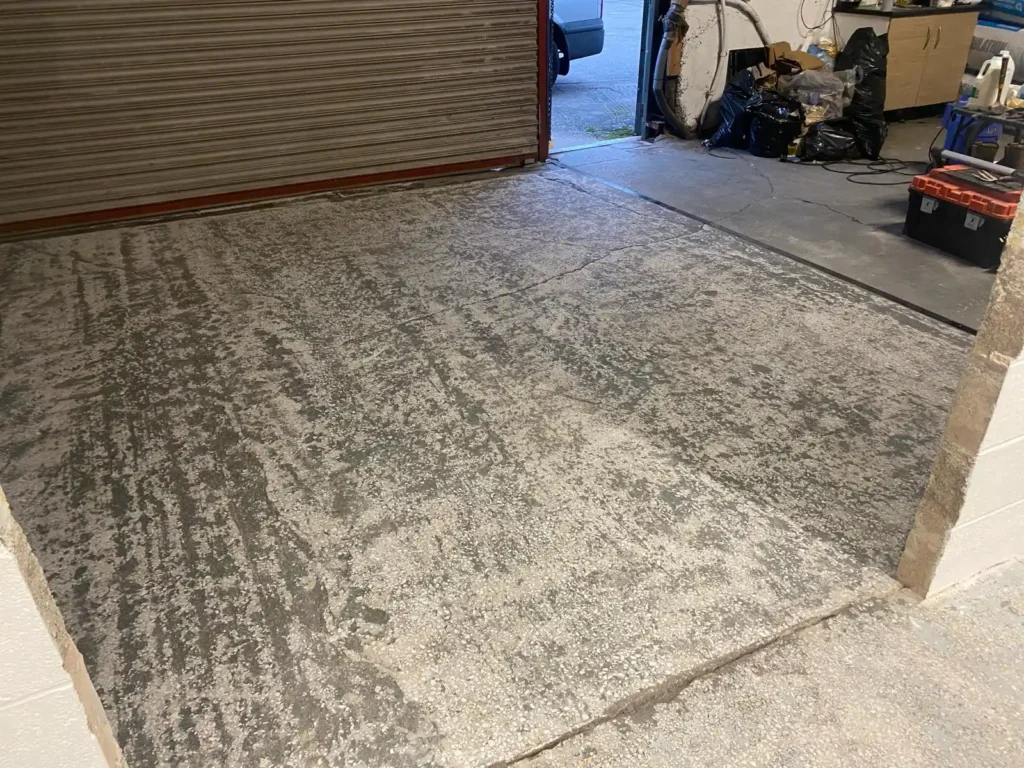
During the removal process, it became evident that the previous epoxy flooring system had been installed without proper subfloor preparation. As a result, the removal was easier than anticipated, with around 50-70Kg of the previous flooring being removed.
Poor adhesion: Without proper subfloor preparation, the epoxy flooring system did not adhere correctly to the substrate. This lack of adhesion likely led to the flooring peeling, chipping, or delaminating prematurely, necessitating frequent repairs or recoating. How does the constant need for repairs impact the cost-effectiveness of a flooring solution?
Uneven surface: Failing to address imperfections in the subfloor before installation resulted in an uneven surface, which may have caused the epoxy coating to wear unevenly. High spots or low spots in the substrate can lead to accelerated wear in certain areas, reducing the overall lifespan of the flooring. What safety hazards can an uneven flooring surface present in a manufacturing environment?
Moisture issues: If the previous occupants did not assess and address potential moisture issues in the subfloor, it could have led to the failure of the epoxy coating. Moisture can seep through the substrate, causing the flooring to bubble, warp, or delaminate. How can moisture-related problems contribute to the deterioration of a resin flooring system?
Inadequate cleaning: Improper cleaning of the subfloor before installation can result in contaminants being trapped beneath the epoxy coating. These contaminants can interfere with the bonding process and lead to the premature failure of the flooring system. Why is a thorough cleaning of the subfloor essential for achieving a long-lasting flooring solution?
The previous occupants’ solution of simply adding another layer of epoxy coating without addressing the underlying issues was a short-term fix that ultimately exacerbated the problem and likely incurred higher costs in the long run.
The preparation process involved using the suggested grinders, as well as flatbed grinders for edges and around columns. The “goods-in” area was also prepared.
Our preparation phase was conducted with exceptional care to ensure the floor’s surface was evenly treated. This equipment, known for its efficiency, was vital for smoothing the large area swiftly.
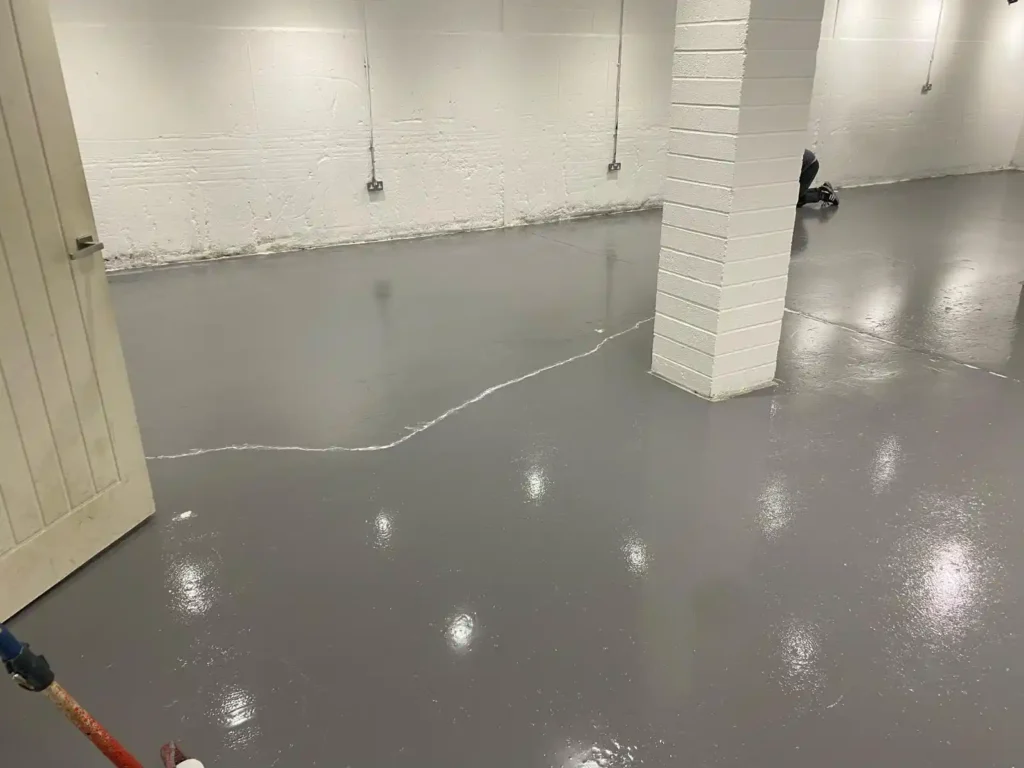
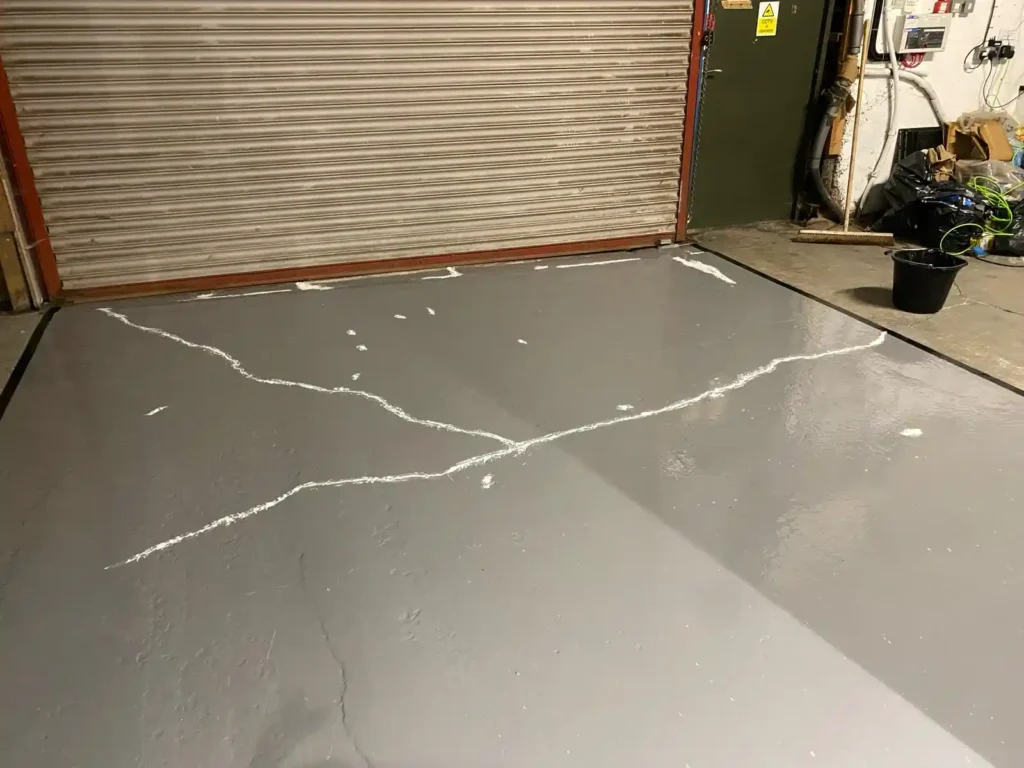
After completing the preparation, several holes and cracks in the substrate were identified and repaired using a suitable repair mortar.


Once all preparation and repair work were completed, the areas were thoroughly cleaned to ensure a dust-free environment before installation commenced. JD Flooring installed the first coat of epoxy high build using a squeegee method and back rolled it to produce a smooth finish. This first coat was left overnight to cure.
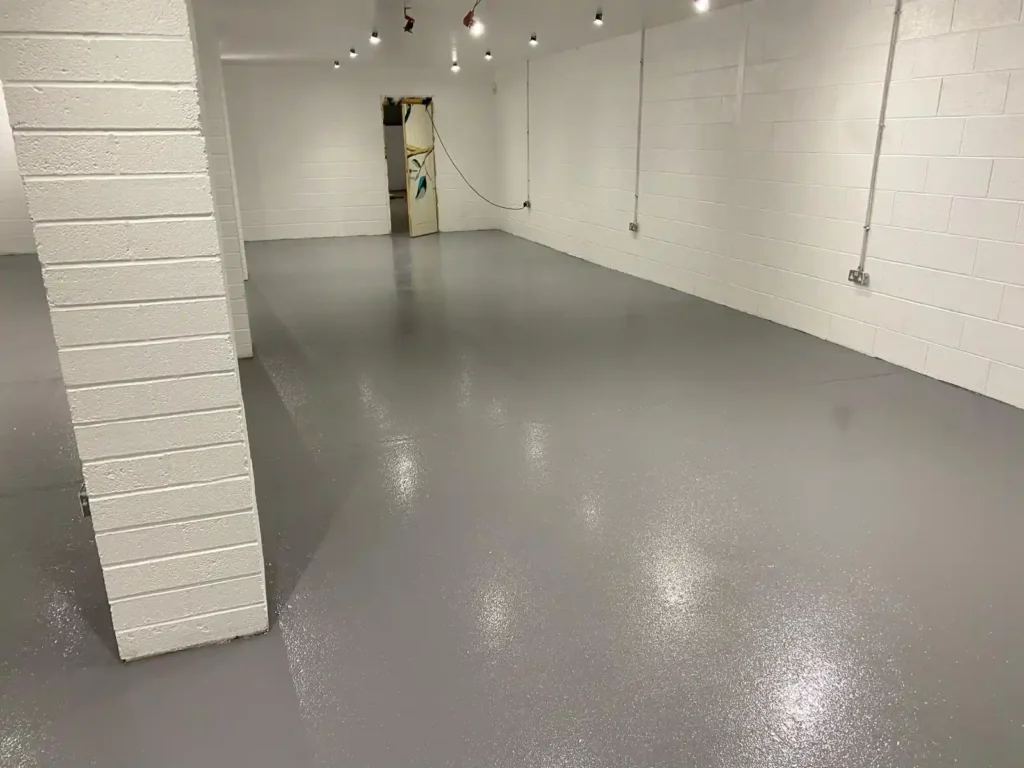
The following day, the cracks and repair areas we attended to again to ensure the final layer would result in a perfect finish. The same installation method was repeated, this time scattering a 0.4mm-0.8mm aggregate into the surface and back-rolling to an even finish. The result was a perfect finish for the environment and the new working area.


The client expressed his delight at the work carried out and the new finish. As a direct result of the quality of work completed by JD Flooring, the client has confirmed that he wishes to appoint us again to install resin flooring in the rest of the building later this year.
A solvent free epoxy coating applied in two or more coats, building a film thickness of up to 1,000 microns. It is specified for medium duty use where the requirement is a clean, hard wearing surface over sound concrete.
Aggregate is scattered between coats where a slip resistant finish is needed. Anticipated life is 5 to 7 years in light use and 2 to 4 years under moderate use.
| Application | Applied in two or more coats, solvent free |
|---|---|
| Intended Use | Medium duty use |
| Thickness | Up to 1000 microns |
| Chemicals | Some resistance to chemical spillage |
| Slip Resistance | Aggregate can be added to achieve a slip resistant finish |
| Anticipated Life | Light use 5-7 years / Moderate use 2-4 years |
WalesHigh Build Coating
BirminghamHigh Build Coating
KnutsfordHigh Build with Quartz Aggregate
Cheadle HulmeHigh Build Coating
DisleyHigh Build Coating
CheshireHeavy Duty Polyurethane Screed
West YorkshireHigh Build Coating
East YorkshireHigh Build Coating
StaffordshireHigh Build Coating
Tell us how the area is reached, what happens in it and how long it can be closed. We attend, test the substrate, and put a written specification and a fixed price in front of you at no cost.