
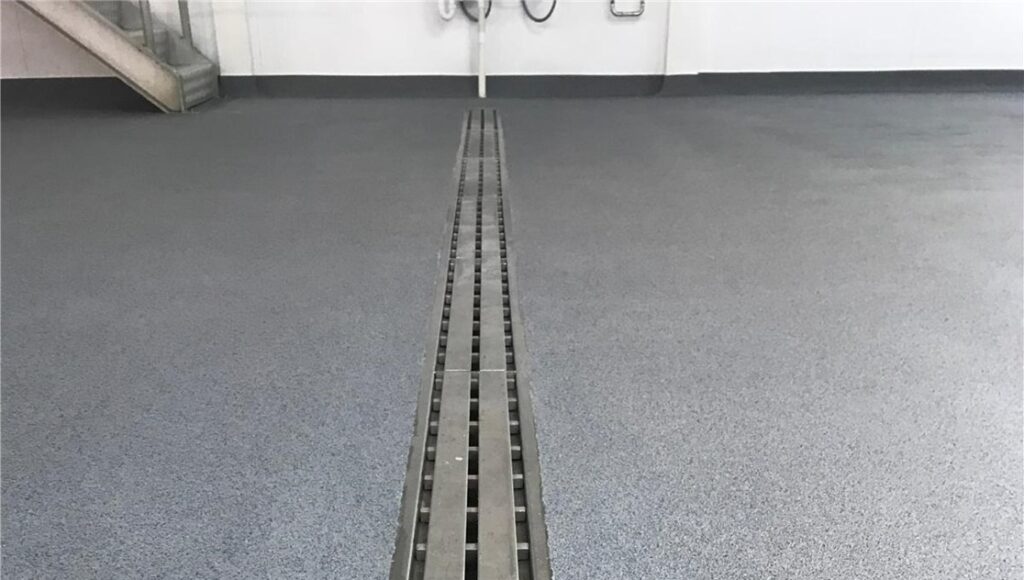
Industrial Resin Flooring in the Food Industry.
The implementation of resin flooring in the food industry has become fundamental to maintaining stringent hygiene standards and operational efficiency in modern food processing facilities. Manufacturing and processing environments face unique challenges regarding floor durability, safety, and sanitisation requirements. How can food manufacturers ensure their flooring solutions meet these demanding standards while providing long-term value?
Key Takeaways
- Resin flooring in the food industry provides essential protection through specialised chemical compositions and professional installation processes that ensure long-term performance.
- Seamless, non-porous surfaces meet stringent hygiene standards whilst providing enhanced slip resistance for workplace safety.
- Superior thermal resistance and load-bearing capabilities make these systems ideal for diverse food processing environments.
- Simple maintenance protocols and extended lifespan deliver significant cost benefits over traditional flooring options.
- Environmental compliance and operational efficiency improvements demonstrate the system’s value in modern food manufacturing.
Understanding Resin Flooring Systems
Chemical Composition and Properties
Industrial resin flooring systems comprise specialised epoxy and polyurethane compounds engineered specifically for demanding environments. These materials create seamless, non-porous surfaces that prevent bacterial growth and contamination. The chemical structure of these systems ensures superior resistance to acids, oils, and cleaning agents commonly used in food processing facilities.
Installation and Curing Process
Professional installation of resin flooring in the food industry requires meticulous preparation and application. The process involves thorough surface preparation, precise mixing of components, and controlled curing conditions to achieve optimal performance. Installation costs typically range from £20 to £35 per square metre for self-smoothing and heavy-duty flowable systems, representing a cost-effective long-term investment.
Hygiene and Safety Standards
Compliance with Food Safety Regulations
Resin flooring in the food industry must meet strict regulatory requirements for food safety and hygiene. These systems provide seamless, joint-free surfaces that eliminate harbourage points for bacteria and contaminants. The non-porous nature of resin flooring ensures easy cleaning and sanitisation, helping facilities maintain compliance with health and safety standards.
Enhanced Slip Resistance
Safety considerations are paramount in food processing environments where wet conditions are common. Modern resin flooring systems incorporate customisable slip-resistant finishes that maintain effectiveness even in challenging conditions. This feature significantly reduces workplace accidents while ensuring easy cleaning and maintenance.
Durability and Performance
Temperature Resistance
Food processing facilities often experience extreme temperature variations. Resin flooring in the food industry demonstrates exceptional thermal shock resistance, maintaining structural integrity in environments ranging from freezer storage to hot processing areas. This versatility ensures consistent performance across different operational zones within the facility.
Load-Bearing Capabilities
Industrial resin flooring systems offer remarkable durability under heavy loads and constant traffic. Heavy-duty polyurethane screed options, with thicknesses between 6mm and 9mm, provide superior resistance to impact, abrasion, and mechanical stress. This durability translates to reduced maintenance requirements and extended service life.
Maintenance and Longevity
Daily Cleaning Protocols
The seamless nature of resin flooring in the food industry facilitates efficient cleaning routines. These surfaces resist chemical cleaning agents while maintaining their protective properties. Regular maintenance involves simple procedures that can be integrated into standard operational protocols without disrupting production schedules.
Long-term Cost Benefits
While initial installation costs may seem significant, the long-term economic advantages of resin flooring systems are substantial. Their durability, minimal maintenance requirements, and extended lifespan result in lower total ownership costs compared to traditional flooring options. This cost-effectiveness makes resin flooring particularly attractive for large-scale food processing facilities.
Environmental and Operational Considerations
Sustainable Manufacturing Practices
Modern resin flooring in the food industry aligns with sustainable manufacturing practices. These systems are manufactured to ISO14001 environmental standards, featuring low VOC emissions and environmentally conscious production methods. This sustainability factor becomes increasingly important as food manufacturers focus on reducing their environmental impact.
Production Efficiency Impact
The implementation of appropriate resin flooring solutions can significantly enhance operational efficiency. The smooth, level surface facilitates equipment movement and reduces vibration, while the seamless finish minimises cleaning time and maintenance requirements. These factors contribute to improved productivity and reduced operational downtime.
Food Industry Case Studies


Conclusion
The adoption of resin flooring in the food industry represents a crucial investment in operational excellence, safety, and hygiene compliance. The combination of durability, easy maintenance, and superior hygiene properties makes these systems an ideal choice for food processing environments. By selecting appropriate resin flooring solutions, food manufacturers can ensure their facilities meet stringent industry standards while optimising operational efficiency and cost-effectiveness.
The long-term benefits of these systems, from reduced maintenance costs to enhanced safety features, clearly demonstrate their value in modern food processing facilities.
Resin Flooring Costs


Frequently Asked Questions
What is the expected lifespan of industrial resin flooring in food processing facilities?
Industrial resin flooring in food processing facilities, when properly installed and maintained, typically lasts between 15 to 20 years. This extended lifespan depends on factors such as traffic intensity, exposure to chemicals, and adherence to maintenance protocols. Regular inspections and prompt repairs of any damage can significantly extend the flooring system’s serviceable life.
How soon can production resume after resin flooring installation?
Production can typically resume 24-48 hours after installation completion, depending on ambient temperature and humidity levels. However, for areas experiencing heavy mechanical loads or chemical exposure, a full seven-day cure period is recommended to ensure optimal performance and longevity of the system.
Which cleaning chemicals are safe to use on resin flooring systems?
Most standard industrial cleaning agents are suitable for resin flooring systems, including alkaline cleaners, mild acids, and sanitising solutions commonly used in food environments. The flooring demonstrates excellent resistance to oils, acids, and cleaning chemicals. However, avoid using concentrated phenol-based cleaners or harsh scouring materials that might compromise the surface integrity.
Can resin flooring be installed in cold storage and freezer areas?
Yes, specialised resin flooring systems are specifically engineered for installation in cold storage and freezer environments. These systems maintain their structural integrity and performance characteristics in temperatures ranging from -40°C to +120°C, making them ideal for various food processing zones. The key consideration is selecting the appropriate formulation designed for extreme temperature variations.
What preparation is required before installing resin flooring in an existing facility?
Prior to installing resin flooring in the food industry, several crucial preparation steps are necessary. The existing surface must be thoroughly assessed for structural integrity, moisture content, and contamination. This typically involves mechanical preparation such as shot blasting or diamond grinding, repairs to any cracks or damage, and ensuring the substrate is clean, dry, and free from dust and debris. Environmental conditions, including temperature and humidity, must also be carefully controlled during installation.
Arrange a Free Site Survey
If you are thinking about upgrading the flooring in your commercial or industrial space then we would love to hear from you. Our team of experts will conduct a free onsite survey and then guide you through the process of product selection and project planning, whilst remaining mindful of your budgetary restraints.
The Benefits of Using Professional Resin Flooring Installers
While it may be tempting to consider a do-it-yourself approach or hire a general contractor for resin flooring installation, enlisting the services of a professional resin flooring installer offers several advantages. In this section, we will evaluate the key benefits of using a professional resin flooring installer for your factory or warehouse.
Expertise and Experience
Professional resin flooring installers possess the necessary expertise and experience in handling various types of resin flooring systems. They understand the specific requirements for each resin type, ensuring that the flooring is installed correctly and performs optimally. Their familiarity with industry standards and best practices guarantees a high-quality, long-lasting floor.
Proper Surface Preparation
One of the critical aspects of a successful resin flooring installation is the proper preparation of the substrate. Professional installers know how to evaluate the condition of the existing floor, identify potential issues, and carry out appropriate surface preparation techniques. This meticulous approach helps to create a strong bond between the resin flooring and the substrate, preventing future issues such as delamination or cracking.
Efficient Installation and Minimal Downtime
Time is money, especially in industrial settings where downtime can have significant financial implications. Professional resin flooring installers have the skills and equipment to complete the installation process quickly and efficiently. Their experience enables them to anticipate and prevent potential problems, ensuring that the installation is completed within the agreed timeframe and with minimal disruption to your operations.
Warranty and Aftercare
Reputable professional resin flooring installers typically offer a warranty on their work, providing you with peace of mind and protection against any defects or issues arising from the installation. In addition, they can provide aftercare services such as maintenance advice and support, ensuring that your flooring remains in top condition for its entire lifespan.
Cost-Effectiveness
While the upfront cost of hiring a professional resin flooring installer may be higher than attempting a DIY installation, the long-term benefits outweigh the initial investment. A correctly installed resin floor lasts longer, requires less maintenance, and provides better performance, resulting in overall cost savings for your business.
JD Flooring Limited – Resin Flooring Installers
JD Flooring Limited is a Cheshire-based company specialising in industrial and commercial resin flooring installation throughout the UK. With over 24 years of experience, JD Flooring Limited offers high-quality Epoxy, Polyurethane, and Polyaspartic flooring solutions that provide durability, strength, and aesthetic appeal for a wide range of industrial and commercial spaces.
The resin flooring systems we install offer exceptional resistance to wear, tear, and chemical spills, ensuring long-lasting beauty and functionality. These systems are also environmentally friendly, with low VOC emissions and slip-resistant surfaces for employee and visitor safety.
JD Flooring Limited partners with the industry’s best resin flooring manufacturers to ensure the highest quality products. All systems installed are either Epoxy, Polyurethane, or Polyaspartic based, and come in a range of floor coatings, self-smoothing systems, heavy-duty screeds, coving, specialist primers, and repair systems. These products are manufactured to the quality assurance standards of ISO9001 and ISO14001.
The company’s team of professionals is certified by ISOPA and ALIPA to handle diisocyanates, a chemical ingredient used in polyurethane flooring. JD Flooring Limited ensures that these chemicals are handled in accordance with appropriate risk management and safety measures.
JD Flooring Limited offers free advice, full on-site surveys, and quotations. The company treats all client projects confidentially and provides professional advice based on extensive industry knowledge across various sectors, including food, pharmaceutical, healthcare, automotive, engineering, warehousing, logistics, aerospace, printing, and packaging.
Share This Article

JD Flooring Limited - Cheshire Resin Flooring Installers
resin flooring in the food industry, industrial resin flooring durability
resin flooring installers, resin flooring in the food industry
resin flooring in the food industry
resin flooring in the food industry
resin flooring installers, resin flooring in the food industry
resin flooring in the food industry
resin flooring installers in Cheshire, resin flooring in the food industry
Industrial resin flooring contractors, industrial resin flooring durability, industrial flooring specialists, resin flooring in the food industry, Warehouse Flooring Repairs in Cheshire, the benefits of industrial resin flooring, choosing resin flooring repair specialists. The Benefits of Resin Flooring in Factories and Warehouses. Affordable epoxy resin flooring options, resin flooring costs. Anti-slip epoxy resin flooring. Epoxy Resin Flooring Types, JD Flooring Limited Resin Flooring Installers. Resin flooring installation, epoxy floor installers, polyurethane floor application, industrial flooring specialists, commercial resin floors, seamless resin flooring, resin floor contractors, concrete floor coatings, epoxy garage floors, anti-slip flooring solutions, decorative resin floors, resin floor maintenance, polished concrete services, resin floor screeding, the benefits of industrial resin flooring. Epoxy Resin Flooring Types, high-performance flooring, chemical resistant floors, warehouse flooring systems, food-grade flooring, epoxy floor coatings, resin floor refurbishment, anti-static flooring, resin terrazzo floors, floor levelling services, resin-bound surfaces, resin floor repair. JD Flooring Limited Resin Flooring Installers. Certified resin flooring installers.
The Benefits of Resin Flooring in Factories and Warehouses. Repairing resin flooring demarcation, choosing resin flooring repair specialists, Epoxy Resin Flooring Types and Anti-slip epoxy resin flooring with Epoxy Resin Flooring Types. Affordable epoxy resin flooring options, resin flooring costs. Certified resin flooring installers. Industrial resin flooring contractors. Repairing resin flooring, choosing resin flooring repair specialists, Warehouse Flooring Repairs in Cheshire, industrial flooring specialists, the benefits of industrial resin flooring, industrial resin flooring durability.